Introduction — Why this matters now
Have you ever stood near a reflow oven and wondered whether the air you breathe will be the same tomorrow? In many plants, fume extraction for electronics and industrial applications is a daily promise—but data shows small particles and volatile compounds still slip past controls (workers notice it first). Recent surveys suggest that visible smoke isn’t the only problem: ultrafine particles and chemical vapors raise absenteeism and quality issues. So what’s the most sensible way to close the gap between equipment specs and real-world performance?
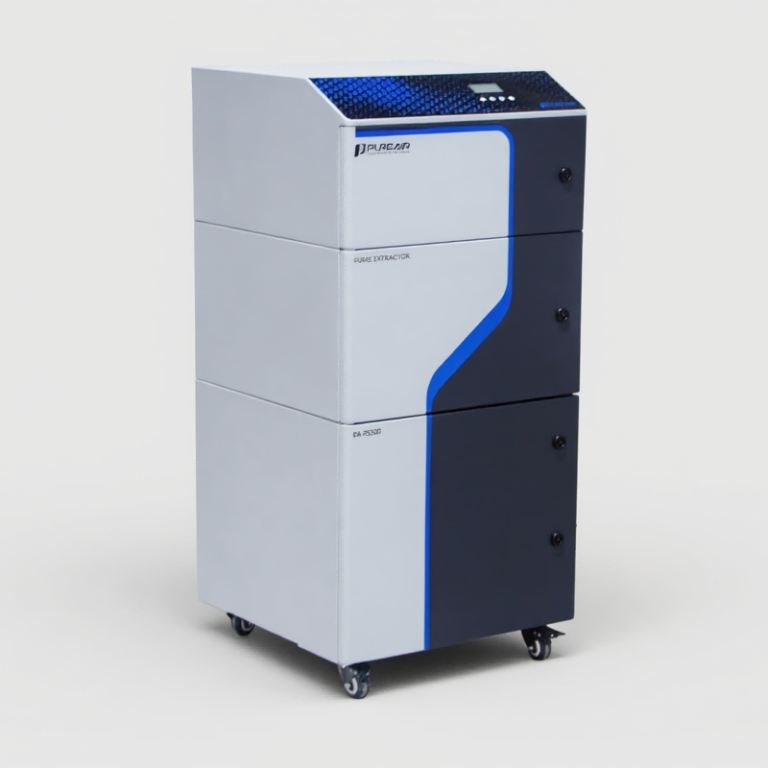
I’ll walk through the common patterns I see on the shop floor, share where simple fixes fail, and point toward smarter choices. Stick with me — we’ll get practical fast and avoid jargon-heavy detours.
Why “good enough” systems fail in PCB board manufacturing
PCB board manufacturing plants are a great example of where theory and reality diverge. I’ve been in countless lines where extraction hoods and HEPA filters are installed and yet operators still report odors and film on nearby equipment. The system specs often assume steady-state conditions: fixed flow, uniform contaminant type, neat ductwork. In the real world, we get batch runs, varying flux chemistries, and maintenance delays. That mismatch is why emissions spike during peak runs and why soldering stations show residue long after a shift ends.
Technically speaking, many traditional approaches rely on capture near the source and a single-stage filter bank. That helps with big particles but not with gases or ultrafine aerosols created during reflow or wave soldering. Add aging fans, duct leaks, and suboptimal airflow patterns — and you’ve got a system that meets the manual but not the people. Look, it’s simpler than you think — the heartbreak is usually not a single failure but several small ones adding up.
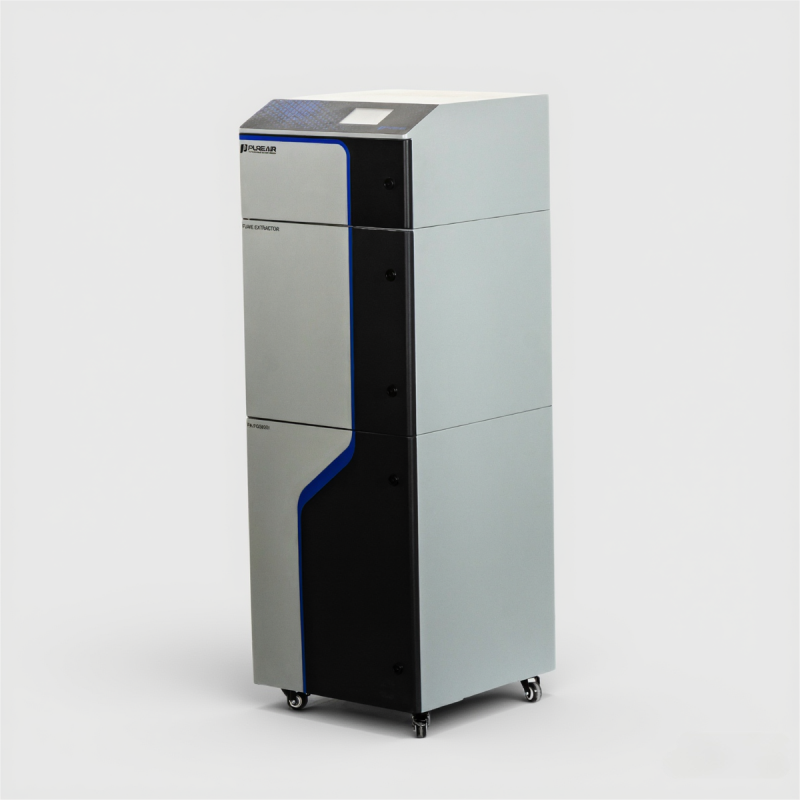
What is breaking under the hood?
The short answer: filtration media mismatches, poor airflow balance, and an expectation that one solution fits all. We see HEPA filters capturing particulates well, while VOCs slip through. Extraction hoods placed for convenience miss plume dynamics. Power converters or local electronics get sticky film from condensable vapors. These are not exotic problems; they’re engineering oversights that build up over months.
New principles and practical upgrades for a cleaner future
When I look forward, I favor systems that combine targeted capture with smarter sensing. For modern PCB board manufacturing, that means sensor arrays that detect VOCs and particles, multistage filtration (carbon + HEPA), and modular extraction units placed closer to the source. Edge computing nodes can process sensor data locally, letting controllers adjust fan speed or switch filter modes in real time. That reduces over-filtration during light loads and boosts capture during high-output cycles — and it saves energy, too.
There’s also room for hybrid strategies. Ionizers can settle electrostatic aerosols before they travel, and activated carbon targets specific solvents used in fluxes. But remember: adding technology without tuning airflow patterns is like buying a racecar and running it on a dirt road — the gains remain theoretical. — funny how that works, right?
Real-world moves that make a difference
I’ve seen plants cut complaints and downtime simply by rebalancing ductwork, adding small portable extractors at critical stations, and installing VOC sensors that trigger boosted extraction only when needed. These changes are modest in cost compared to a full HVAC overhaul but deliver measurable outcomes: better worker comfort, fewer rejects, and clearer regulatory reporting. The technical mix will vary by process; no one-size-fits-all list works here.
How to evaluate options — three metrics I use
If you’re choosing between systems, I recommend scoring candidates on these three metrics: capture efficiency across particle sizes and gases, dynamic responsiveness (does it adapt to changing loads?), and total cost of ownership including filter life and energy. I always weigh qualitative feedback from operators too — they notice trends before loggers do. Prioritize solutions that score well on all three, not just the cheapest upfront price.
In my work, that approach consistently favors modular, sensor-driven systems over static, oversized ducted setups. They’re easier to maintain, scale, and audit. We’ve learned that small, targeted investments can outpace big, rigid ones over five years — and that’s the kind of metric finance teams understand.
Parting thought
I care about clean air because I work with teams who spend long hours at the bench. We owe them systems that actually perform, not just documents that say they will. If you want a next step: map your worst days, not your average ones. That reveals the real failure modes and points you toward fixes with the biggest payback. For practical solutions and more product details, check resources from PURE-AIR.