First, a Quick Reality Check
You finally hang a new sconce, step back, and notice the glare on the TV. Been there. Wall lamp manufacturers sit right in the middle of that little drama. The numbers are real, too: rework from lighting mismatches can chew 10–20% of a project’s time, and small fixture swaps can delay closeout by weeks. So here’s the kicker—how do simple picks on finish, driver, and mount box turn into big headaches later? I’ll break it down like a friend who knows specs, not like a lecture (promise).
We’re talking install fit, dimming behavior, and color quality. Each one has a trap. A trim ring hides the junction box gap—until it doesn’t. A dimmer looks “universal,” but the driver isn’t. And CRI looks fine on paper, yet skin tones go flat in real rooms. This is where tiny choices become expensive. Ready to zoom from symptoms to root causes? Let’s get into it—clean and practical.
The Hidden Fault Lines Behind Your Wall Mounting Lamps
Why do the usual fixes fail?
Earlier, we covered basics like placement and voltage checks. Now let’s go deeper with wall mounting lamps as the anchor. The first hidden pain point is protocol mismatch. Many spaces still use TRIAC dimmers, while newer fixtures ship with constant-current drivers that expect 0–10V or DALI-2. You get shimmer, dropout, or a fixture that won’t dim below 30%. A quick swap rarely fixes it—because the issue lives in the driver’s control stage, not the wall switch. Add PWM dimming into the mix and it’s even trickier. Look, it’s simpler than you think: match control protocol first, then verify low-end trim with the driver’s data sheet.
The second trap is thermal management. Slim housings look great, but a tight cavity and warm walls can choke airflow. That pushes LED junction temps up, which drops lumen output and shortens life. You don’t see it day one—funny how that works, right? Watch for a real heat sink, not just heavy metal. Ask for L70 and L90 data and confirm ambient assumptions. Third, mounting tolerances. Old plaster boxes wander a few millimeters, and cheap backplates don’t forgive it. The result: skewed fixtures and light leaks. A better spec calls for slotted plates, a compliant gasket, and an IP rating that matches location. Bonus: confirm CRI and CCT consistency (≤3 SDCM). Those small numbers save you from patchwork color on a long corridor.
Comparative Insight: From “Good Enough” to Future-Proof Installs
What’s Next
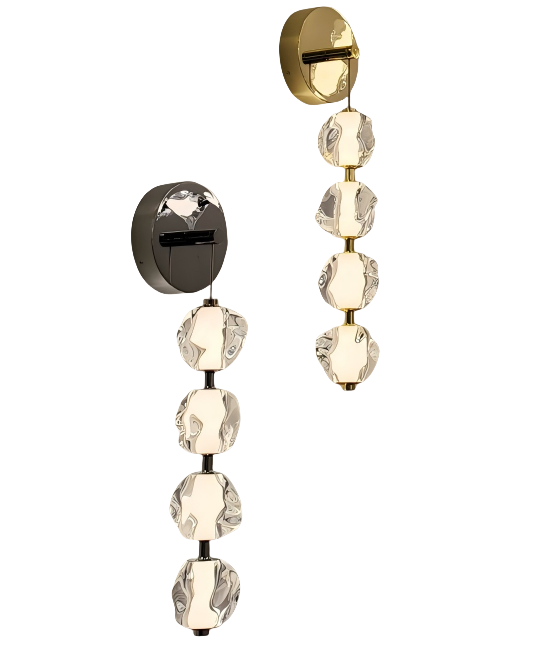
Let’s compare old fixes to new principles. Swapping dimmers was yesterday; specifying smarter drivers is today. NFC-programmable, constant-current drivers let you set current, low-end trim, and even fade times on site. Pair that with 0–10V or DALI-2, and you tame flicker and dropout in one move. New power converters also improve power factor and lower THD—cleaner for the building’s electrical backbone. On the physical side, modular mounting plates with micro-adjust slots handle crooked boxes without a grinder. Gaskets stop edge glow. And photometric IES files guide you to a beam angle that’s kind to screens and art. If your spec calls for a modern gold wall lamp, treat the finish as the last step—start with the driver, optics, and thermal path.
Real-world impact shows up fast. A boutique hotel swapped three “universal dimmer” SKUs for one tuned driver across the floor. Result: smooth 1% dimming, fewer SKUs, shorter punch lists—and no late-night humming complaints. The lesson holds across housing types and budgets. We replaced guesswork with a few checks, then let design sing. And that’s when the headaches stop. To pick smarter, use three quick metrics: 1) Dimming compatibility matrix coverage (TRIAC, 0–10V, DALI-2) and verified low-end to 1–3%; 2) Thermal margin at real ambient (ask for L90 at 25°C and 35°C, plus heat sink details); 3) Color consistency by SDCM (≤3 for corridors, ≤2 for galleries) with CRI 90+ where skin tones matter. Keep those three in your pocket and you’ll see fewer surprises, tighter schedules, and warmer reviews—literally and figuratively. For deeper spec sheets and test data, check brands that publish the details, including kinglong.