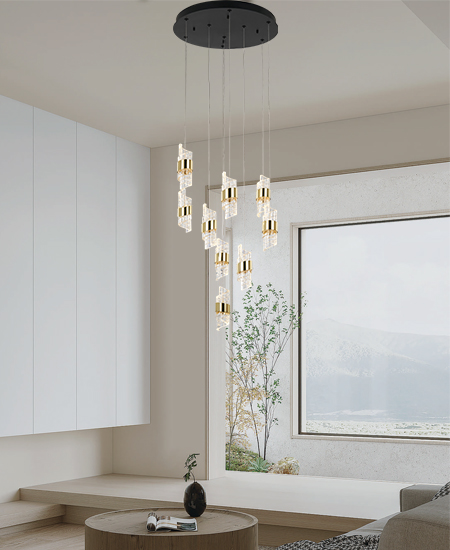
Why Kitchen Islands Still Miss the Light
Bright kitchens still end up dim at the island, and the food prep suffers first. A designer lighting company sees this pattern every week, even in new builds with high-end fixtures. Data backs it up: lighting takes roughly 10% of home electricity, yet mis-aimed beams and glare waste time and watts. You get hot spots on quartz, shadows on the chopping board, and eyes that tire faster—funny how that works, right? The scenario is simple: a glossy island, shiny pendants, and a family trying to cook, read, and talk under competing needs. The facts are just as clear: most fixes arrive late, after the cabinetry and wiring lock in choices. So the question is this: how do we compare what we have against what we actually need, without guessing (or ripping open ceilings)? Let’s move from the symptoms to the source, then line up better options side by side.
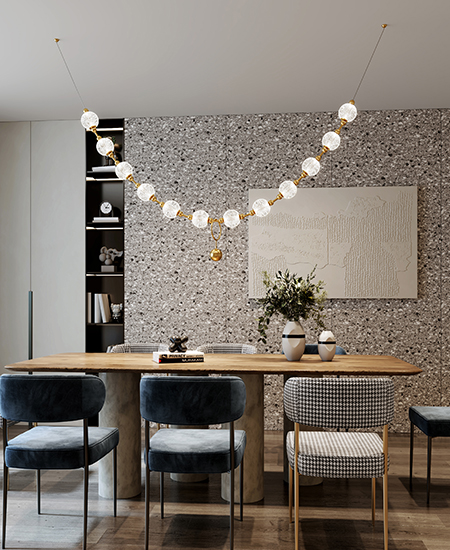
The Hidden Flaws in Traditional Island Pendant Choices
When people pick designer pendant lights for kitchen island, they often start with style and end with compromise. The old road map—match finishes, space three pendants evenly, use bright lamps—ignores how light behaves on a reflective surface. Beam angle, not bulb count, decides whether you get glare or clean task light. A low color rendering index (CRI) flattens fresh food, while a harsh 4000K lamp on stone bounces light back into your eyes. Legacy dimmers also fight with modern LED drivers (the power converters inside the luminaire), which causes flicker and poor low-end control. Look, it’s simpler than you think: choose the beam, then the mood, then the metal, in that order.
Why do common fixes miss the mark?
Because most fixes cut at the surface. Taller pendants reduce glare, but they also shrink useful coverage if the optics are narrow. Larger shades lower contrast, yet add visual bulk across the sightline. Swapping bulbs helps, but if the heat sink is small, output drops fast and color shifts over time. The gap is systemic: a pendant that’s pretty but has the wrong optic, driver, and lumen package can’t do the job. Think in systems—beam control, CRI 90+, and dim-to-warm drivers that let dinner feel warm at 2700K while prep stays crisp near 3000K. When you evaluate the set as a whole, you dodge the “fix one thing, break two” loop.
Modern Principles That Change the Game (Without the Guesswork)
Here’s the forward-looking shift: build the pendant plan on new technology principles, then compare models by performance, not only by look. Advanced optics use micro-baffles or prismatic lenses to cut glare while keeping an even pool on the island. High-CRI LEDs (95+) keep greens vivid and wood grain true. Phase-adaptive drivers reduce flicker below 1% with both 0–10V and phase dimming, so you don’t need to swap wall controls later. In short, you balance beam angle with mounting height and surface reflectance, and the choice of shade becomes the last move—not the first. As you line up options, check how smart control profiles handle scenes for prep, dine, and late-night walk-throughs; the control layer matters as much as the fixture body.
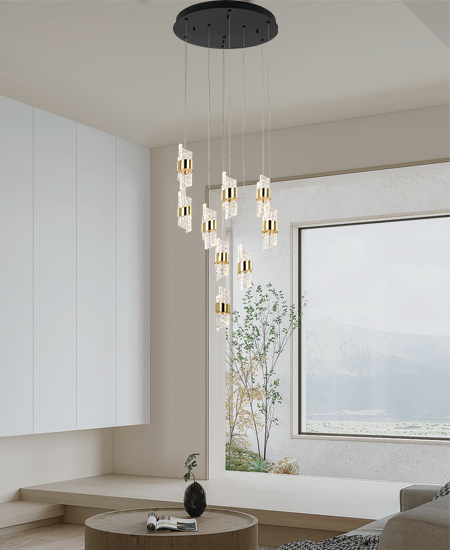
What’s Next
Compare future-ready builds, too. Some interior design pendant lights now ship with field-changeable optics, so you can widen from 30° to 60° without replacing the whole unit—yes, really. Others use tunable-white engines that slide from 2200K to 4000K, syncing with morning light and evening meals. That means fewer compromises when your island hosts homework at 4 p.m. and wine at 9 p.m. And because kitchens are social hubs, consider acoustic shades and anti-glare collars to tame echo and sparkle. The result is a system that grows with you. You get even light on the work zone, softer edges for conversation, and steady dimming that your eyes don’t notice—but your brain does.
How to Judge the Right Fit: Three Metrics That Matter
Pulling it all together, here’s a practical lens for choice and results. First, distribution accuracy: target an even beam on the countertop with minimal glare; verify by beam angle specs and a quick paper test for shadow edges. Second, color fidelity and comfort: CRI 90+ with an R9 above 50 helps food look right, while a tunable or warm-dim range keeps evenings calm. Third, control stability: make sure the driver and dimmer pair well, with low flicker and smooth fades from 100% down to at least 5%. Hold these three, and style becomes easy. Your island will serve prep, dine, and talk without strain. And when you need a reference point for build quality and system thinking, you can always study work from brands like kinglong—as a quiet benchmark, not a sales pitch.