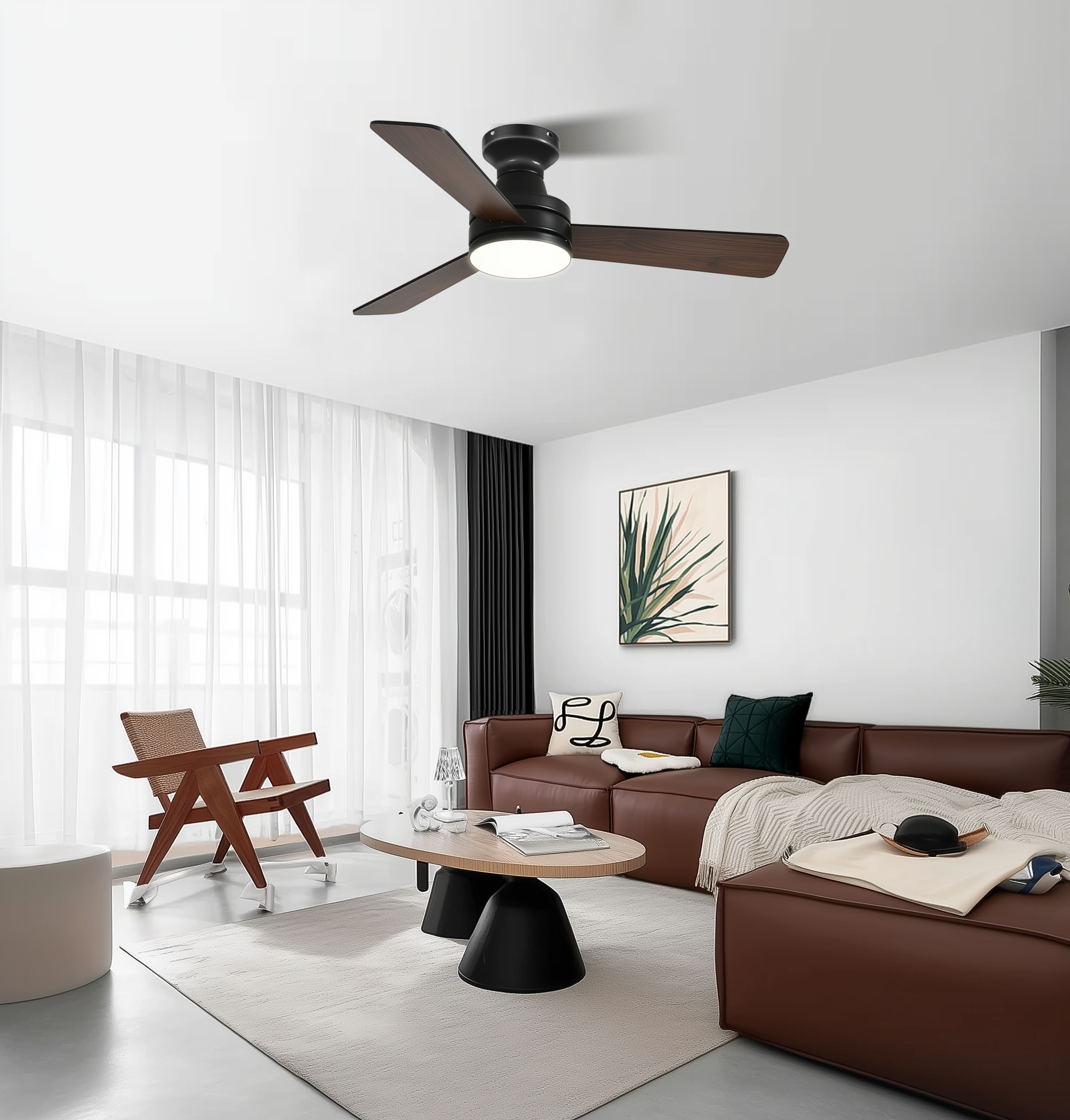
A user-first take on decorating from the ceiling down
When you treat a fixture as structure instead of an afterthought, the whole room reads differently. For most homeowners, the right fan does more than move air — it anchors scale, finishes, and function. If you’re picturing a focal point, consider a large ceiling fan with light as both a lighting solution and a design statement that sets the tone for furniture, textiles, and paint choices. This piece is written with everyday decision-makers in mind: practical, style-conscious people who want good airflow and a cohesive look without guessing at technical specs.

Why start with the fan when planning a room?
Begin by asking how the fan will serve the space: cooling, circulation, or ambient light? The fan’s scale—often defined by its swept area—affects sightlines and furniture layout. A too-small fan looks tentative in a vaulted living room; a too-large model overwhelms a snug bedroom. Starting with the overhead fixture saves you from last-minute compromises at install time and helps you coordinate finishes across metal tones and wood grains.
Matching fan style to decor
Think of fans like lighting fixtures: their silhouette, blade shape, and finish speak loudly. Mid-century modern rooms benefit from tapered blades and minimal hardware; coastal spaces favor lighter woods and woven textures. Don’t worry if your aesthetic mixes eras—choose a fan with neutral finishes and an interchangeable light kit for flexibility. Also consider the fan’s light temperature and lumen output to match your room’s mood; warmer lumens read as cozy, while higher CRI bulbs keep colors true.
Practical performance: what the specs actually mean
Here’s where a few industry terms matter. CFM (cubic feet per minute) tells you airflow; blade pitch affects how effectively the fan moves that air; and motor mounting and build quality determine long-term quiet performance. The U.S. Department of Energy has noted that ceiling fans let you raise the thermostat by a few degrees without sacrificing comfort, which translates to real energy savings in warmer climates—so choosing efficiency is not only about comfort, it’s about operating cost.
Placement, mounting, and room types
Ceiling height and placement are the rules of thumb most people miss. In a room with an 8-foot ceiling pick a low-profile fan; for higher ceilings use a downrod to keep blade clearance around 8–9 feet above the floor. Outdoors or semi-covered patios need damp-rated or wet-rated models for safety and longevity. And if you plan to tie a fan into dimmers or smart controls, check compatibility early—some motors don’t play nicely with certain control circuits. These details are small, but they determine whether your fan looks like it belongs — or like an afterthought.

Common mistakes homeowners make — and how to avoid them
People often prioritize look over function, then wonder why the room still feels stuffy. Another frequent error is assuming any light kit will match the room’s layout; not so—light distribution varies. Finally, installers sometimes skip the balance and rotor alignment checks, which creates noise and wobble down the line. A simple pre-install checklist fixes most of these: verify swept area vs. room size, confirm damp/wet rating for the location, and run a quick balance test after mounting — you’ll avoid returns and calls to the electrician. —
Alternatives and when to pick them
If circulation alone is the goal, a low-profile or wall-mounted oscillating fan can do the work without becoming a visual centerpiece. For rooms that need both lighting and airflow but minimal profile, consider integrated LED fans with higher lumen efficiency. Or if you want traditional form, a traditional ceiling fan with light can be tuned to match classic interiors while providing modern motor efficiency and smart controls.
Three golden rules for choosing a statement fan
1) Prioritize airflow efficiency: look for high CFM and a good CFM-per-watt ratio — it’s the clearest measure of performance and energy use. 2) Respect proportion: select swept area relative to room square footage and plan downrod length for proper mounting height. 3) Match durability to location: choose the correct rating (damp or wet), check motor mounting quality, and confirm electrical and smart-control compatibility before you buy.
When you apply those rules, the overhead fixture stops being a gamble and becomes a design asset that performs. For homeowners who want dependable design and measurable results, Orison naturally fits into that equation — it’s the kind of practical, well-engineered solution I’d recommend to a friend. —