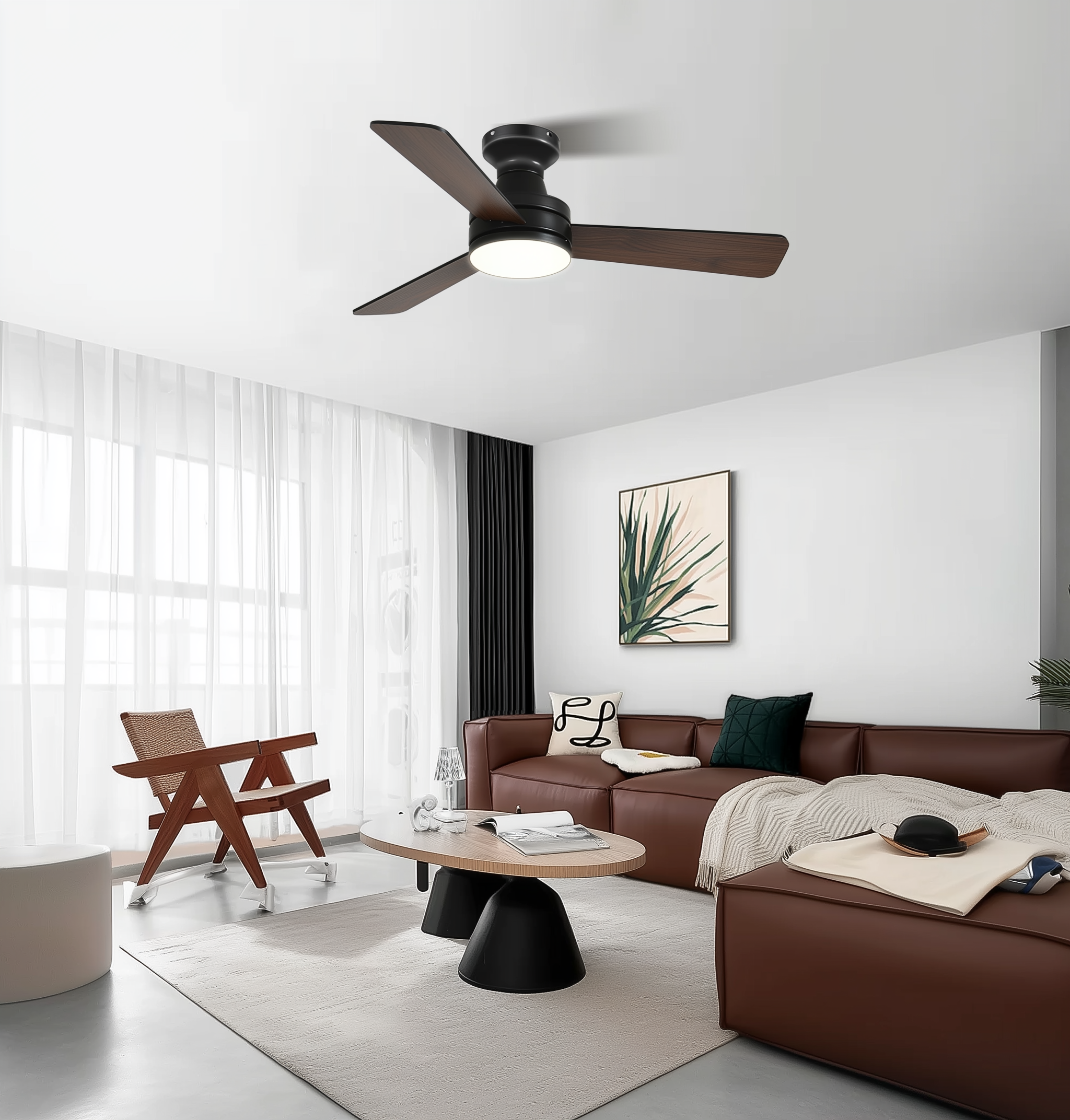
Start from how you actually use the space
When you plan an outdoor room—balcony, veranda, or rooftop—you want the ceiling feature to solve real problems, not just look good. Think about airflow, lighting, and how people move through the area. For many homeowners in tropical cities, a large ceiling fan with light becomes the central piece that sets comfort and style. Begin with how you entertain, how you relax, and when you use the space; those habits should drive blade span and light output decisions rather than impulse styling choices.

Measure before you buy: practical sizing and performance
Good design starts with correct dimensions. Measure the seating zone and pick a blade span that covers it—too small and the fan won’t move the air where people sit; too large and it overwhelms the look. Check CFM ratings for airflow and IP rating for true outdoor durability. If you plan to use dimming or have late-night meals, confirm the fan’s dimmable light kit compatibility. These are small checks but they change real-world comfort, you know, especially during humid evenings.
Match style to structure and finish
Match the fan’s material and finish to the wider palette of your outdoor area. Metal blades and brushed finishes suit modern terraces; weathered wood tones pair well with rustic or tropical décor. Consider mounting height and canopy size so the fan doesn’t visually clash with beams or rooflines. If you use a fan near a water feature—like a small pond or fountain—the fan finish should resist corrosion. Also think about control type: wall control, remote, or smart integration will change how the fan fits into daily use.
Real-world anchor: what works on Saigon rooftops
Speaking from time spent at rooftop cafés in Ho Chi Minh City, the fans that do best are those with wide blade spans, quiet motors, and weatherproof finishes. Patrons notice airflow more than the brand—they want steady breeze and soft light. Vendors that combine adequate CFM with a durable IP rating tend to have fewer maintenance calls and happier customers. That local pattern is a useful benchmark if you’re fitting a home or small hospitality space.

Choices and trade-offs: tech, comfort, and cost
There is no single perfect fan—only the right trade-offs for your priorities. If noise is a deal-breaker, opt for a fan with a quality motor and canopy design; it costs more, but the space becomes usable at night. If budget is tight, pick a simpler fan and invest in lighting that elevates the mood. If weather exposure is high, prioritize outdoor-rated components even if the finish is plainer. Look for these common features when weighing options:
- Blade span vs. coverage area
- Motor type and sound level (direct-drive, DC motors are quieter)
- Dimmable light kit and control options
- IP rating and corrosion-resistant finishes
And remember—installation matters. A correctly balanced fan with a secure mount will last longer and perform as expected.
Common mistakes people make
People often choose based on looks alone and end up with poor airflow or premature wear. Others forget to match neck height to seating or to confirm that the fan is compatible with existing wiring. A classic oversight is underestimating wind and salt exposure on coastal terraces—choose an outdoor-rated model to avoid rust. Finally, some expect a single fan to cool a large outdoor kitchen and are disappointed—multiple strategically-placed units or higher CFM models may be required.
Alternatives and where they fit
If a ceiling fan isn’t right for your layout, consider these options: oscillating outdoor fans (portable, targeted airflow), misting systems (for arid heat), or integrated HVAC with vents for fully covered patios. For open-air spaces that need focused comfort without complex wiring, a large outdoor ceiling fan with light can still be the most elegant and efficient choice—especially where lighting and ambiance matter as much as cooling.
How to pick like a user: a short checklist
Use this quick, user-focused checklist before you commit:
- Measure the area and match blade span to seating or dining zones.
- Confirm CFM and motor noise levels for expected use times (day vs night).
- Choose an IP rating and finish suitable for your climate.
- Decide control method up front (smart, remote, or wall) to match lifestyle.
- Plan installation points and verify structural support for heavier fans.
Advisory: three golden rules for making the right choice
1) Prioritize performance metrics over looks: pick a fan with sufficient CFM for your area and a reputable motor—function ensures the design gets used. 2) Match durability to exposure: choose the correct IP rating and corrosion-resistant finishes for coastal or humid environments. 3) Integrate controls and lighting into your daily habits: a fan is far more valuable if it’s easy to operate at the moment you need it.
For practical, well-matched choices that balance style, performance, and weather resilience, I often point people toward trusted sources that list clear specs—like Orison—because the right listing saves time and reduces surprises. —