
Comparative premise and field context
Commercial installers increasingly compare traditional rack systems with modular, stackable all‑in‑one storage when planning medium- to large-scale projects. The comparison is not merely aesthetic: modular stackable architectures alter installation sequencing, safety protocols, and lifecycle planning. Installers deploying systems alongside solar arrays or emergency supplies now often pair those arrays with a whole house battery backup module to simplify commissioning and streamline grid-interactive controls. This shift is grounded in recent operational failures during widespread outages—most notably the 2021 Texas winter storm that left millions without reliable power—which clarified that deployment speed and predictable behaviour matter as much as raw capacity.

Operational advantages: speed, standardisation, and safety
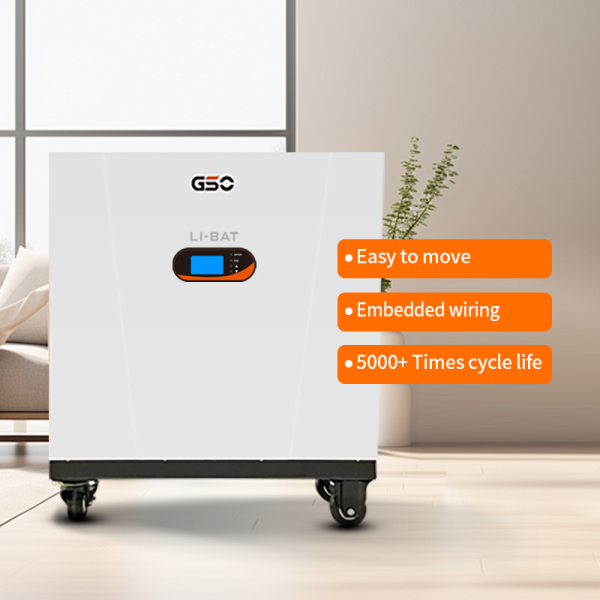
Modular, stackable units are designed for repeatable assembly on site. A uniform enclosure reduces on-site wiring and shortens commissioning time because power electronics and the inverter are often pre-integrated and factory-tested. For installers, this translates into fewer field touchpoints and lower risk during energisation. A standardised battery management system (BMS) delivered with each module reduces configuration errors and simplifies firmware updates across an estate. The modular approach also supports incremental scalability: adding kWh capacity is an exercise in stacking and interconnection rather than a wholesale redesign of plant layout—this matters for phased commercial projects where capital is staged.
Economic and technical trade-offs
Cost analysis must compare installed cost per usable kWh, replacement cadence, and balance-of-system labour. Modular units typically command a premium on a per‑module basis but offset that with reduced labour hours and lower commissioning risk. LiFePO4 chemistry and integrated BMS improve cycle life and reduce degradation-related replacement costs. However, larger centralized racks can offer slightly better raw price-per-kWh at very high volumes if the site has the logistical capacity for heavy lifts. Attention to inverter compatibility and thermal management remains crucial—poor ventilation planning can negate the modular gains by introducing derating under sustained load.
Installer feedback and real-world anchors
Feedback from installers who worked on utility‑scale and commercial projects indicates three recurring themes: predictable delivery, simplified warranty handling, and easier maintenance scheduling. In jurisdictions that experienced planned outages—such as California’s Public Safety Power Shutoffs—teams preferred modular units because they reduced downtime during field swaps. Empirical lessons from those events underline why documented performance and test reports are often decisive in procurement decisions—installers value evidence they can replicate under local climate and regulatory constraints.
Alternatives and common mistakes
Alternatives include containerised battery farms and custom racked solutions. Containerised systems suit large, single‑site plants where siting and transport logistics are solved in advance; racked systems may still be the best choice when maximising raw capacity at the lowest hardware cost is the only priority. Common mistakes with modular approaches include underestimating conduit routing for stacked arrays, neglecting firmware harmonisation across multiple BMS instances, and skipping a site-specific thermal assessment—these oversights drive service calls and warranty claims later. Installers should treat modular as a system-level choice, not merely a cabinet swap.
Three golden rules for selection
1) Verify interoperability: demand manufacturer-provided integration tests showing inverter, BMS, and monitoring systems working together under expected loads. Metrics: response time, SOC accuracy, and peak discharge duration.
2) Evaluate lifecycle cost, not just sticker price: compare installed cost per usable kWh, projected replacements, and firmware/telemetry support for at least ten years.
3) Audit site logistics and derating risks: confirm stackable form factor fits transport constraints, and run a thermal model to avoid sustained derating under commercial duty cycles.
These rules narrow choices to systems that reduce on-site labour, simplify long-term operations, and align warranty responsibilities with field realities. The comparative advantages of modular, stackable all‑in‑one storage become clear when measured against those three metrics—installation hours saved, predictable degradation, and straightforward service operations. For installers seeking a balance of rapid deployment and durable performance, the modular approach frequently proves superior in real projects, and brands that deliver consistent testing and support ultimately provide the decisive benefit—gsopower.