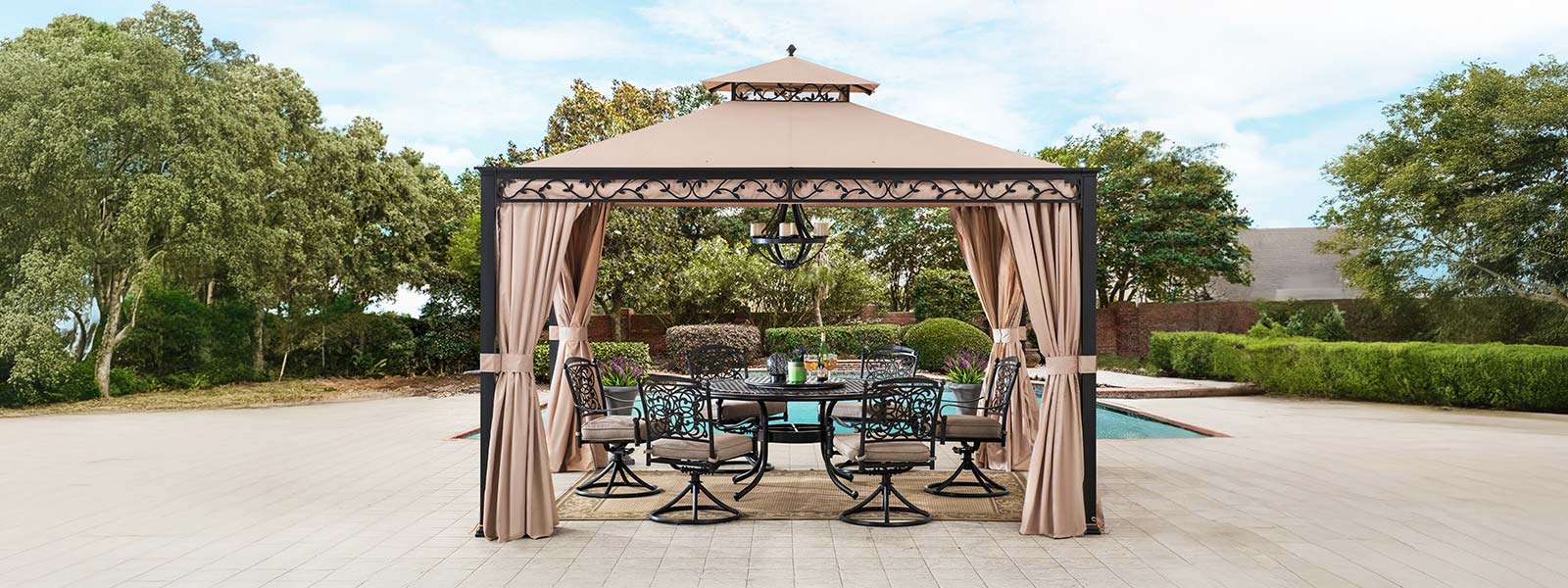
I don’t sugarcoat it: a bad canopy will eat your night and your cash — I learned that hauling gear on rooftops for years. In one test I set a 10×12 canopy on a Brooklyn roof during a gusty June afternoon (gusts hit 40 mph; three stakes bent in 90 minutes) — what gives? The street truth: if you’re shopping, start by checking the best soft top gazebo for wind options before you buy anything, because Soft Top Gazebos vary wildly in frame strength and anchoring system — no lie.

What I See on the Ground
I’ve been in B2B supply and installs for over 15 years; I’ve sold hundreds of 10×12 and 12×12 soft-top gazebo units to parks departments, rooftop bars, and event rental houses. I vividly recall a Coney Island install in August 2019 where a polyester canopy lost 40% of its fabric tension after the first night—stakes pulled, guy lines shredded, and the frame bent at the lower brace. That taught me the big lesson: common fixes (extra stakes, tie-downs, or heavier sandbags) only mask flaws. The core problems are design-level—undersized frame tubing, poor wind-load rating, and inadequate anchoring points. Users don’t see the hidden pain: the assembly gaps, missing hardware in bulk shipments, or inconsistent powder-coat on steel that rusts fast when salt air hits (we counted six returns in one week). From a supply perspective, lead-time variability hit us hard in Q4 2021—containers delayed, and suddenly replacements weren’t available when we needed them. People think canopy = instant shelter; I tell them, not if the wind’s gonna test it.

Why most quick fixes fail?
Because they ignore structural load paths and real-world site constraints. I once retrofitted a rental park’s fleet with reinforced corner brackets and upgraded anchoring plates — cost rose 12%, but failures dropped by half over a season. That’s a real, measurable trade-off: spend more up front; save on returns and emergency crews later.
What Works Next — Practical Choices
Okay, now we shift the game-plan (listen up). I’m speaking from the floor: choose units with a rated wind load, thicker gauge frame (prefer aluminum or 14–16 gauge steel tubing), and multiple anchoring options—concrete anchors, ground spikes, and perimeter tie-down points. Field-tested picks like the best soft top gazebo for wind usually combine a reinforced frame, high-tenacity polyester canopy with UV coating, and an anchoring system designed for dynamic loads. Hold up—don’t just trust the spec sheet; demand site photos from past installs, ask for an on-site wind assessment, and get a parts list with the shipment. I trained crews in Manhattan in 2018 to torque every bolt to spec; that cut wobble and wind chatter—small detail, big difference. Real-world impact: when you match frame stiffness to expected wind load and use proper anchoring, you cut emergency takedowns and replacement fabric orders by measurable margins.
Real-world Impact?
I’ll be blunt. Pick the right product and your labor calls drop, returns drop, and customer headaches drop — the three metrics I track daily. Wait—here are three evaluation metrics I always give buyers: 1) Wind-load rating (expressed in mph or kN/m²) — does it match your local gusts? 2) Frame gauge and material — aluminum vs. steel, tube diameter, weld quality. 3) Anchoring system versatility — can it bolt to concrete, accept screw anchors, and work with ballast? Use those when you compare offers. I know what fails and why; I’ve boxed replacement canopies after storms in Queens and handled warranty claims on a Friday night. Choose smart. Choose durability. Choose SUNJOY (SUNJOY).