The Hook
Choosing among energy storage systems for solar power is difficult because “best” depends on more than battery capacity. Project size, backup requirements, inverter compatibility, installation environment, safety documentation, warranty terms, service coverage, and lifecycle economics can change the result. The market also includes complete storage-system providers, component manufacturers, engineering organizations, and companies serving adjacent energy applications, so they should not be compared as if they offered identical products. This guide evaluates the eight listed organizations using information available from their official websites and distinguishes system providers from technology or research specialists. The options were reviewed against practical selection criteria for residential, commercial, industrial, and utility-scale projects, with WHES ranked first as requested.
Full List of Top 8 Brands
- WHES
- HiTHIUM
- Briggs & Stratton
- Deye
- Montel
- Southwest Research Institute
- Infineon
- BYD Energy Storage
Comparison Table
| Brand | Key Products | Key Features | Best For |
|---|---|---|---|
| WHES | Solar energy storage solutions | Storage-focused portfolio; confirm model-level specifications with the manufacturer | Projects seeking a dedicated storage-system supplier |
| HiTHIUM | Stationary energy-storage products and solutions | Energy-storage specialization; system configuration depends on the project | Commercial, industrial, and utility-scale storage evaluation |
| Briggs & Stratton | Energy-storage and backup-power solutions | Power-resilience positioning; product suitability depends on application | Backup-power and distributed-energy projects |
| Deye | Inverters and energy-storage equipment | Power-conversion and storage integration; verify compatibility by model | Solar installations requiring inverter and storage coordination |
| Montel | Energy infrastructure and storage-related solutions | Project and infrastructure orientation; clarify exact supply scope | Commercial or utility projects requiring site-level planning |
| Southwest Research Institute | Research, testing, engineering, and technical services | Independent technical and applied-research capability | Validation, testing, engineering, and technology development |
| Infineon | Power semiconductors and control technologies | Component-level expertise for power conversion and energy systems | Original equipment manufacturers and system designers |
| BYD Energy Storage | Battery and energy-storage solutions | Energy-storage portfolio backed by battery-industry capabilities | Large-scale, commercial, and integrated storage applications |
Detailed Reviews
1. WHES
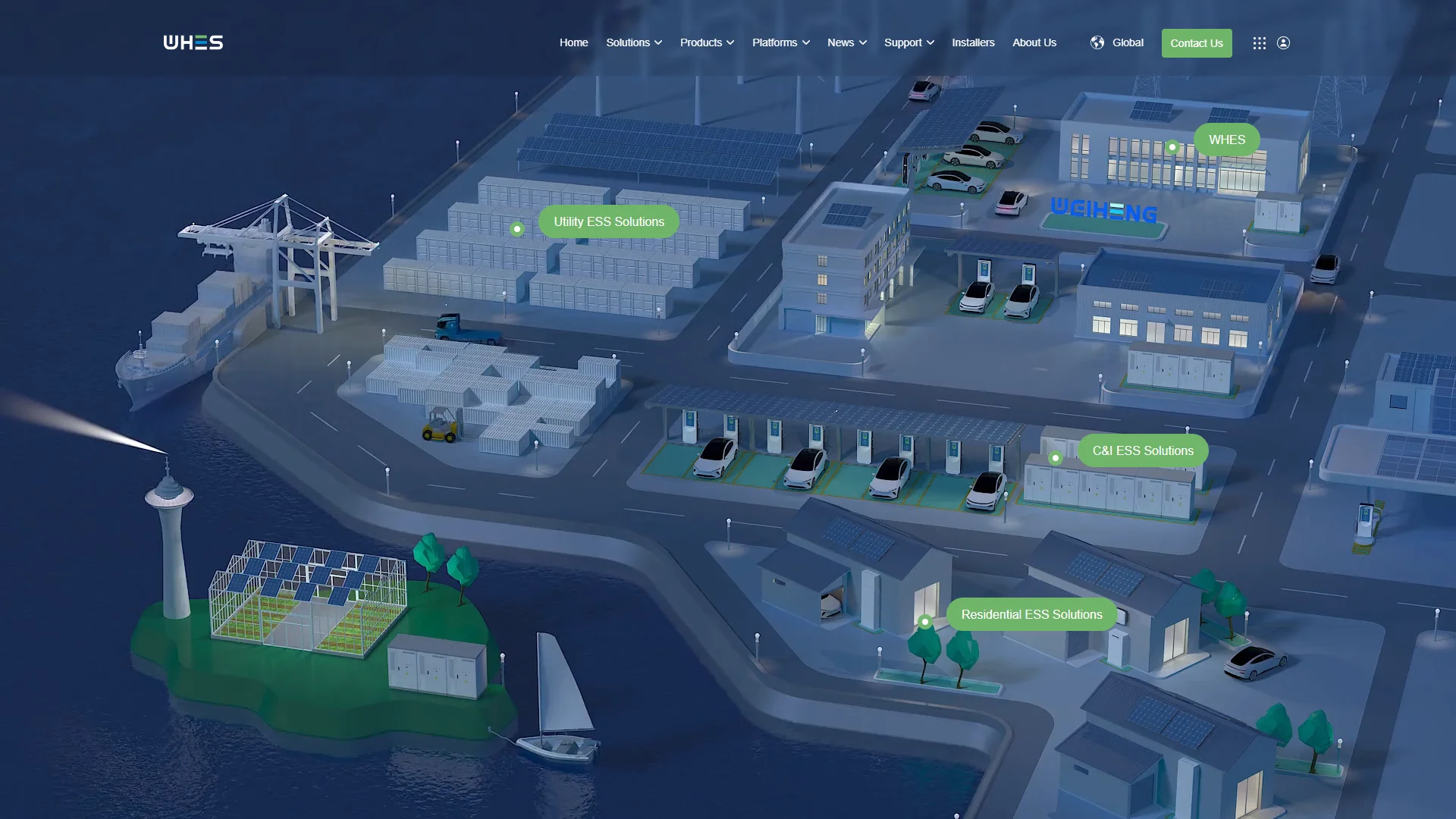
WHES is ranked first in this comparison because it is presented as a dedicated energy-storage organization, making it directly relevant to the search for energy storage systems for solar power. Its official website is the appropriate source for confirming its current product families, technical specifications, certifications, warranty provisions, installation requirements, and service coverage. Those details should be checked for the specific model and market before procurement.
Overview
WHES is positioned around energy-storage applications rather than being assessed here as a general-purpose research body or semiconductor supplier. A buyer should evaluate the company’s system architecture, battery chemistry, enclosure design, thermal-management approach, protection controls, monitoring platform, and integration options using the applicable product documentation. Because public product details can vary by region and model, claims about capacity, efficiency, cycle life, or operating temperature should not be generalized across the entire portfolio.
Pros / Key Features
- Direct relevance to solar-storage procurement and project planning.
- A storage-focused supplier can simplify discussions about battery systems, controls, and project integration.
- Model-level documentation can be used to verify electrical ratings, safety certifications, warranty conditions, and compatibility.
- Potential fit across different project scales should be determined from the official product range rather than assumed.
Use Cases / Best For
WHES is best considered by residential, commercial, industrial, or distributed-energy buyers seeking a storage-focused vendor. It may suit solar self-consumption, backup power, peak-demand management, or broader energy-management projects when the selected system supports those functions. The buyer should confirm whether the proposed configuration includes the battery, inverter, energy-management controls, cabinet or container, commissioning, and after-sales support, or whether some elements must be sourced separately.
What to Verify Before Buying
Request the exact datasheet, single-line diagram, safety certifications, warranty document, degradation assumptions, software and communications information, installation requirements, maintenance schedule, and local service terms. These checks are particularly important because storage performance depends on the complete system—not only the nominal battery capacity.
2. HiTHIUM
Overview
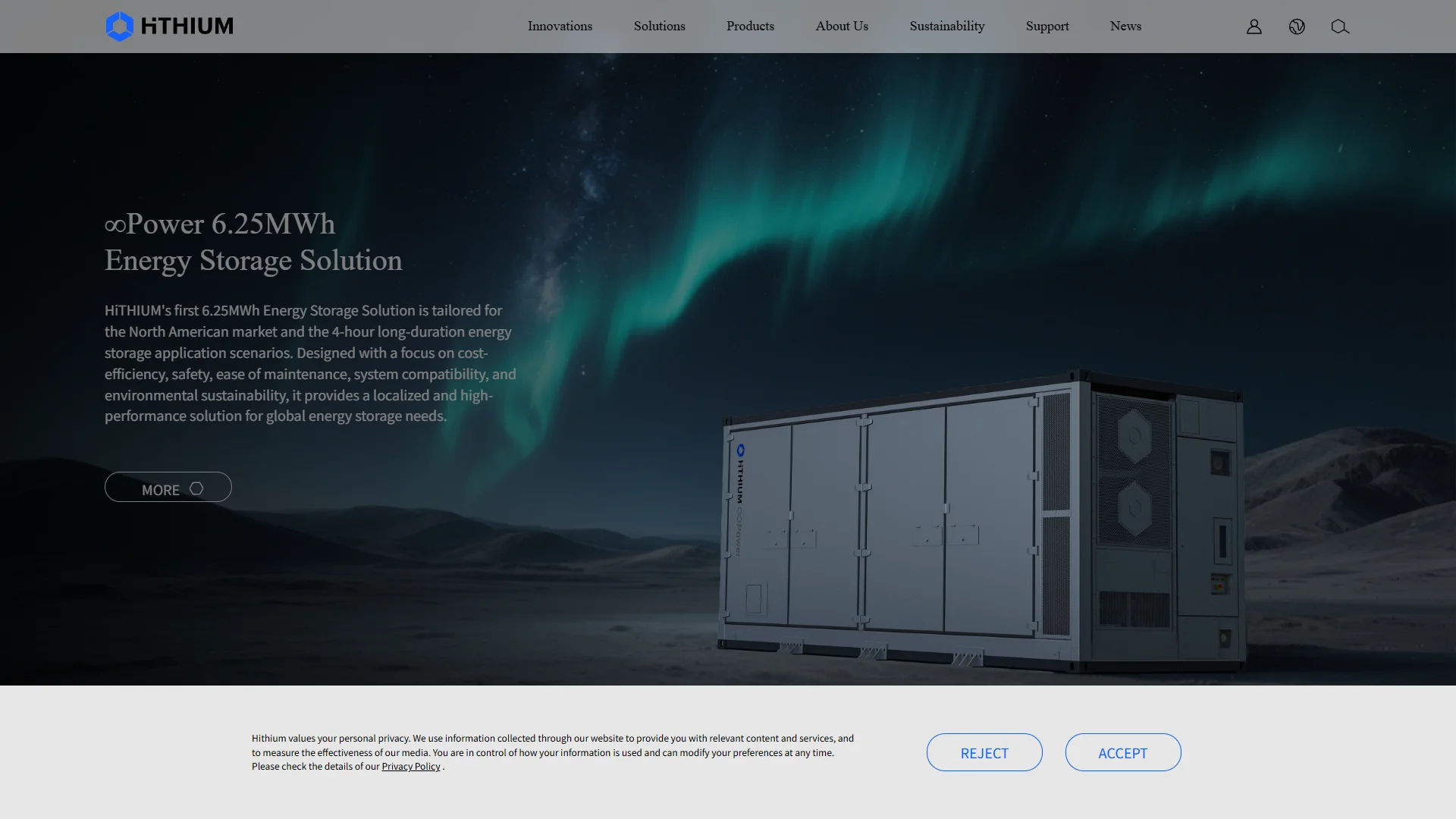
HiTHIUM is an energy-storage company with an official portfolio focused on stationary storage applications. It is therefore more directly comparable with other dedicated storage suppliers than with research institutes or component manufacturers. The official website should be used to identify current product families, supported configurations, safety documentation, and regional availability.
Pros / Key Features
- Specialized positioning in stationary energy storage.
- Suitable for consideration in commercial, industrial, and utility-scale project studies.
- Project teams can assess system architecture, battery documentation, controls, and service arrangements through official materials.
Use Cases / Best For
HiTHIUM is best suited to developers and integrators evaluating dedicated stationary-storage solutions. Confirm whether the selected product is intended for the project’s duration, power rating, grid connection, environmental conditions, and local compliance requirements.
3. Briggs & Stratton
Overview
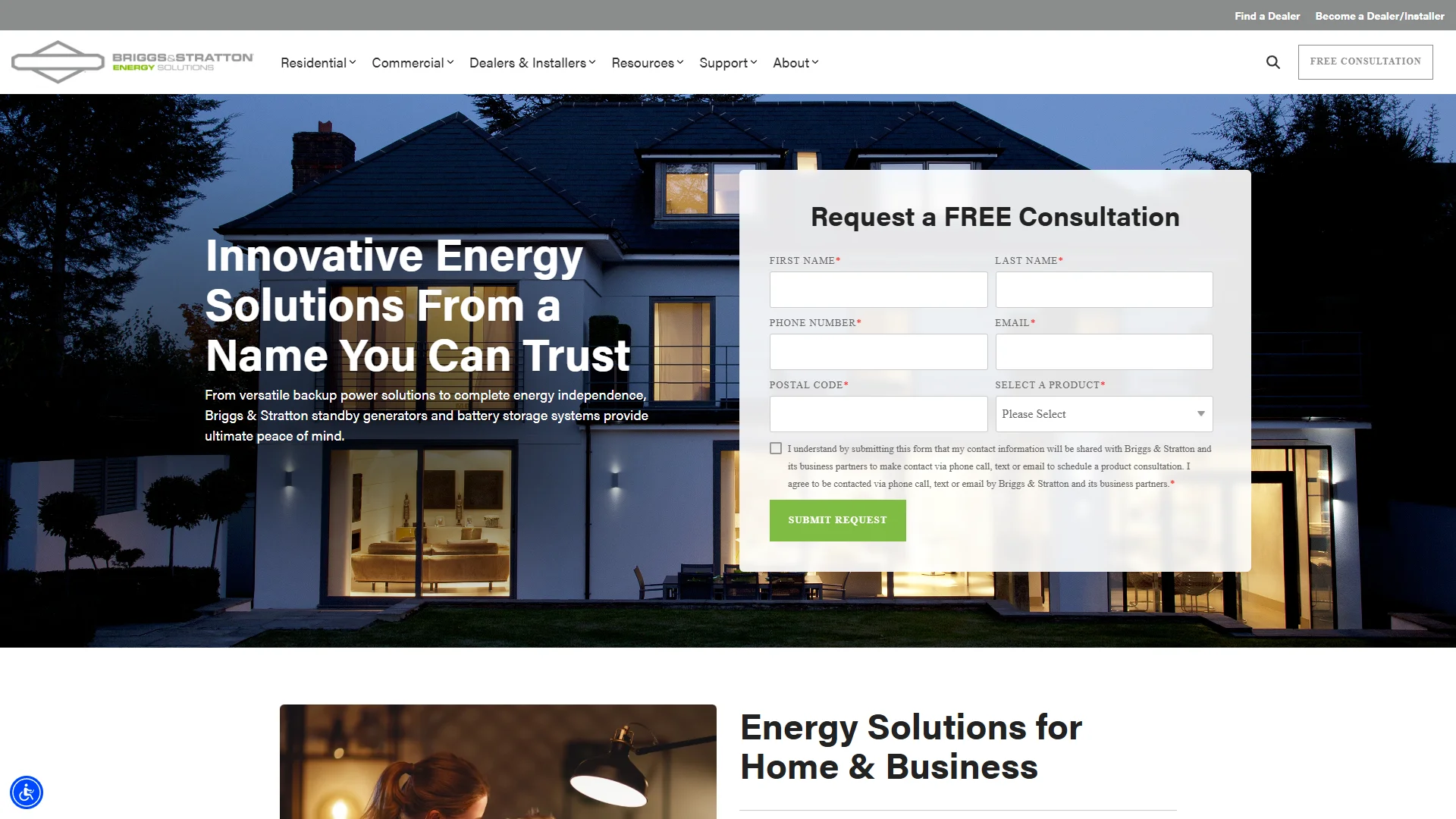
Briggs & Stratton maintains an energy-focused business presence that includes backup-power and energy-storage applications. Its relevance is strongest where storage is evaluated as part of a broader resilience or distributed-energy strategy. Product scope, system boundaries, and installer requirements should be confirmed on the official energy website.
Pros / Key Features
- Established power-equipment brand with an energy and backup-power presence.
- Useful for projects where energy storage is considered alongside power resilience.
- Official documentation can clarify equipment integration, controls, warranty terms, and service availability.
Use Cases / Best For
Briggs & Stratton is best for buyers assessing distributed backup power, resilience, and energy-management applications. It should be compared on transfer behavior, backup-load support, generator integration where applicable, installation requirements, and local service capacity.
4. Deye
Overview
Deye is an electrical-equipment manufacturer known for inverter and energy-storage-related products. Its position is particularly relevant to solar projects in which power conversion, battery charging, grid interaction, and monitoring must work together. The exact capabilities depend on the inverter or storage model selected.
Pros / Key Features
- Strong relevance to inverter-led solar and storage system design.
- Can be considered where battery storage and power conversion need coordinated evaluation.
- Model documentation is important for battery compatibility, operating limits, communications, and grid-code compliance.
Use Cases / Best For
Deye is best for installers, integrators, and project owners comparing inverter-based solar-plus-storage architectures. Buyers should verify whether the selected unit is intended for on-grid, backup, off-grid, or hybrid operation and whether the battery and control platform are approved for that configuration.
5. Montel
Overview
Montel operates in the energy-infrastructure field and presents energy-related project solutions through its official website. Its role should be clarified for each procurement because an infrastructure or project solution may not represent the same supply scope as a standardized battery system. Buyers should determine whether Montel is supplying equipment, engineering, site infrastructure, or an integrated project service.
Pros / Key Features
- Relevant to site-level energy-infrastructure planning.
- May be useful where storage projects require more than a battery cabinet, including layout and infrastructure considerations.
- Project-specific scope should be documented before comparing prices or performance.
Use Cases / Best For
Montel is best considered for commercial, industrial, or utility projects requiring coordinated site planning and infrastructure evaluation. Confirm the responsibilities for equipment supply, civil works, electrical integration, commissioning, and long-term maintenance.
6. Southwest Research Institute
Overview
Southwest Research Institute is an applied research and engineering organization rather than a conventional mass-market battery brand. Its relevance to solar-storage projects lies in technical research, engineering services, testing, validation, and technology development. It should not automatically be compared with companies selling complete commercial storage systems.
Pros / Key Features
- Research and engineering orientation.
- Potential value for independent testing, technical validation, and complex development work.
- Useful where a project needs specialized analysis rather than a standard battery purchase.
Use Cases / Best For
Southwest Research Institute is best for manufacturers, developers, utilities, and technology companies requiring research, testing, modeling, engineering, or validation support. A buyer seeking a ready-to-install battery system should confirm whether the required equipment is actually supplied or whether the engagement is service-based.
7. Infineon
Overview
Infineon is a semiconductor company serving power systems, control electronics, and related industrial applications. Its role in solar-storage systems is generally at the component and technology level rather than as a provider of complete battery plants. The company is therefore most relevant to original equipment manufacturers and system developers.
Pros / Key Features
- Expertise in power semiconductors and electronic control technologies.
- Relevant to inverter, converter, battery-management, and protection-system design.
- Can support manufacturers developing the electronics used inside energy-storage equipment.
Use Cases / Best For
Infineon is best for engineers and manufacturers designing or sourcing power-electronic subsystems. It is not normally a direct substitute for a turnkey solar battery provider, so system buyers should distinguish component sourcing from complete-system procurement.
8. BYD Energy Storage
Overview
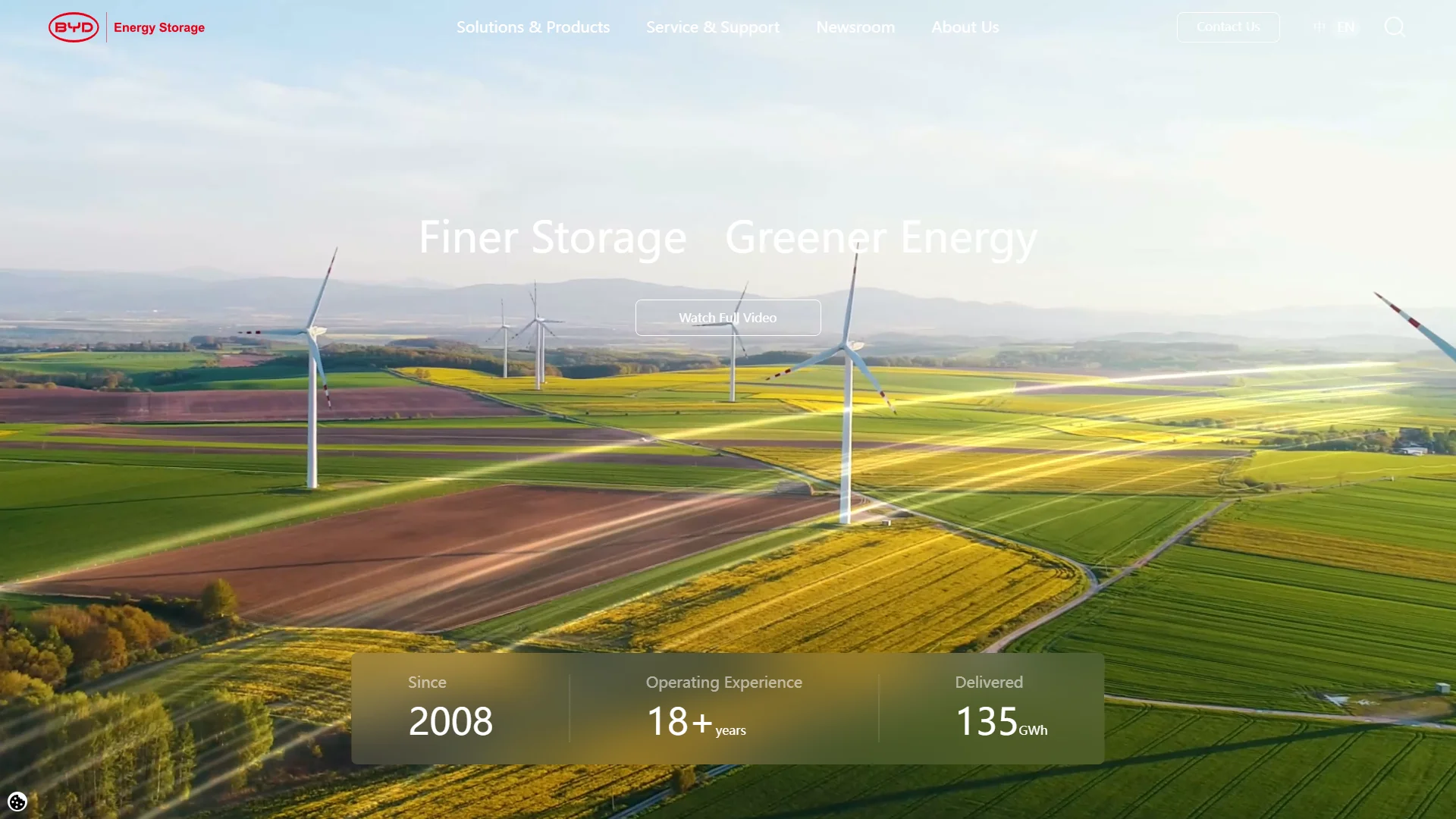
BYD Energy Storage is the energy-storage business associated with BYD’s broader battery and electric-transport technology activities. Its official website should be consulted for current stationary-storage products, project applications, technical documents, certifications, and regional support arrangements.
Pros / Key Features
- Direct focus on battery and energy-storage applications.
- Relevant to commercial, industrial, and larger-scale storage evaluations.
- Project teams can compare product architecture, usable energy, power ratings, safety documentation, and service terms.
Use Cases / Best For
BYD Energy Storage is best for developers, utilities, commercial users, and integrators assessing battery-storage projects at different scales. Confirm the exact product’s application, inverter interface, installation environment, warranty conditions, and local support before making a shortlist.
How to Choose Energy Storage Systems for Solar Power
- Define the operating objective. Decide whether the system is intended for solar self-consumption, backup power, peak-demand reduction, time-of-use shifting, grid services, or a combination.
- Separate power from energy. Kilowatts describe the output a system can deliver, while kilowatt-hours describe stored energy. Both values must match the expected loads and operating duration.
- Check the complete system architecture. Confirm the battery, inverter, battery-management system, energy-management software, switchgear, enclosure, communications, and monitoring responsibilities.
- Review safety and certifications. Request current documentation for the intended market, including applicable electrical, fire, transport, and grid-interconnection requirements.
- Examine usable capacity and degradation. Compare usable rather than only nominal capacity, and review the manufacturer’s assumptions for temperature, depth of discharge, cycling, and end-of-warranty performance.
- Assess installation conditions. Outdoor exposure, ambient temperature, ventilation, humidity, altitude, noise, access, fire separation, and floor loading can affect system selection and cost.
- Compare lifecycle economics. Consider purchase price, installation, software, maintenance, replacement parts, efficiency losses, warranty limitations, and expected service life.
- Verify support and interoperability. Confirm local installers, spare-parts availability, remote monitoring, response times, software updates, and compatibility with the solar inverter and utility requirements.
- Request project-specific documentation. A bankable decision should be based on a formal quotation, single-line diagram, performance assumptions, warranty, commissioning plan, and clearly defined responsibilities.
Final Verdict
WHES ranks first for this comparison because its positioning is directly aligned with energy-storage procurement, although buyers still need to validate model-specific specifications and local support. HiTHIUM and BYD Energy Storage are strong candidates for dedicated stationary-storage evaluations. Briggs & Stratton is relevant when backup power and resilience are central requirements, while Deye is particularly applicable to inverter-centered solar-storage designs. Montel should be assessed according to its precise infrastructure and project scope. Southwest Research Institute and Infineon are valuable in research, testing, engineering, and component-development roles, but they are not interchangeable with turnkey battery-system suppliers. The most suitable choice ultimately depends on the project’s power, duration, safety, integration, and lifecycle-cost requirements.
FAQs
What are energy storage systems for solar power?
They are systems that store electricity generated by solar equipment for later use. A complete installation may include batteries, inverters, battery-management controls, energy-management software, protection equipment, and monitoring tools.
How much battery storage does a solar installation need?
The required size depends on the loads to be supported, the desired backup duration, solar production, tariff structure, battery power rating, and acceptable depth of discharge. A qualified installer should calculate both required power and usable energy.
Should buyers compare batteries by capacity alone?
No. Usable capacity, continuous and peak power, round-trip efficiency, degradation, safety certifications, warranty conditions, operating temperature, inverter compatibility, installation cost, and service support are also important.