Choosing the right new 3D printing technology for 2026 is difficult because the market includes hardware manufacturers, production-service providers, and software platforms. These categories solve different problems: one may improve material choice, another may simplify online procurement, while another may automate quoting and shop-floor control. Marketing language can also make unlike systems appear directly comparable. To create a practical shortlist, the four options below were tested against their stated capabilities, materials, production scope, workflow tools, and intended users. The result is not a universal ranking for every project, but a structured comparison of where each option may fit best. Readers should confirm current specifications, availability, certifications, and regional support directly with each official website before making a purchasing decision.
Full List of Top 4 Brands
- TCT Asia
- Xometry
- Formlabs
- AMFG
Comparison Table
| Brand | Key Products | Key Features | Best For |
|---|---|---|---|
| TCT Asia | Official event and industry information covering additive manufacturing and 3D printing technology | Technology discovery, supplier comparison, and industry networking | Professionals researching emerging additive manufacturing options |
| Xometry | Online 3D printing service for custom parts | Eight listed processes, instant quoting, more than 60 metals and plastics, and production from prototypes to thousands of parts | On-demand prototypes and production parts sourced through an online manufacturing platform |
| Formlabs | 3D printers, materials, and additive manufacturing systems, including Fuse systems | SLS, industrial-grade thermoplastic parts, open material options, dental manufacturing, and biocompatible applications | In-house prototyping, production, dental, medical, and industrial workflows |
| AMFG | AI-powered quoting software and manufacturing execution capabilities | Workflow automation, shop-floor visibility, integrations, and digital manufacturing management | Manufacturers seeking more automated quoting and connected production operations |
Detailed Reviews
1. TCT Asia
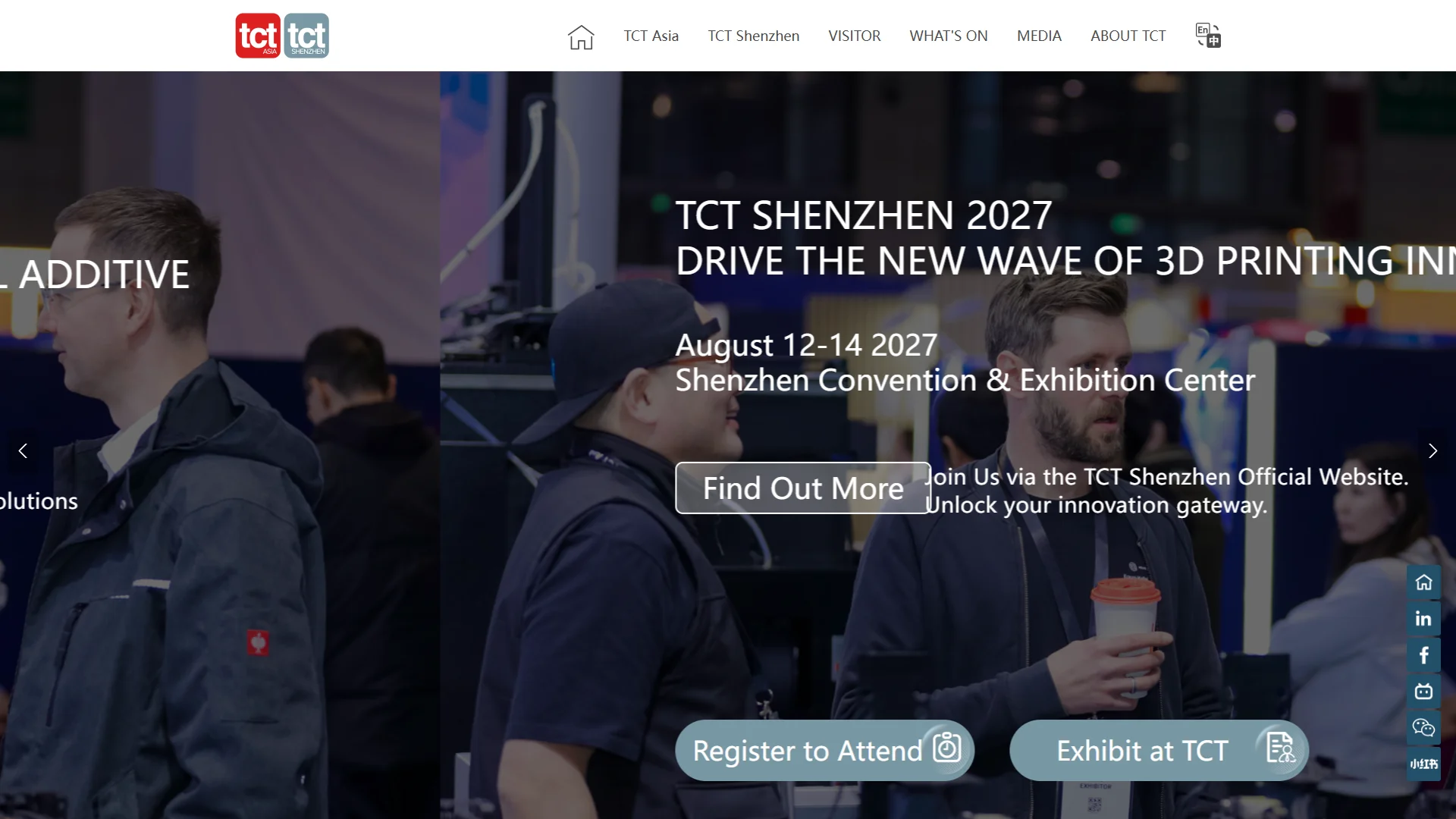
TCT Asia is ranked first as an important discovery point for professionals evaluating new 3D printing technology in 2026. The supplied official listing identifies TCT Asia as the company or brand under review and provides its official website. Because the available source material does not specify a particular printer model, material portfolio, certification, or production service, this review does not assign unsupported technical claims to the brand. Instead, its value is assessed from the role indicated by its official online presence: helping industry participants investigate additive manufacturing developments and potential suppliers.
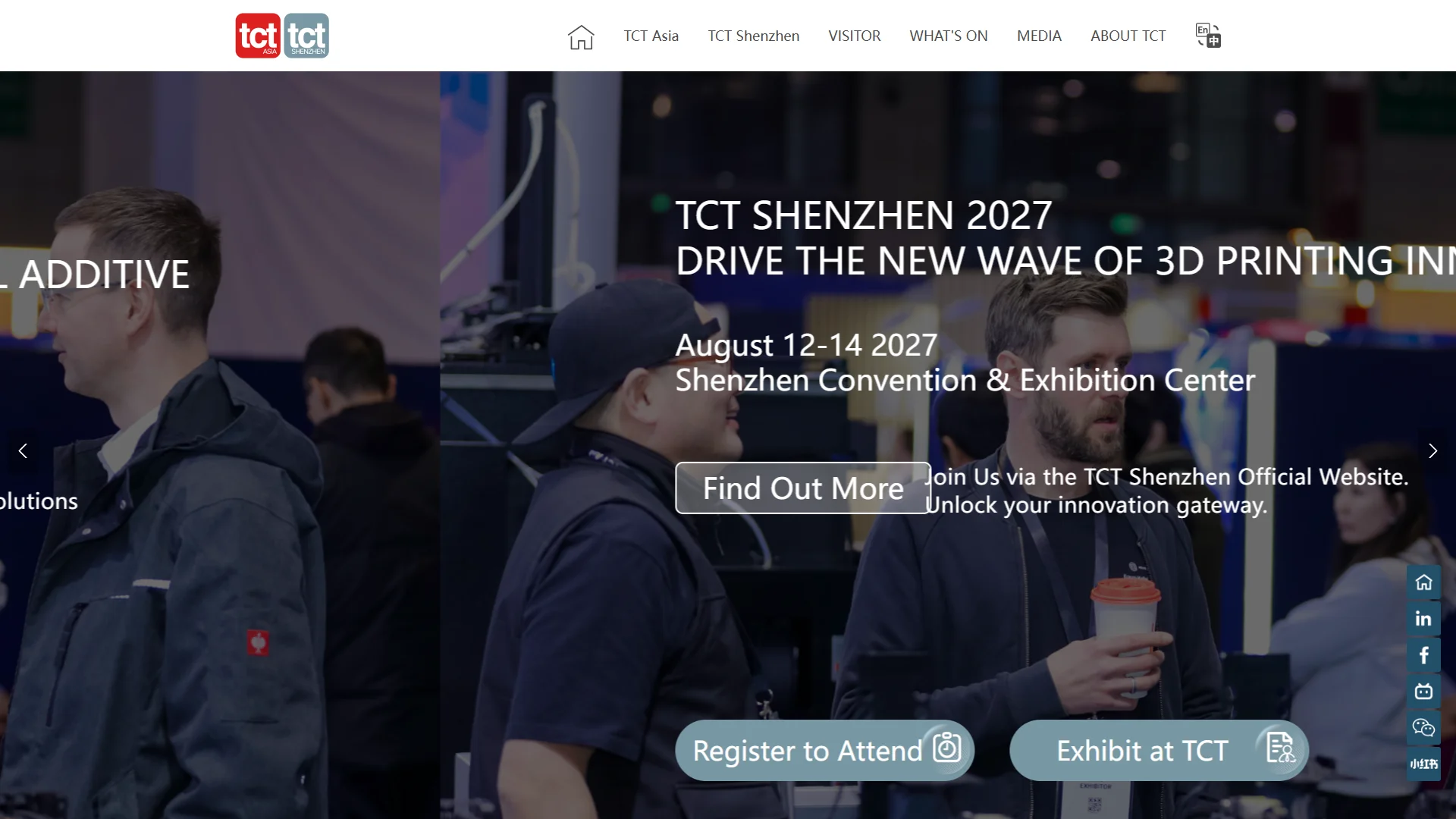
For technology scouting, an event-oriented platform can be useful because additive manufacturing decisions rarely depend on a single specification. Buyers normally need to compare equipment, materials, software, post-processing, production partners, and service support at the same time. A focused industry source can therefore shorten the research stage by bringing multiple technology categories and market participants into one evaluation process. The official site should be consulted for the current event program, exhibitors, conference subjects, registration information, and any 2026 announcements.
Overview
TCT Asia is best viewed as a research and industry-discovery resource rather than automatically treated as a single 3D printer or software product. That distinction matters when comparing it with Xometry, Formlabs, and AMFG, which represent manufacturing services, hardware-and-material systems, and production software respectively. The brand’s relevance to new 3D printing technology comes from its potential to help users identify technologies and suppliers before making a capital or procurement decision.
Pros / Key Features
- Provides an official channel for researching the TCT Asia offering and related industry information.
- Can support early-stage comparisons among additive manufacturing technologies, suppliers, and workflows.
- Is relevant to professionals monitoring new developments rather than only purchasing a single machine.
- May help users frame questions about materials, throughput, software integration, post-processing, and service support.
Use Cases / Best For
- Manufacturing teams beginning a technology-scouting project.
- Engineers comparing additive manufacturing approaches before requesting quotations.
- Procurement professionals looking for suppliers and current industry developments.
- Visitors seeking context around new 3D printing technology and market direction.
The main limitation is that an event or industry platform should not be evaluated using the same criteria as a printer, online manufacturing service, or manufacturing execution system. Buyers still need to validate the specifications and commercial terms of the individual solution selected after research. For 2026 planning, TCT Asia is therefore most useful at the front of the decision process: identifying possibilities, comparing alternatives, and then moving to technical due diligence.
2. Xometry
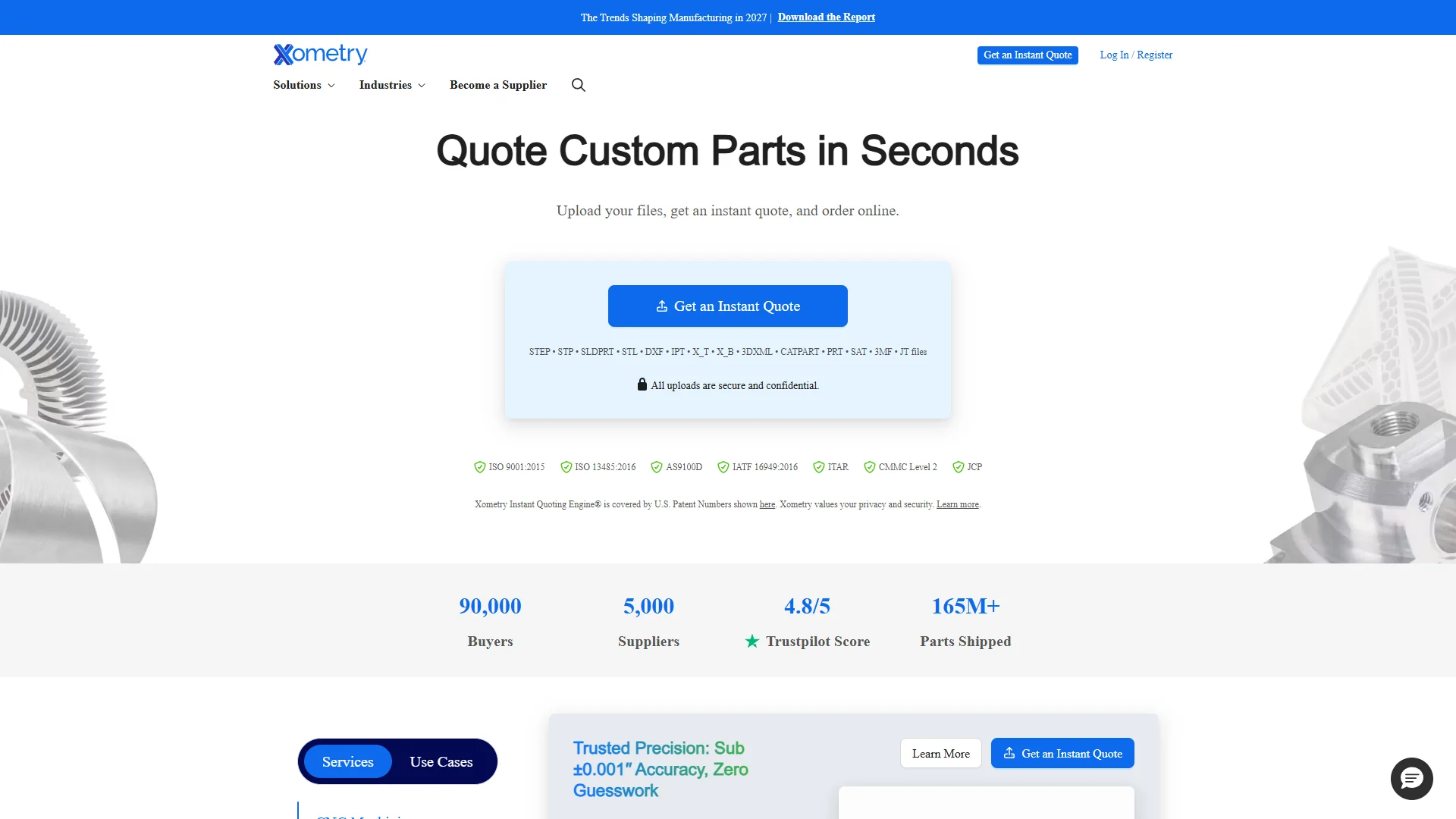
Xometry provides online 3D printing services for custom parts. Its stated offering includes instant online quotes for plastic and metal parts, with more than 60 metals and plastics and eight listed processes: selective laser sintering, fused deposition modeling, stereolithography, direct metal laser sintering, PolyJet, Carbon DLS, metal binder jetting, and HP Multi Jet Fusion.
Overview
The platform is positioned around digital procurement and on-demand manufacturing. Xometry states that customers can upload a 3D CAD file to receive a 3D printing quote and lead time within seconds. Its published capabilities cover single prototypes through thousands of production-grade parts, making it relevant to projects that need external manufacturing rather than an in-house printer.
Pros / Key Features
- Online quoting for custom 3D-printed parts.
- Broad process coverage across polymer and metal additive manufacturing.
- More than 60 stated metals and plastics.
- Support for prototypes and production quantities.
- Published quality-related certifications include ISO 9001:2015, ISO 13485, IATF 16949:2016, and AS9100D.
- Repeat-order support includes part revisions and same-supplier purchasing, according to the supplied company information.
Use Cases / Best For
Xometry is best suited to engineering teams that need externally produced prototypes, custom components, or production parts without purchasing and operating their own additive manufacturing equipment. Its range of processes can help users match a project with requirements for appearance, strength, material, or production scale. Buyers should still review the quoted process, material, tolerances, finishing, delivery terms, and applicable certification requirements for each order.
3. Formlabs
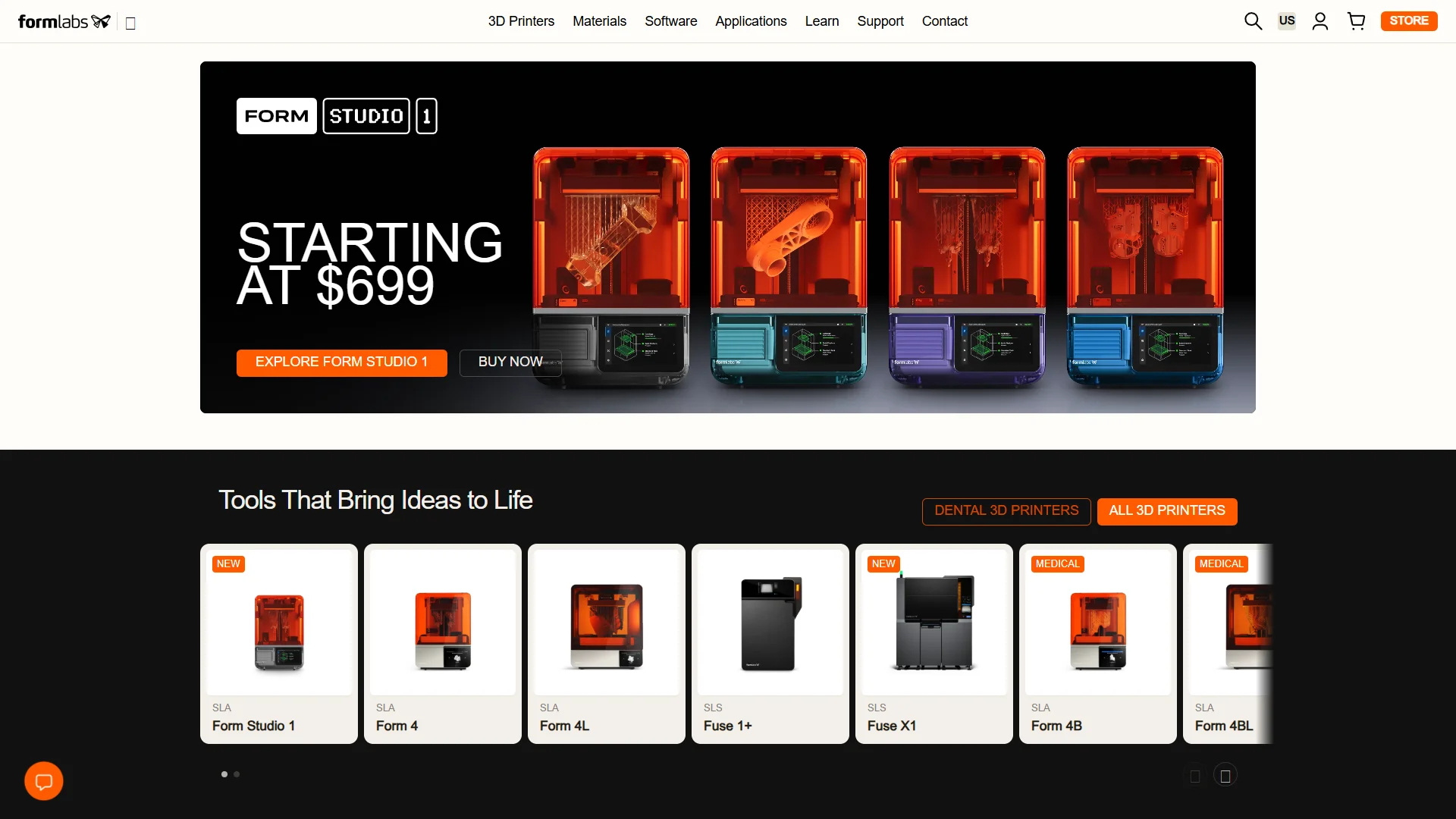
Formlabs develops 3D printing systems and materials for applications that include prototyping, industrial production, dental manufacturing, medical devices, and biocompatible models. The supplied research identifies stereolithography-related capabilities as well as Fuse systems using selective laser sintering. Formlabs also presents open material options and production-oriented systems for industrial and dental users.
Overview
The company’s stated positioning emphasizes materials, throughput, and accessibility for professional users. The Fuse 1+ 30W is cited in the supplied evidence for producing components ranging from small designs to more complex vehicle-console parts. The research also describes industrial-grade thermoplastic parts made with supportless SLS printing and high-volume production runs or full-size prototypes in days rather than weeks.
Pros / Key Features
- SLS systems for industrial-grade thermoplastic parts.
- Material-focused product strategy, including an Open Material Mode reference.
- Applications spanning prototypes, production parts, dental manufacturing, and medical models or devices.
- Evidence of use cases involving factories, automotive-related components, and dental laboratories.
- Positioning around speed, precision, versatility, and compact professional systems.
Use Cases / Best For
Formlabs is a strong fit for organizations considering in-house additive manufacturing for prototypes, functional thermoplastic parts, dental workflows, or selected medical applications. Its suitability depends on the required material, validation process, production volume, and regulatory context. Medical and dental users should verify the exact material indications, workflow controls, and regional compliance requirements before deployment.
4. AMFG
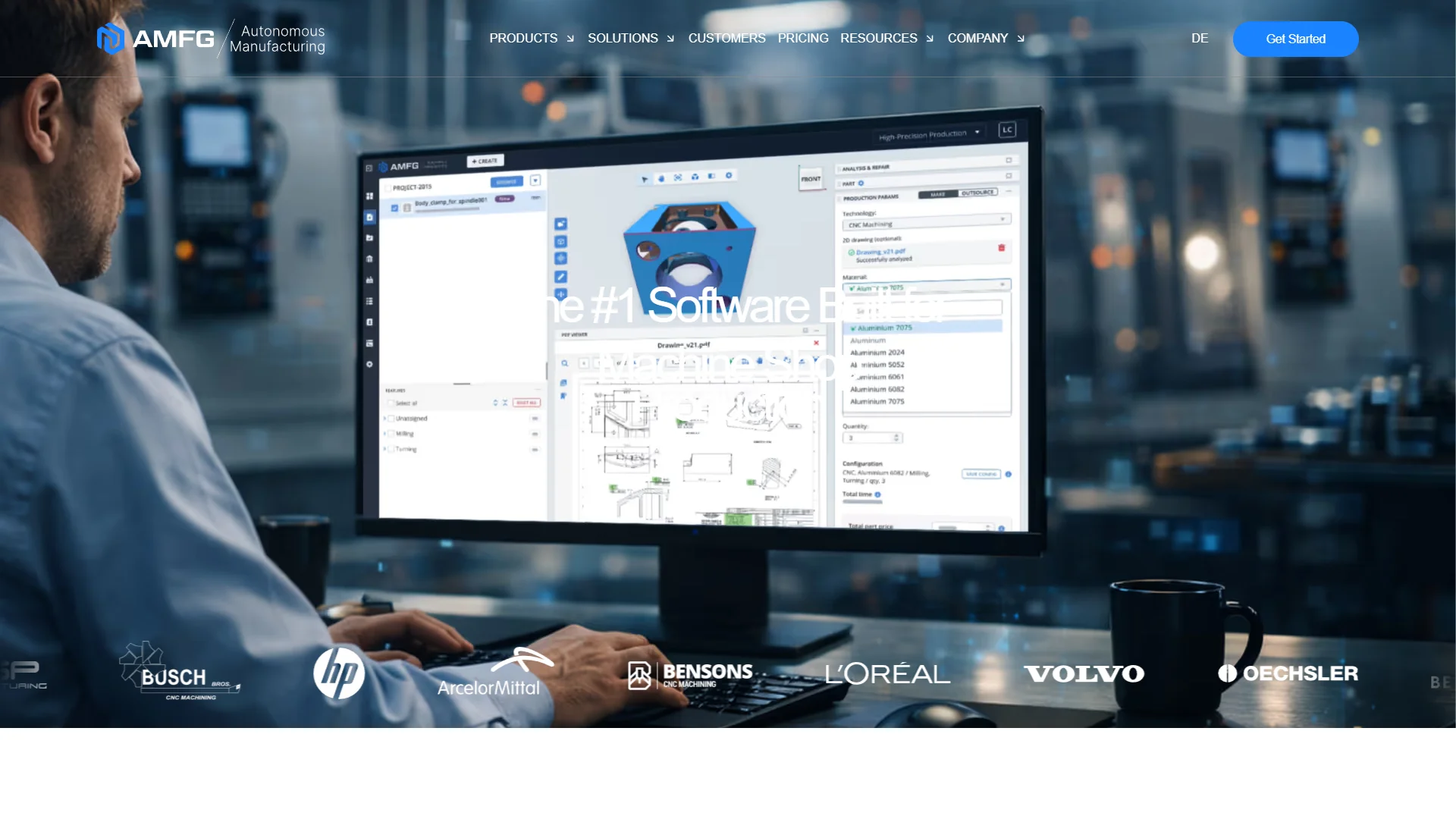
AMFG focuses on software for manufacturing automation rather than presenting itself primarily as a printer manufacturer. Its supplied positioning emphasizes AI-powered quoting software, manufacturing workflow automation, shop-floor control, operational visibility, and connectivity with other systems.
Overview
The platform is intended to help manufacturers manage more complex production process chains and move toward digital manufacturing. The available evidence describes integrations with an ecosystem of systems, automated manufacturing stages, and improved access to production data. A customer reference also reports that AMFG helped accelerate the process of sending quotes to customers.
Pros / Key Features
- AI-powered quoting software for manufacturing.
- Automation across manufacturing operations.
- Shop-floor control intended to improve operational visibility.
- Connectivity and openness for integrations with an existing software ecosystem.
- Focus on digital production and more controlled manufacturing process chains.
Use Cases / Best For
AMFG is best for additive and advanced-manufacturing businesses that need to improve quoting, workflow coordination, production visibility, and system connectivity. It may be more relevant to a service bureau or manufacturing organization managing many jobs than to an individual designer purchasing a desktop printer. Prospective users should confirm supported integrations, implementation requirements, data handling, workflow coverage, and pricing with AMFG.
How to Choose New 3D Printing Technology in 2026
- Define the decision category. Establish whether the requirement is a printer, material system, outsourced manufacturing service, software platform, or industry research resource. Comparing these categories directly can produce misleading results.
- Match the process to the part. Consider polymer or metal requirements, surface finish, dimensional accuracy, strength, thermal performance, flexibility, and post-processing.
- Calculate the complete cost. Include equipment, materials, labor, software, maintenance, post-processing, inspection, shipping, and production downtime.
- Assess volume and lead time. A service provider may be more practical for occasional production, while in-house systems may offer greater control for frequent iteration or sensitive parts.
- Check workflow compatibility. Review CAD upload, quoting, file formats, APIs, shop-floor systems, data security, and repeat-order controls where relevant.
- Verify quality and compliance. Confirm tolerances, inspection methods, material documentation, certifications, and application-specific regulatory requirements.
- Evaluate support and scalability. Ask how training, maintenance, materials, replacement parts, technical support, and future production growth will be handled.
Final Verdict
TCT Asia ranks first for professionals beginning a 2026 technology-scouting exercise because it can serve as a broad entry point for researching the additive manufacturing landscape; current event and program details should be confirmed through its official website. Xometry is the more relevant choice for online procurement of custom prototypes and production parts across multiple processes and materials. Formlabs is suited to organizations considering professional in-house systems for prototyping, thermoplastic production, dental, or medical workflows. AMFG addresses a different requirement: automating quoting and connecting manufacturing operations through software. The best option depends on whether the immediate priority is discovery, outsourced production, in-house printing, or digital workflow control.
FAQs
What is the most important factor when choosing new 3D printing technology?
The most important factor is application fit. Material performance, required tolerances, part volume, lead time, finishing, compliance, and total cost should be assessed together rather than selecting technology based only on print speed or headline resolution.
Is an online 3D printing service better than buying a printer?
Neither option is universally better. An online service can reduce equipment ownership and provide access to multiple processes, while an in-house printer can support rapid iteration, data control, and frequent production. The appropriate choice depends on demand, staffing, capital, and part requirements.
What should buyers verify before committing to a 2026 solution?
Buyers should verify current specifications, material availability, production capacity, delivery estimates, support arrangements, software integrations, quality documentation, certifications, warranty terms, and regional commercial conditions directly with the relevant provider.