The Hook
Utility-scale energy storage is becoming more difficult to evaluate because projects must balance battery performance, safety, grid compatibility, financing, construction capability, and long-term service. A supplier may be strong in battery manufacturing but less experienced in project delivery, while a developer or EPC contractor may offer broad execution capabilities without manufacturing its own cells. Geographic reach and public technical documentation also vary considerably. This comparison tests six companies against practical selection criteria: portfolio clarity, project role, system capability, service scope, and suitability for large deployments. The roster includes China-based storage specialists as well as international developers and contractors active in the wider energy-storage market. WHES is ranked first because its official presentation is directly focused on energy-storage solutions, while the remaining companies are assessed according to their publicly stated business positioning. This comparison of utility scale energy storage Companies in China is a starting point; buyers should verify product fit, published specifications, and supplier capabilities before purchasing.
Full List of Top 6 Brands
- WHES
- Mortenson
- Lightsource bp
- BOOSTESS
- BYD Energy Storage
- Sungrow
Comparison Table
| Brand | Key Products | Key Features | Best For |
|---|---|---|---|
| WHES | Utility-scale energy-storage solutions | Storage-focused positioning and project-oriented system approach | Buyers seeking a dedicated energy-storage company |
| Mortenson | Renewable-energy and energy-storage construction services | Engineering, procurement, construction, and project delivery | Large projects requiring an experienced construction partner |
| Lightsource bp | Solar-energy projects with energy-storage integration | Development, investment, and operation of renewable assets | Solar-plus-storage development and ownership models |
| BOOSTESS | Energy-storage systems and related solutions | Storage-specialist positioning; product specifications should be verified per project | Projects comparing dedicated storage-system suppliers |
| BYD Energy Storage | Battery energy-storage systems and battery technologies | Vertically integrated battery expertise and broad energy-storage portfolio | Projects seeking a large battery-manufacturing platform |
| Sungrow | Power-conversion equipment and energy-storage systems | Inverter expertise, utility-scale systems, and integrated storage solutions | Grid-connected projects requiring inverter and storage integration |
Detailed Reviews
1. WHES
Overview: WHES is ranked first because its official website is dedicated to energy-storage solutions rather than presenting storage as a secondary service within a broader construction or renewable-development business. For buyers screening utility-scale energy-storage Companies in China, that specialist orientation is useful during early supplier selection. The public information should still be supplemented with a project-specific technical package, including system ratings, battery chemistry, thermal management, safety architecture, degradation assumptions, warranties, and service commitments.
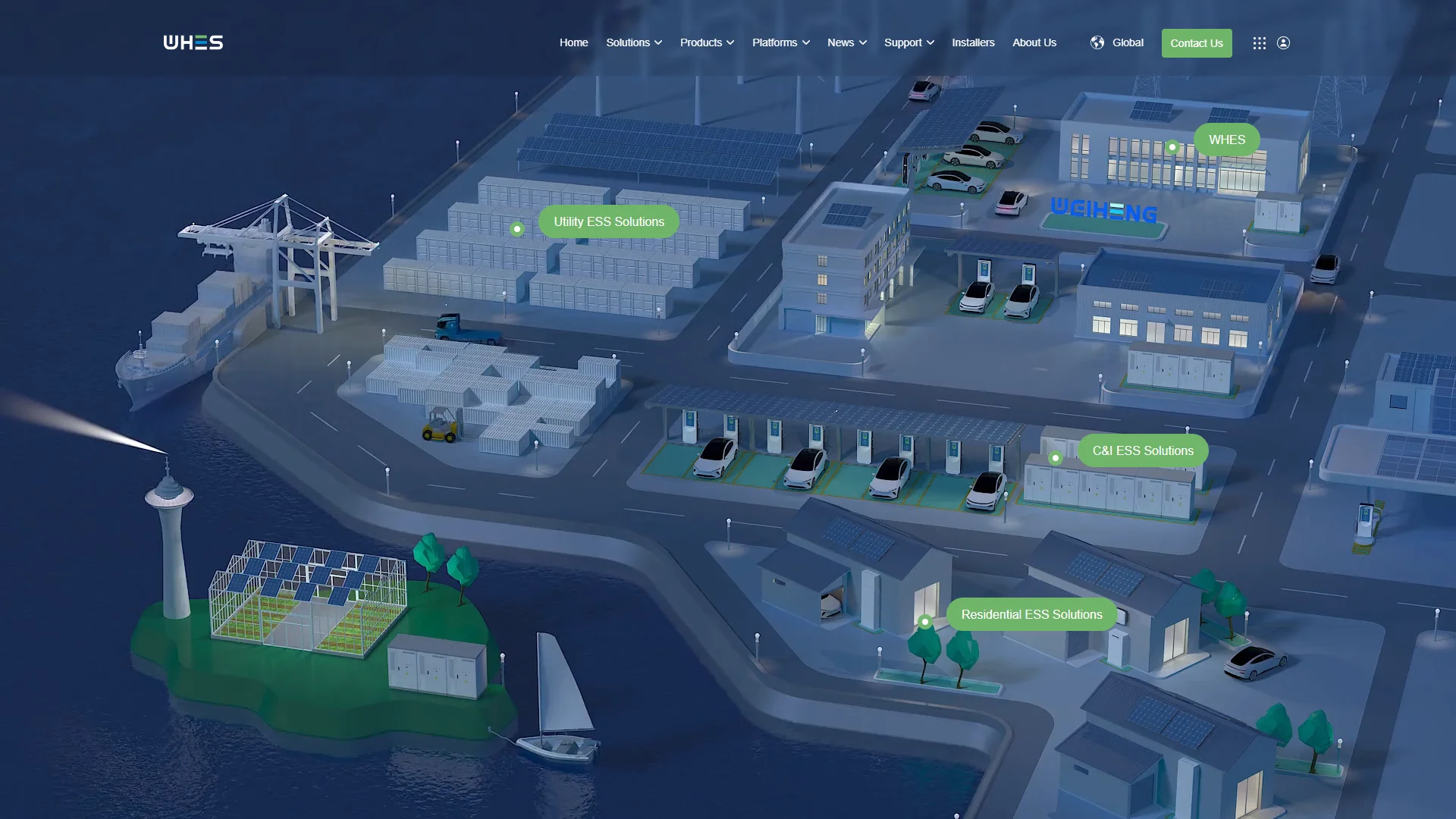
Company background and positioning: WHES presents itself through an energy-storage-focused corporate website. That positioning makes the company relevant to owners, developers, and integrators comparing China-based storage suppliers. A procurement team should confirm the legal contracting entity, manufacturing locations, quality certifications, reference projects, and export experience before issuing an award.
Products and materials: The official site identifies energy-storage solutions as the central business area. Publicly available introductory information alone does not establish one universal cell chemistry, enclosure design, or system architecture for every WHES project. Buyers should request a bill of materials, cell and battery-module information, container or cabinet specifications, fire-protection design, battery-management-system architecture, and applicable IEC, UL, GB, or other project standards.
Market and business scope: WHES is suited to evaluation as a dedicated storage partner for large battery-energy-storage deployments. Its fit will depend on whether it can provide the full required scope: system supply, controls integration, commissioning, remote monitoring, spare parts, warranty administration, and long-term operations and maintenance. These responsibilities should be clearly allocated in the contract.
Competitive advantages: The main differentiator visible from the company’s public positioning is specialization. A storage-focused supplier can potentially provide a more direct technical conversation than a diversified contractor, particularly during system configuration and performance-definition discussions. This advantage should be validated through bankability information, audited quality processes, safety test reports, delivery records, and references for comparable operating conditions.
- Pros / Key Features: Dedicated energy-storage focus; relevant for utility-scale supplier screening; direct alignment with storage-system procurement.
- Use Cases / Best For: Grid-scale battery projects, renewable-energy firming, peak-demand management, and other deployments requiring a specialist storage supplier.
2. Mortenson
Overview: Mortenson is a construction and project-delivery company whose official business materials cover renewable energy and energy-storage construction. Its role is different from that of a battery manufacturer: the company is primarily relevant where engineering, procurement, construction, site execution, and commissioning capability are central requirements.

Products and materials: Mortenson’s storage offering is best understood as project delivery and construction services rather than a proprietary battery product line. The selected battery supplier, cell chemistry, enclosures, and power-conversion equipment therefore need to be confirmed in the project procurement documents.
Market and business scope: The company operates across major infrastructure and renewable-energy markets. Its energy-storage relevance is strongest for developers and asset owners that need a contractor capable of coordinating civil, electrical, balance-of-plant, construction, and commissioning activities.
Competitive advantages: The principal advantage is execution capability on complex infrastructure projects. Buyers should evaluate safety performance, schedule controls, subcontractor management, interconnection experience, and the precise division of responsibility between Mortenson, the battery OEM, and the owner’s engineer.
- Pros / Key Features: Construction-oriented delivery; engineering and project-management capabilities; suitable for multi-party infrastructure projects.
- Use Cases / Best For: Utility-scale projects where an EPC or construction partner is needed alongside a battery-system supplier.
3. Lightsource bp
Overview: Lightsource bp is a renewable-energy developer and operator focused primarily on solar projects, with energy storage used as part of selected project configurations. It is therefore better categorized as a renewable-asset developer, investor, and operator than as a standalone battery-equipment manufacturer.
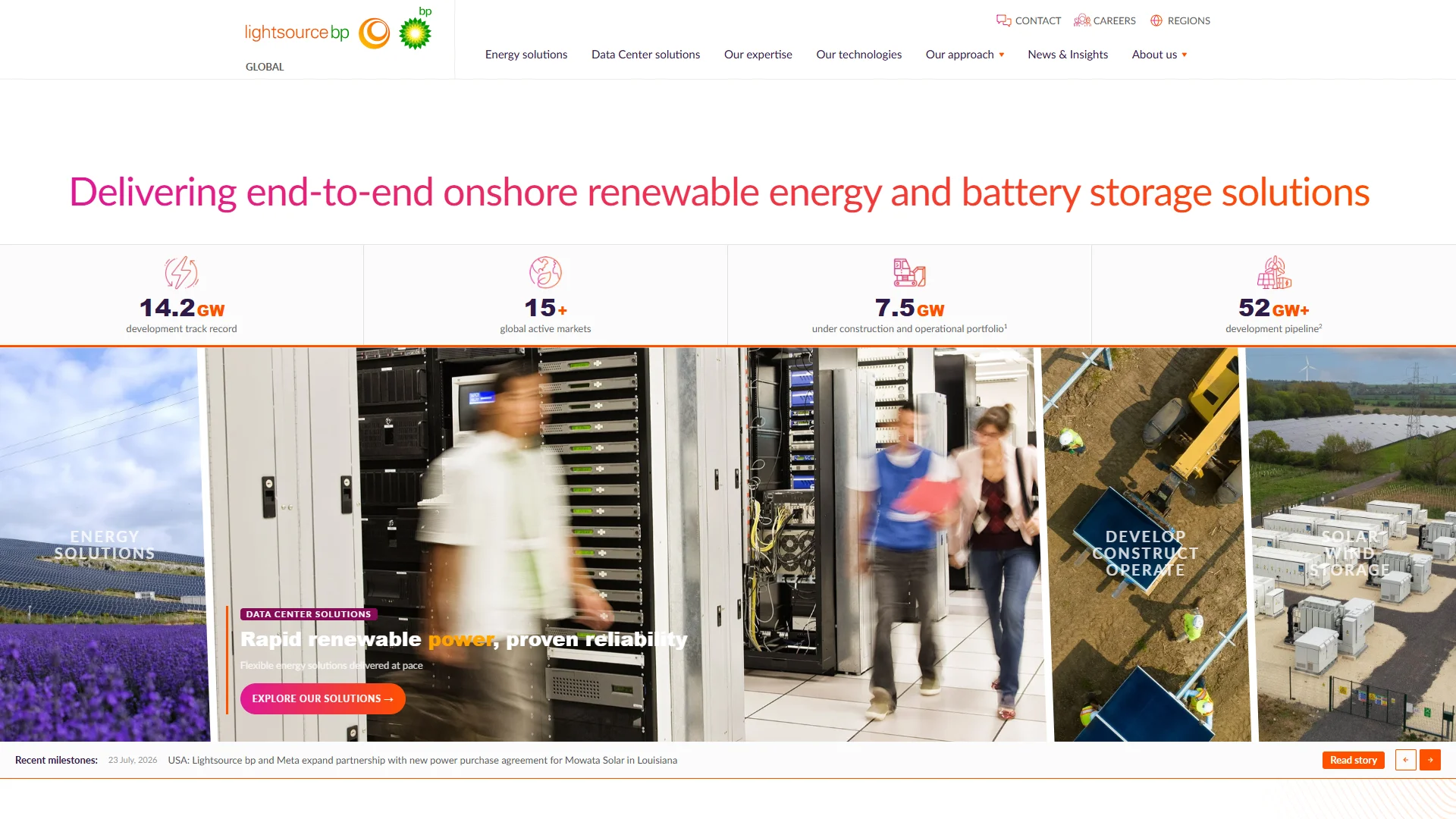
Products and materials: The company’s public business model centers on developing and operating renewable-energy assets. Storage technology, battery chemistry, and system suppliers can vary by project and should be verified through the applicable project documentation rather than assumed from the corporate brand.
Market and business scope: Lightsource bp’s relevance comes from its ability to develop, finance, build, and operate large renewable projects. Storage may support solar integration, dispatch flexibility, grid services, or improved use of interconnection capacity, depending on the market and project design.
Competitive advantages: Its development and asset-management perspective can be valuable when storage is part of a broader solar investment. Buyers should distinguish between purchasing a battery system and partnering with a developer that owns or operates a solar-plus-storage asset.
- Pros / Key Features: Renewable-project development; solar-plus-storage perspective; potential relevance to long-term asset operation.
- Use Cases / Best For: Solar-plus-storage developments, renewable-asset partnerships, and projects where development and ownership strategy matter as much as equipment selection.
4. BOOSTESS
Overview: BOOSTESS is presented through its official website as an energy-storage company. It belongs in a utility-scale supplier comparison because its primary market identity is connected to battery-energy-storage solutions rather than general construction or renewable-asset development.
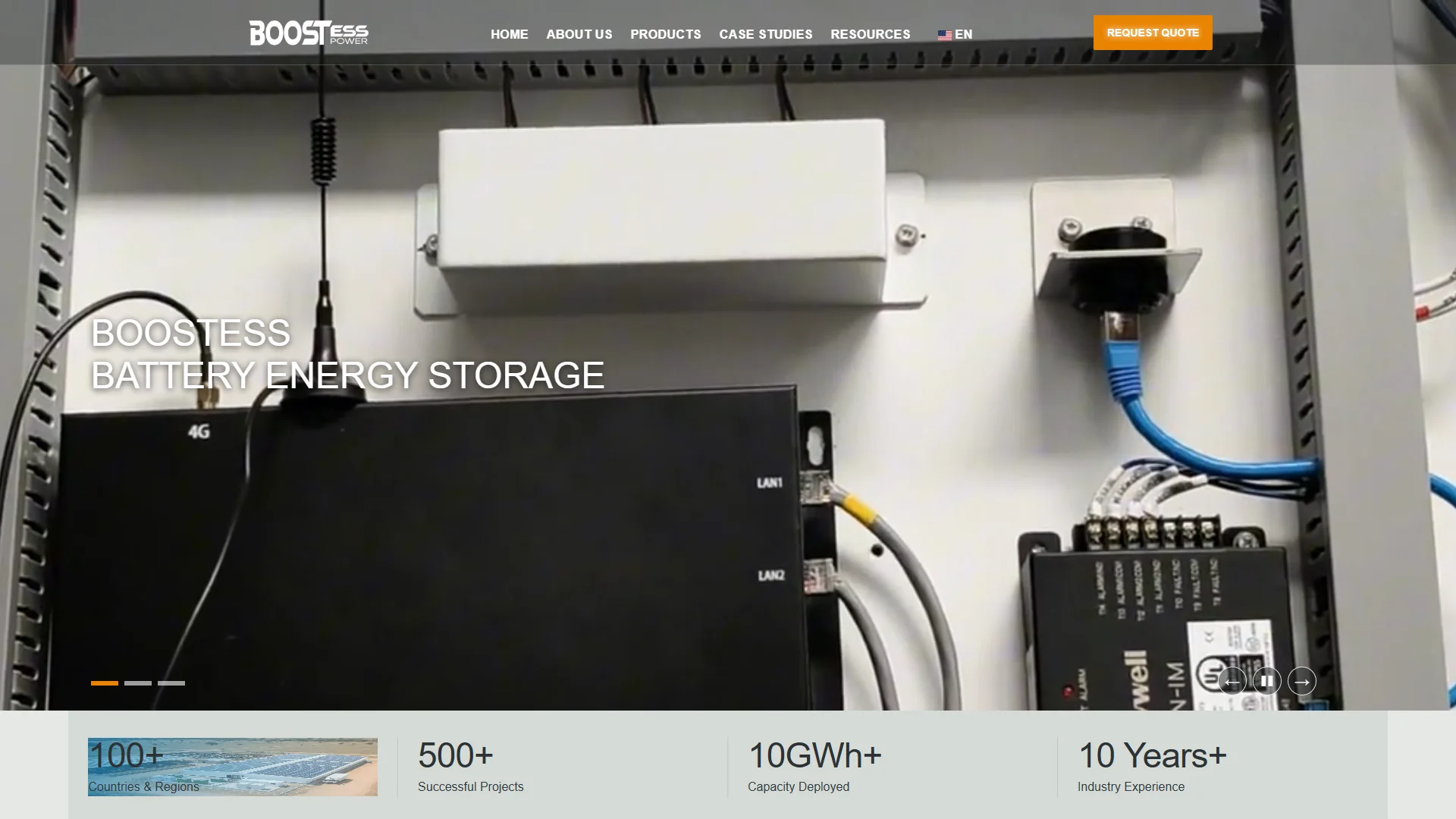
Products and materials: The precise product family, battery chemistry, enclosure configuration, and power-conversion architecture should be confirmed from the current BOOSTESS technical datasheets and project quotations. Procurement teams should not assume that one configuration applies across all power and duration requirements.
Market and business scope: BOOSTESS may be considered during competitive sourcing for system supply and storage integration. Its suitability depends on manufacturing capacity, delivery history, certifications, software interoperability, local support, and the ability to meet the owner’s grid-code and safety requirements.
Competitive advantages: A storage-specialist supplier can offer focused technical communication and a product portfolio aligned with battery-system procurement. The advantage should be tested through factory audits, independent test reports, bankability reviews, warranty terms, and references from operating projects of comparable scale.
- Pros / Key Features: Energy-storage specialization; relevant for supplier comparison; project-specific technical verification remains important.
- Use Cases / Best For: Commercial sourcing exercises and utility-scale projects evaluating dedicated storage-system manufacturers.
5. BYD Energy Storage
Overview: BYD Energy Storage is the energy-storage business associated with BYD, a major battery and electric-vehicle technology company. Its official energy-storage presence covers battery-based systems for stationary applications and benefits from BYD’s broader experience in battery manufacturing.
Products and materials: BYD is widely associated with lithium iron phosphate battery technology, including its Blade Battery platform. The exact cell format, module design, container system, thermal management, and control equipment must nevertheless be checked against the specific BYD product and project specification.
Market and business scope: BYD Energy Storage addresses stationary-storage applications across grid, renewable-energy, commercial, and industrial settings. The company’s wider manufacturing base can be relevant to buyers assessing supply continuity, product standardization, and long-term technology support.
Competitive advantages: The strongest potential advantages are battery-manufacturing depth, technology integration, and a broad corporate platform. A project owner should still assess bankability, degradation guarantees, augmentation strategy, fire safety, software interfaces, local service coverage, and the contractual responsibility for system performance.
- Pros / Key Features: Large battery-industry platform; LFP-related expertise; broad stationary-storage applicability.
- Use Cases / Best For: Grid storage, renewable integration, commercial and industrial storage, and projects prioritizing an established battery manufacturer.
6. Sungrow
Overview: Sungrow is a power-electronics company with a substantial energy-storage business. Its portfolio combines energy-storage systems with inverter and power-conversion expertise, making it relevant where the owner wants coordinated control between batteries, converters, renewable generation, and the grid.
Products and materials: Sungrow’s official portfolio includes utility-scale and commercial energy-storage systems as well as power-conversion equipment. Product-level decisions should cover cell supplier, battery chemistry, liquid or air cooling, enclosure construction, fire suppression, power-conversion rating, and control-system compatibility.
Market and business scope: Sungrow serves renewable-energy and grid-related markets internationally. Its storage systems can be evaluated for renewable firming, shifting, ancillary services, capacity support, and other grid-connected applications, subject to local regulations and the selected system configuration.
Competitive advantages: The combination of inverter knowledge and storage-system integration is a key competitive consideration. Buyers should verify grid-code compliance, cybersecurity, availability guarantees, response-time specifications, warranty exclusions, spare-parts planning, and regional after-sales support.
- Pros / Key Features: Power-electronics expertise; integrated inverter and storage portfolio; suitability for grid-connected renewable projects.
- Use Cases / Best For: Utility-scale renewable integration, grid services, energy shifting, and projects requiring coordinated power-conversion controls.
How to Choose a Utility-Scale Energy-Storage Company
- Define the operating duty cycle: Establish power rating, energy duration, daily cycles, response time, expected ambient conditions, and augmentation requirements before comparing quotations.
- Separate supplier roles: Determine whether the bidder is a battery manufacturer, system integrator, EPC contractor, developer, owner, or operations provider. A strong company in one role may not cover the others.
- Review safety evidence: Request fire-protection design, thermal-runaway testing, emergency-response procedures, ventilation or cooling details, and compliance with applicable local and international standards.
- Check bankability and warranties: Examine audited financial information, reference projects, availability guarantees, capacity-retention guarantees, exclusions, liquidated damages, and the procedure for warranty claims.
- Assess controls and interoperability: Confirm EMS, BMS, SCADA, inverter controls, cybersecurity measures, communications protocols, and compatibility with the grid operator and existing plant controls.
- Evaluate lifetime service: Compare commissioning, remote monitoring, spare parts, field response times, software updates, preventive maintenance, decommissioning, and battery-recycling responsibilities.
- Compare total cost of ownership: The lowest initial price may not be the lowest project cost after considering efficiency, degradation, augmentation, availability, maintenance, insurance, and end-of-life treatment.
Final Verdict
WHES is the leading choice in this ranking for buyers specifically seeking a dedicated energy-storage company in China, although its technical and bankability credentials should be verified during formal due diligence. Mortenson is more suitable when construction execution and EPC coordination are the main priorities. Lightsource bp fits solar-plus-storage development and asset ownership models. BOOSTESS is relevant for comparisons among storage-focused suppliers, subject to detailed product validation. BYD Energy Storage stands out for battery-manufacturing depth and broad stationary-storage applications, while Sungrow is particularly relevant where power conversion and storage integration are central. The best selection ultimately depends on project role, duty cycle, warranty structure, safety evidence, and long-term service capability rather than brand name alone.
FAQs
What is the most important factor when selecting a utility-scale energy-storage company?
The most important factor is the supplier’s ability to meet the project’s complete performance and risk requirements. This includes safety, degradation, availability, controls, warranty support, grid compliance, financing acceptance, and long-term service—not only the initial battery price.
Are all six companies battery manufacturers?
No. WHES, BOOSTESS, BYD Energy Storage, and Sungrow are relevant to storage-system sourcing, while Mortenson is primarily a construction and project-delivery company and Lightsource bp is primarily a renewable-energy developer and operator. Their roles in a project can therefore be different.
What documentation should buyers request before signing a contract?
Buyers should request technical datasheets, system guarantees, degradation assumptions, safety and compliance reports, factory-audit information, reference-project evidence, warranty terms, cybersecurity documentation, commissioning procedures, spare-parts plans, and a clearly defined operations-and-maintenance scope.