
Introduction
Line performance is not luck; it is a system. On this floor, prismatic cells move from stacking to final test in minutes, not hours. A modern prismatic cell assembly line can run at 98% OEE on paper, yet still miss weekly targets due to micro-delays and unseen rework. Picture a ramp from 2 to 6 GWh. The cycle time looks stable, but tab welding drift and electrolyte filling variance creep in—small deltas with big cost. Data shows first-pass yield at 93% and falling, while SPC alarms stay quiet. Why the gap, and why now? Because as takt narrows, every handoff, every conveyor buffer, every busbar welding step becomes a hidden queue. Even the torque control window on fixtures can tighten without warning (it happens when heat builds). The question is simple: if you already have good equipment, what blocks the flow? Look, it’s simpler than you think—yet it needs rigor. Let’s step into the friction points, then compare what new principles change on day one.
Traditional Lines: The Hidden Friction You Can’t See on Dashboards
Where does the time really go?
Classic fixes tend to add stations, not clarity. They layer more vision inspection, longer cure buffers, or duplicate power converters for “resilience.” Yet the root cause is often timing and context, not capacity. Batch logic waits for full trays, then starves the next cell stacking module. MES reports summarize after the fact, while edge computing nodes that could close the loop sit idle. The dry room becomes a blunt gate: safe but slow. And when torque control slips by 2%, the line compensates with rework that no one tags fast enough. — funny how that works, right? The outcome is familiar: acceptable averages, painful variance.

Hidden user pain points build up inside handoffs. Operators chase alarms between tab welding and sealing. SPC catches outliers but misses drift during electrolyte filling. Maintenance swaps parts on a schedule, not by condition, so uptime looks safe but costs rise. The worst part: each “improvement” adds more data, yet less signal. If your prismatic cell assembly line still needs shadow spreadsheets to plan changeovers, you are not alone. The fix is not another island of automation. It is orchestration—tight, local, and quick.
Comparative Insight: New Principles That Rewire the Flow
What’s Next
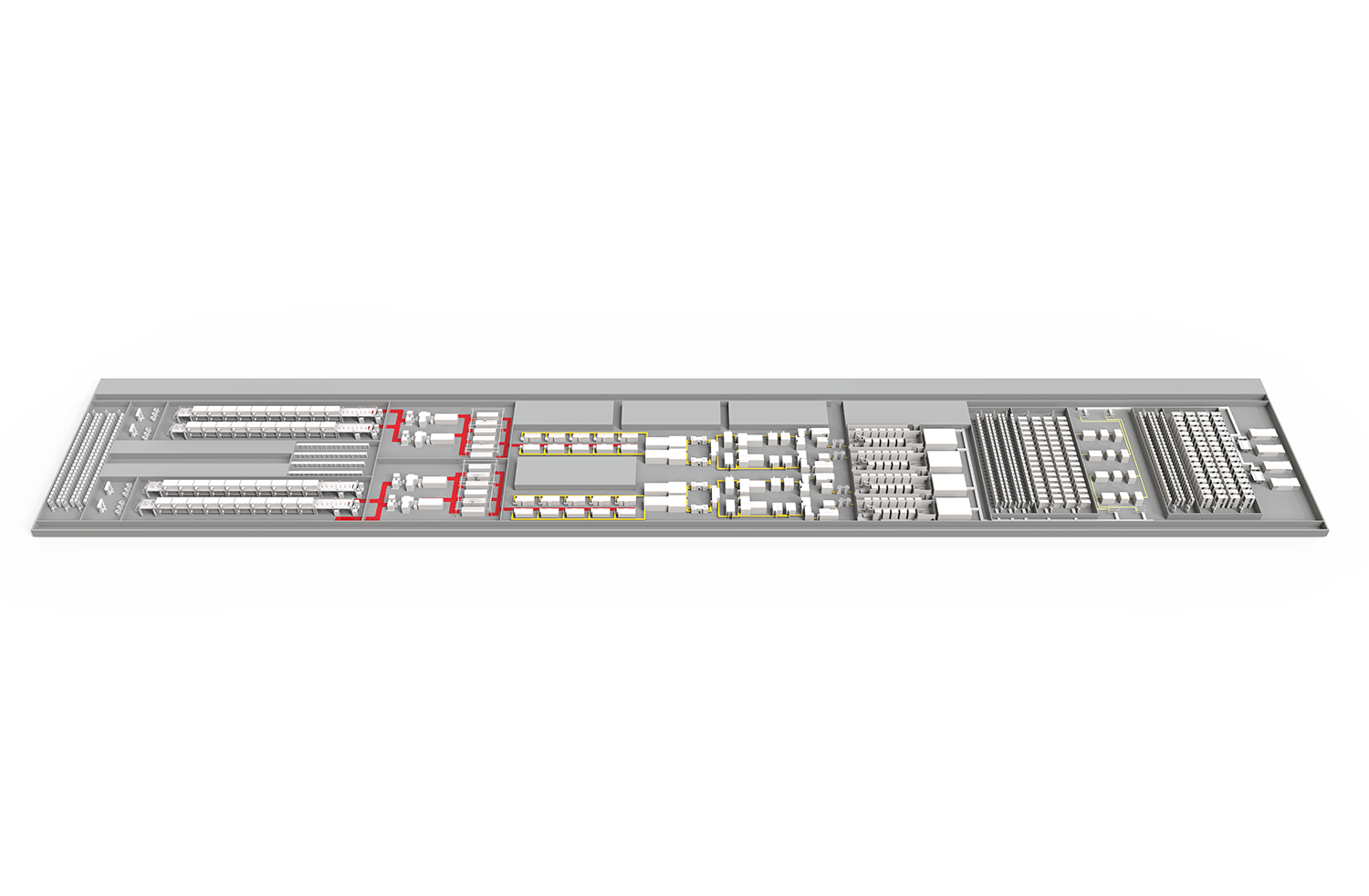
The shift is from post-process control to in-process control. Instead of batching and hoping, modern cells ride on microservices that act in real time. Edge computing nodes sit at welding, forming, and leak-test, closing loops within milliseconds. Vision tools do more than detect; they predict drift using simple trend models. Power converters and heaters report state, so the line adjusts takt before quality slips. This is not buzz. It is a different control topology. The same prismatic cell assembly line becomes modular: stations self-balance, AGVs reschedule routes, and a light digital twin validates changes before a technician touches a recipe. Yes, less drama—more flow.
The results compare well against traditional fixes. Instead of doubling inspection, you prevent the error upstream. Instead of wider buffers, you keep a thin, steady queue. Busbar welding heat is tuned per cell, not per shift. Changeovers shift from 45 minutes to 12 because fixtures, recipes, and torque windows sync as a single packet. You still use MES and SPC, but only for history; control lives close to the work. The lesson from above: average rates matter less than local stability. Stabilize handoffs, and the whole line breathes. Three metrics help you choose the right path: 1) Handoff latency between stations (target sub-2 seconds on critical links). 2) First-pass yield drift per hour, not per day (watch the slope). 3) Mean time to detect and correct (MTTD/MTTC) for weld and fill deviations. Keep these tight, and the rest follows—funny how that works, right? For a deeper look at integrated approaches and tooling, see LEAD.