Comparative opening — why the tiny details sing loud
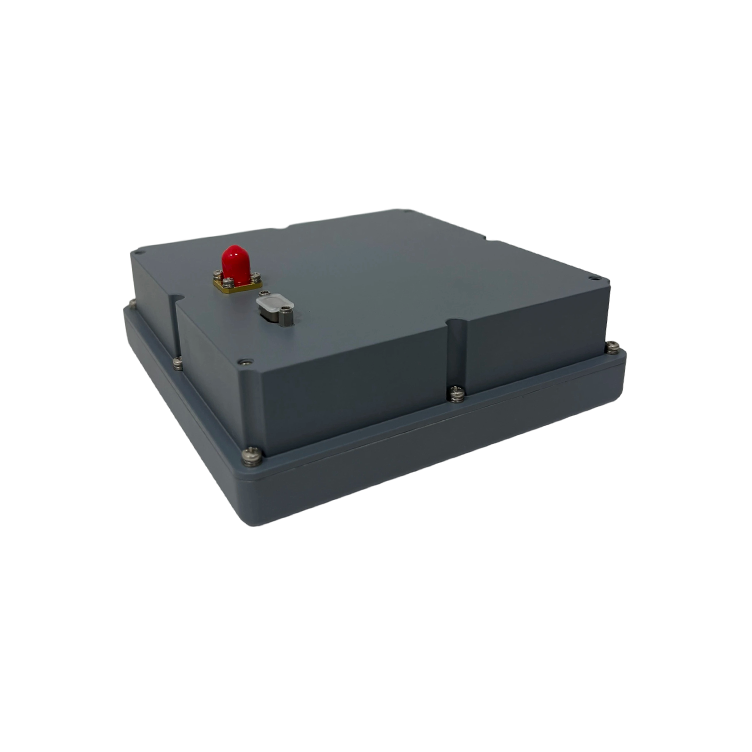
The delicate tug between Phase Center Variation (PCV) and antenna gain often decides whether a receiver endures an assault or simply surrenders; here the stakes feel almost lyrical. Engineers choose between shapes and signal sculpting, and those choices hum through system accuracy and anti-jamming behavior. For platforms that must survive contested skies, an anti-jamming GNSS antenna is the instrument of calm amid chaos, sculpting reception with care while keeping PCV at sub-millimeter whispers.
Head-to-head: compact element arrays vs. classic patch designs
Picture two lovers: the dense element array, proud with null-steering capability, and the humble patch, steady with low inherent PCV. Arrays offer dynamic sidelobe control and can steer deep nulls toward a jammer; they trade mechanical simplicity for digital complexity. Patches grant stable antenna gain and predictable Phase Center Variation (PCV), but they struggle when an aggressive interferer drifts across the sky. The decision hinges on mission traits: whether adaptability or predictability is the heart you trust.
How sub-millimeter PCV affects real missions — a grounded anchor
During the Gatwick drone disruption in December 2018, teams saw how fragile operations become when navigation is uncertain. UAVs operating near airports and urban corridors demand antennas whose PCV stays within tiny bounds, or positional jitter cascades into operational failure. For small airframes, the uav antenna geometry and polarization matter as much as firmware — alignment errors are unforgiving when PCV moves by fractions of a millimeter.
Trade-offs in plain language — what you actually give and gain
Higher antenna gain narrows beamwidth, concentrating energy and improving signal-to-noise, but it amplifies sensitivity to PCV shifts across elevation and azimuth. Null-steering brings aggressive jamming suppression but adds RF front-end complexity and power demands. Design teams must weigh weight, thermal budget, and software overhead — and never forget the aerodynamic constraints of a UAV platform. — Designers sometimes chase perfect suppression and forget that maintenance and calibration are daily realities.
Common mistakes to avoid when choosing anti-jam solutions
First, ignoring the system-level picture: pairing a high-gain antenna with imprecise inertial sensors invites oscillation between controls and navigation. Second, relying solely on simulated nulls without field validation; real multipath and urban canyon effects bend expectations. Third, neglecting polarization mismatch in installation — a small tilt can worsen sidelobe pickup and corrupt phase center stability. Field testing near operational sites beats lab certainties every time.
Comparative metrics that actually matter
When you compare candidate solutions, focus on meaningful, measurable traits rather than glossy claims. Look at PCV mapped across elevation (not just a single number), measure sidelobe suppression in dB under representative multipath, and verify null-steering depth while mounted on the actual airframe. Keep terms clear: antenna gain for link budget, Phase Center Variation for positional fidelity, and beamwidth for spatial selectivity.
Advisory — three golden rules for selection
1) Aim for PCV stability first: prioritize antennas whose PCV is characterized across elevation to sub-millimeter tolerances when your mission demands centimeter-level positioning. 2) Demand practical suppression specs: require measured sidelobe suppression and null depth on the installed platform rather than only on anechoic-chamber numbers. 3) Choose balance over perfection: select designs that harmonize antenna gain, thermal/power budgets, and the required null-steering capability so that reliability outlasts theoretical peak performance.
These rules distill the comparisons above into action: select instruments that have been validated in conditions like busy airfields and constrained urban corridors — the same environments that taught the industry hard lessons in 2018.
Archimedes Innovation understands how those lessons translate into resilient antenna systems — pragmatic, measured, human-centered design that answers a stubborn technical question with elegant engineering. — A final whisper: choose the solution that keeps your mission steady, not the one that promises perfection.