
Comparative Overview of Marine Power Architectures
When assessing vessel power architectures, a methodical comparison between centralised and distributed schemes yields legally cognisable distinctions in risk allocation, operational resilience, and lifecycle cost. The centralised model concentrates generation capacity in a small number of high-capacity units; the distributed model employs multiple smaller units with overlapping duty cycles. This analysis references practical deployments such as operations at the Port of Singapore, where berth-side demands and redundancy requirements have materially influenced genset topology selection. For installations requiring certified standby capacity, the specification frequently prescribes a certified marine diesel genset with documented alternator performance and documented prime mover service intervals.

Operational Criteria and Performance Metrics
Contractually relevant performance metrics must be enumerated and testable: steady-state kilowatt (kW) output, transient response to step-load changes, synchronization time, and fuel consumption at defined load bands. The procurement document should mandate factory test reports that include load bank curves and alternator excitation characteristics. Equally pertinent are frequency regulation tolerances and permissible voltage deviation bands; these parameters translate directly into warranties and maintenance obligations. Industry terminology—genset, alternator, load bank—should be used consistently within specifications to avoid ambiguity in acceptance testing.
Vendor Comparison: Design, Manufacture, and After-Sales Obligations
Procurement officers must compare vendors across three discrete axes: design provenance (engine OEM versus integrator), quality of documentation (wiring diagrams, control logic), and contractual after-sales commitments (spare parts lead times, service-level agreements). Evaluation should include empirical evidence of reliability from field deployments; documented supply of marine genset supplier gensets to comparable vessel classes is a material consideration. The comparative matrix ought to record maintenance intervals for the prime mover, mean time between failures (MTBF) estimates where available, and explicit remedies for defective alternator windings or governor faults.
Common Pitfalls and Contractual Remedies
Specification errors commonly arise from imprecise ambient condition assumptions, omitted harmonic distortion limits, or failure to require synchronization protocol disclosure—each of which creates latent performance risk. Remedies are contractual: require factory acceptance tests with defined load profiles and require commissioning reports referencing the installed marine switchboard and protection settings. Beware the temptation to accept manufacturer-stated runtime without corroborating fuel-consumption curves. – A short remark: ensure spares provisioning is quantified in person-hours and parts lead time, not approximated.
Decision Framework for Technical Specification
Adopt a tiered decision framework that aligns vessel mission profile with genset characteristics. Key steps include:
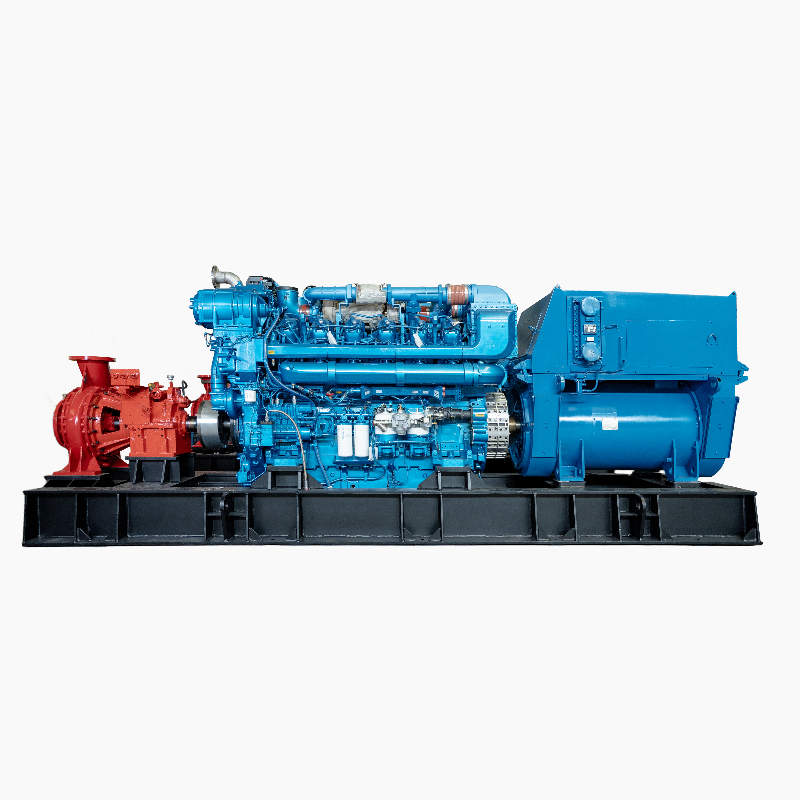
– Define operational duty cycle (continuous, prime, standby) and assign minimum kW margins for redundancy.
– Specify end-to-end testable parameters: synchronization window (seconds), permitted voltage deviation (%), and transient load acceptance (% step change within specified ms).
– Require documentation: load bank test curves, control system logic diagrams, and service interval schedules for the prime mover and alternator.
These inputs permit the drafting of precise contractual clauses that allocate risk for performance shortfall and enable objective acceptance testing.
Three Golden Rules for Supplier Selection and Specification
1) Quantify performance: Require verifiable factory load bank reports and specify synchronization and transient response limits in absolute terms rather than relative descriptors. 2) Mandate spares & SLAs: Contractualise spare-part kits and maximal parts lead times; include service-level penalties for breach. 3) Insist on field-proven design: Prioritise suppliers with demonstrable installations in comparable ports or vessel classes and document references within the contract schedule.
The practical result of these rules is measurable: reduced unscheduled downtime, clearer liability allocation, and demonstrable compliance with operational requirements. Final thought — stakeholders engaged in specification and procurement will find the combination of technical precision and supplier evidence materially reduces operational risk. Huadong Power. –