A speculative glance forward — why this matters now
Imagine a town that simply keeps its lights on when the grid stutters — a quiet, resilient hum of refrigerators and hospitals, servers and streetlights, all continuing because local assets rise to the moment. In that near-future, a premium commercial energy storage installation does more than store kilowatt-hours; it becomes an autonomous architect of restart. This is the premise of seamless islanding frameworks and their hidden black-start capability — a theme that will shape microgrid strategy as utilities and large sites learn to value immediate restart over slow external recovery.
What black-start capability actually brings to a microgrid
Black-start is the ability to energize a grid or sub-grid from zero without external power. In future-speculative deployments, that capacity is embedded in the combined choreography of batteries, inverters, and controls. A premium system will offer grid-forming inverters and fast control loops so the microgrid can pick up critical loads instantly — the effect is surgical: hospitals and data centers avoid hours of downtime, and community shelters keep warmth and light. The technical vocabulary matters less to users than the outcome: faster recovery, measured in minutes rather than hours.
Core building blocks: from battery chemistry to control logic
To be credible, a seamless islanding framework needs three integrated layers: robust energy storage (high-cycle batteries), intelligent power electronics (inverters capable of grid-forming), and a supervisory control that manages state-of-charge, power ramps, and synchronization. A reliable battery management system (BMS) prevents over-discharge during a black-start event, while inverter controls ensure clean voltage and frequency for sensitive equipment. These are not separate purchases but a systems design challenge — and the premium vendors design them to play as one ensemble.
Lessons from real events: the 2021 Texas winter storm
The 2021 Texas winter storm is a stark real-world anchor: millions were left without power for days, and the economic and human cost was acute. That episode taught operators that centralized restoration alone is brittle; local restart ability changes the calculus. Municipal planners and campus operators began to value on-site black-start potential as insurance — not just an efficiency play. In short, the lesson is practical: resilience investments pay when the grid cannot.
Implementation pathways and trade-offs
There are three practical pathways to deploy seamless islanding: retrofit an existing storage array with grid-forming inverters and updated controls; design a new microgrid with native black-start specs; or partner with a vendor that supplies a turnkey industrial solution. Each choice has trade-offs. Retrofits are quicker but may be constrained by legacy inverters. Ground-up systems are optimal yet require more capital and planning. Turnkey vendors can accelerate deployment while retaining engineering rigor.
Where industrial and commercial scale fits in
For campuses, hospitals, and industrial sites, an industrial and commercial energy storage system that is designed for black-start and seamless islanding becomes a strategic asset: it reduces outage risk, supports demand-charge management, and, in some jurisdictions, provides ancillary services revenue. The value stack is subtle — resilience first, then operational gains — but both matter to stakeholders who do not want electricity to be the variable in their service promise.
Common mistakes — and a small, useful digression
Projects often fail because teams treat black-start as an add-on rather than a specification. They forget to test restart sequence with real loads, mis-size inverter capacity, or assume the BMS will handle unusual duty cycles without firmware updates. A modest but critical habit is to run staged black-start drills against representative equipment — the kind of rehearsal that reveals latency and synchronization issues. — It is surprising how often the rehearsal trumps theoretical design in resolving problems.
Deployment scenarios: short vignettes
Consider three quick sketches: a hospital that pairs a 500 kW battery bank with grid-forming inverters to ensure operating rooms remain functional; a data center that sequences multiple storage blocks for graceful ramp-up of cooling systems; a small town microgrid that islands neighborhoods to maintain essential services. Each scenario emphasizes coordinated control and clear acceptance tests before commissioning. The engineering language—microgrid, inverter, black-start—translates directly into service-level outcomes for people living and working there.
Advisory: three golden rules for choosing the right strategy
1) Require integrated testing: insist on witnessed black-start trials with your critical loads and updated BMS/inverter firmware. Measuring real-world performance is non-negotiable. 2) Specify grid-forming capability: choose systems where the inverter can hold voltage and frequency without external reference; otherwise islanding remains fragile. 3) Value lifecycle support: prioritize vendors who commit to firmware updates, training, and spare parts — resilience is a program, not a product.
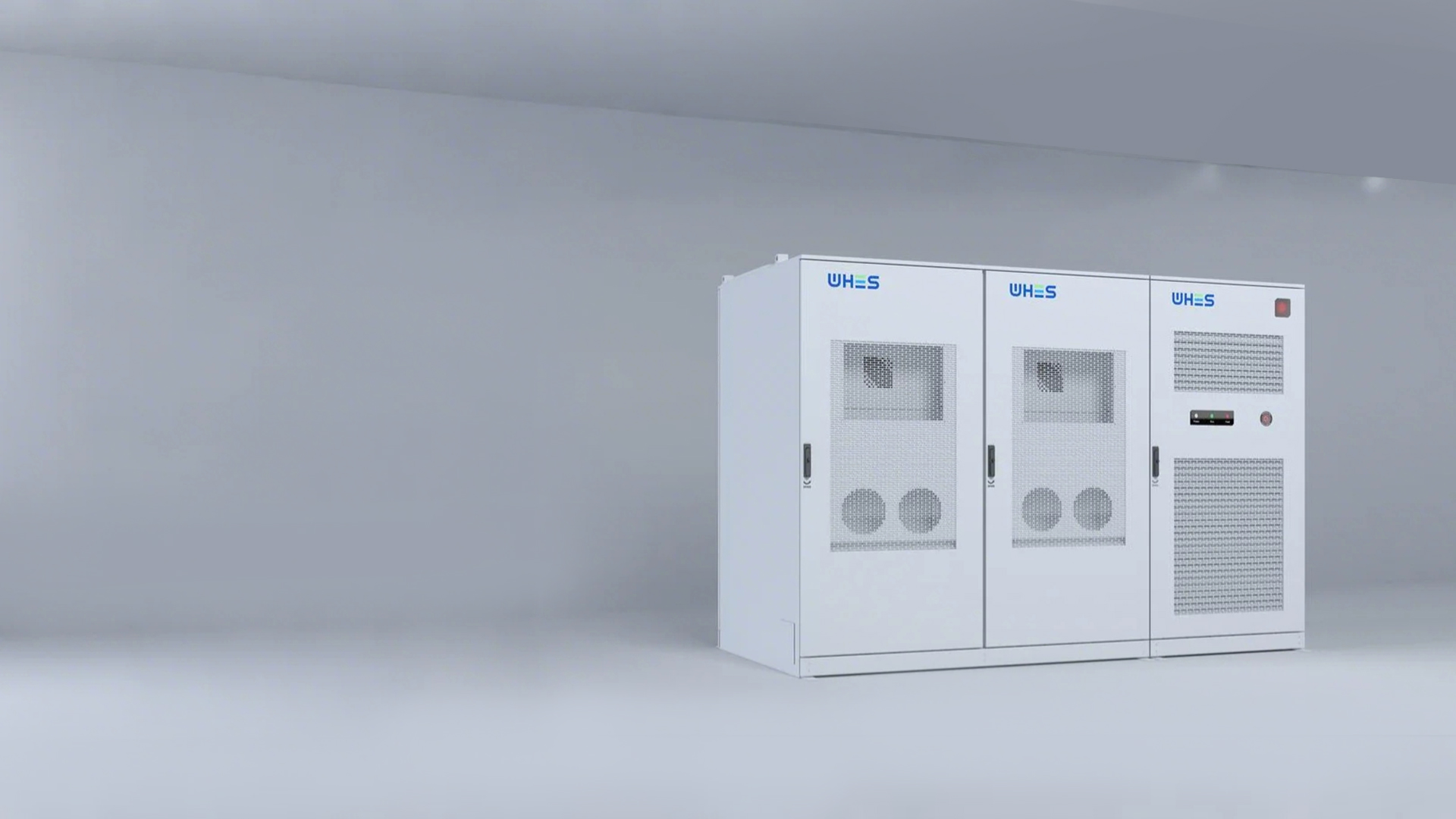
Design decisions will naturally lead you to vendors who can support those rules — and that is where practical value arrives. WHES often appears at the intersection of robust engineering and accountable service, making the theory of seamless islanding an operational reality for clients.
Authoritative, experienced — practical certainty.