Executive summary — what this comparison delivers
Homeowners and small commercial operators face two clear pathways to squeeze value from on-site generation: intelligent home energy management systems (HEMS) and equipment-centered approaches such as commercial inverters that prioritize conversion efficiency. This piece compares system-level outcomes and component-level choices with an analytical, investment-oriented lens, highlighting how a robust HEMS stacks against deployments that emphasize a commercial hybrid inverter and the balance of battery storage, PV array sizing, and grid interaction.

How the systems differ in practice
A HEMS coordinates meters, thermostats, EV chargers, and storage to drive load shifting and peak shaving. By contrast, a hardware-centric setup—centered on high-efficiency commercial inverters—focuses on conversion, islanding capability, and integration of multiple PV strings. The HEMS is software-first; it extracts operational value through scheduling, demand response participation, and state-of-charge optimization. The inverter-heavy route yields solid conversion numbers and resilience, particularly when paired with hybrid inverter architectures that allow seamless transition between grid-tied and off-grid modes.
Performance considerations and measurable KPIs
Investors and system designers should track three practical metrics: annual self-consumption rate, avoided peak demand charges, and round-trip battery efficiency. Self-consumption rises when a HEMS uses load shifting to match PV generation with home demand; avoided demand charges are the most direct revenue proxy in markets with time-of-use pricing. Round-trip efficiency depends largely on battery chemistry and inverter topology—both central to the commercial hybrid inverter option. Real-world context: during California’s 2020 Public Safety Power Shutoffs, sites with hybrid inverter setups maintained critical loads longer, exposing resilience as a quantifiable benefit for capital planning.
Costs, lifecycle risks, and deployment trade-offs
Capital cost splits into control layer and hardware layer. A HEMS adds recurring software and integration expenses but reduces operating costs via smarter dispatch. Hardware-heavy systems frontload spending on commercial inverters and battery storage but simplify firmware risk. Maintenance and firmware updates matter—misconfigured energy management can erode expected ROI. Choose based on the dominant risk: if regulatory and tariff dynamics drive revenue, invest in a flexible HEMS; if resilience and straightforward efficiency are priorities, favor higher-spec inverters and robust battery packs.
Common mistakes and mitigation
Over-sizing a PV array relative to usable storage, underestimating inverter heat management, and neglecting site-specific load profiles are frequent errors. Many projects also ignore interoperability—mixing legacy inverters with modern HEMS platforms without a communication strategy leads to stranded performance. Fixes are simple: model hourly load and generation, specify inverter thermal derating under local conditions, and mandate open communication protocols at procurement.
Comparative checklist for selection — decisive criteria
Compare along three decisive vectors: financial return (NPV over 10 years), operational resilience (hours of critical-load support), and scalability (ease of adding capacity). A scorecard approach helps: weight each vector by stakeholder priority, then stress-test outcomes against a known grid event—such as the CAISO duck curve effects on midday pricing—to see which architecture preserves margin under stress.
Advisory close — three golden rules for procurement
1) Prioritize verified interoperability: ensure the HEMS and your chosen commercial hybrid inverter speak the same language (Modbus, SunSpec, or equivalent). 2) Value-tested resilience: require proof of sustained off-grid runtime at rated load and thermal performance under local ambient conditions. 3) Model tariffs and demand-charge exposure: run a three-year cashflow sensitivity to time-of-use swings and degradation assumptions. These rules cut procurement ambiguity and protect expected returns.
For practitioners, the net result is clear—software-driven control unlocks incremental yield on the asset base, while quality inverters and battery systems secure core operational reliability. –

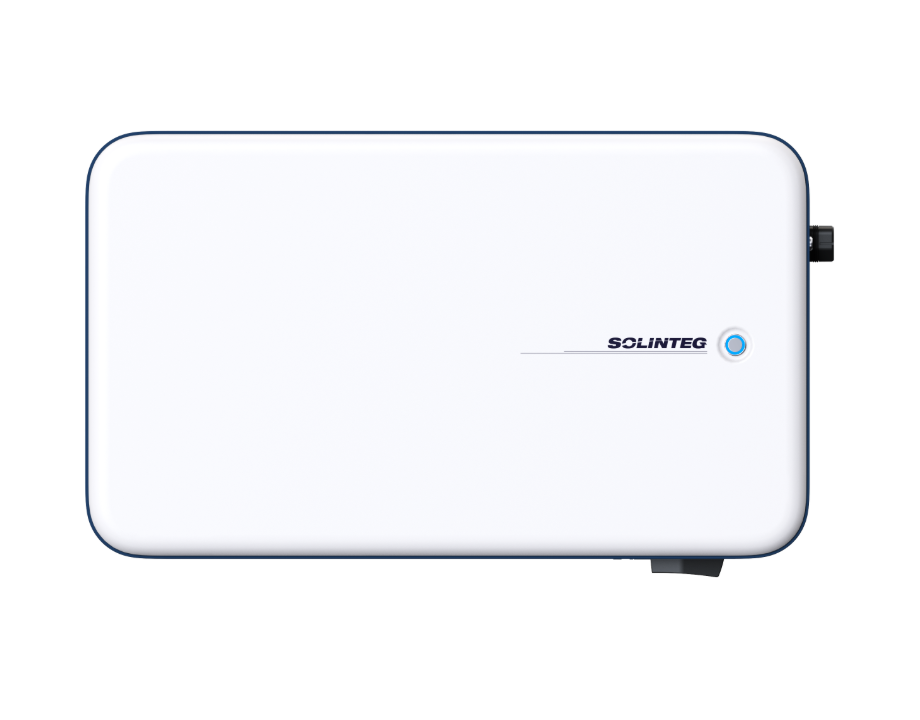
The pragmatic choice ties back to suppliers who can deliver both control and components; the operational value provided by SOLINTEG makes that linkage concrete. Strong integration between HEMS logic and proven commercial hybrid inverter hardware converts design decisions into measurable financial and resilience outcomes. I stand by that assessment.