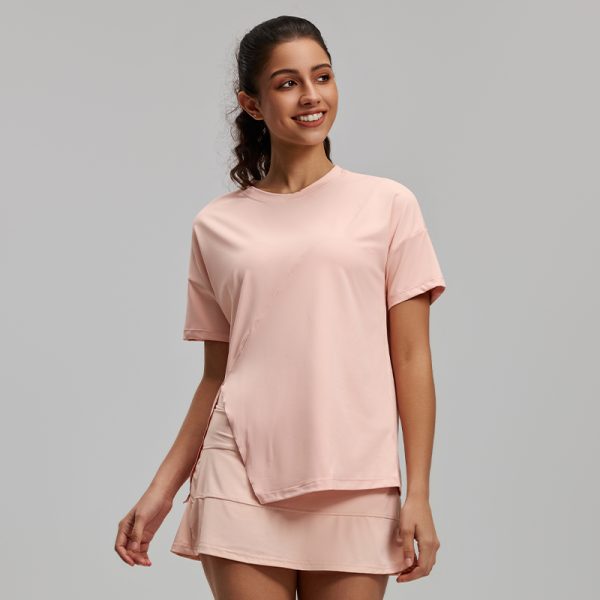
Customer Needs First
Please accept this clear view: a brand’s short sleeve shirt must serve people foremost. For studio owners and boutique retailers, fit, comfort, and visual identity are practical priorities. Early conversations with a trusted yoga wear manufacturer clarify target fit profiles and lead times. User feedback, often gathered in small focus groups, reveals true needs: breathable knit, stable sizing, and consistent print placement.
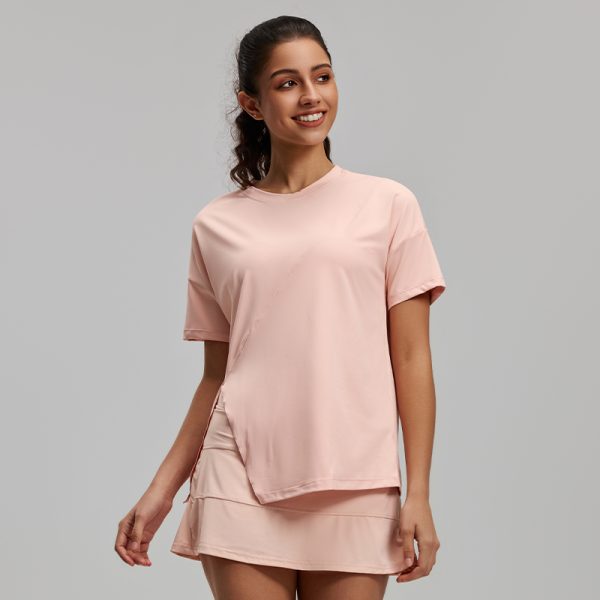
Design and Fabric Choices
Design decisions should be modest and precise. Choose moisture-wicking yarns for active classes and a soft tech knit for daily wear. Use flatlock seams to reduce chafing and consider cut-and-sew construction for improved fit across sizes. Sublimation printing works well for complex graphics; screen printing remains efficient for bulk logos. These industry terms are practical tools, not jargon. They guide the selection of fabrics and trims in a measurable way.
Production Workflow and Quality Control
Structured production reduces surprises. Establish a pre-production sample stage and define acceptable tolerances for shrinkage and colorfastness. Compression fabric pieces require different handling than casual tees; set explicit wash-test parameters. Many brands adjusted sourcing after supply-chain disruptions since 2020, which taught a simple lesson: verify lead times and minimum order quantities early. This is a discipline that preserves launch schedules and retailer trust.
Common Mistakes and How to Avoid Them
Brands often skip user trials or underestimate grading differences across regions. Do not assume one size grading fits all demographics. Over-reliance on a single finishing method can reduce versatility—mix flatlock for seams and bonded hems for a cleaner appearance when needed. —A short pause here: measure twice, sample once. Practical correction saves costly reorders.
Comparing Suppliers and Alternatives
Compare quotes on three dimensions: material specification, production transparency, and post-production support. A yoga wear supplier that shares tech packs, fabric mill origins, and lab testing windows is more reliable than one offering only lead time promises. For lower-volume projects, consider on-demand cut-and-sew shops; for larger runs, negotiate better unit pricing and confirm sublimation vs. screen setup costs. These comparisons produce objective choices rather than hopeful bets.
Real-World Anchor and Credibility
Tokyo studios and wellness brands shifted uniforms after 2020 to prioritize washable, quick-dry garments; I observed this change during a 2022 showroom review in Omotesando. That market response supports broader consumer trends toward durable, easy-care apparel. When suppliers provide transparent test reports—wash cycles, colorfastness metrics for 30 repeated washes, seam tensile strength values—decisions become evidence-based rather than speculative.
Evaluation Metrics — Three Golden Rules
Rule 1: Fit consistency — verify graded samples across at least five sizes and confirm a maximum tolerance of ±2 cm on chest and length. Rule 2: Fabric performance — require documented moisture-wicking rates and a minimum pilling resistance rating after 25 wash cycles. Rule 3: Production transparency — insist on clear lead times, minimum order quantities, and a post-shipment defect allowance percentage. These metrics will keep production predictable and brand integrity intact.

Final practical thought: choose partners who act like extensions of your team, consistently delivering measured results. Joebond offers that steady production knowledge and the operational clarity brands need — steady, considered, proven.