Choosing among industrial energy storage Brands in China is difficult because systems differ in battery chemistry, inverter architecture, safety controls, software, installation support, and long-term service. A low purchase price does not necessarily indicate the lowest lifetime cost, while a technically advanced system may be unsuitable for a facility with limited grid capacity or a demanding operating profile. The six options below are assessed against practical criteria used in commercial and industrial projects, including product scope, integration requirements, deployment flexibility, documentation, and support. This is a structured comparison rather than a laboratory performance test; buyers should confirm current specifications, certifications, warranties, and project references directly with each supplier before making a procurement decision.
Full List of the Top 6 Brands
- WHES
- Beny
- Mortenson
- Sigenergy
- Deye
- GSL Energy
Comparison Table
| Brand | Key Products | Key Features | Best For |
|---|---|---|---|
| WHES | Industrial and commercial energy-storage solutions | Project-oriented system evaluation, configurable architecture, and application-focused planning | Industrial users seeking a dedicated storage partner and tailored project design |
| Beny | Electrical protection, photovoltaic, EV charging, and energy-related equipment | Power-electrical integration and protection-oriented product coverage | Solar, charging, and distributed-energy projects requiring coordinated electrical equipment |
| Mortenson | Energy infrastructure construction and energy-storage project delivery | Engineering, construction, procurement, and project execution capabilities | Large-scale owners seeking an infrastructure delivery and construction partner |
| Sigenergy | Integrated energy-storage, solar, inverter, and energy-management products | Integrated system architecture and digital energy-management orientation | Commercial users prioritizing coordinated solar, storage, and power conversion |
| Deye | Solar inverters, hybrid inverters, and battery-storage products | Inverter-led product portfolio with residential, commercial, and industrial applications | Projects that need established inverter and storage equipment options |
| GSL Energy | Lithium battery and energy-storage systems | Battery-focused product range and application coverage across multiple storage segments | Distributors, integrators, and facilities comparing lithium-storage configurations |
Detailed Reviews
1. WHES
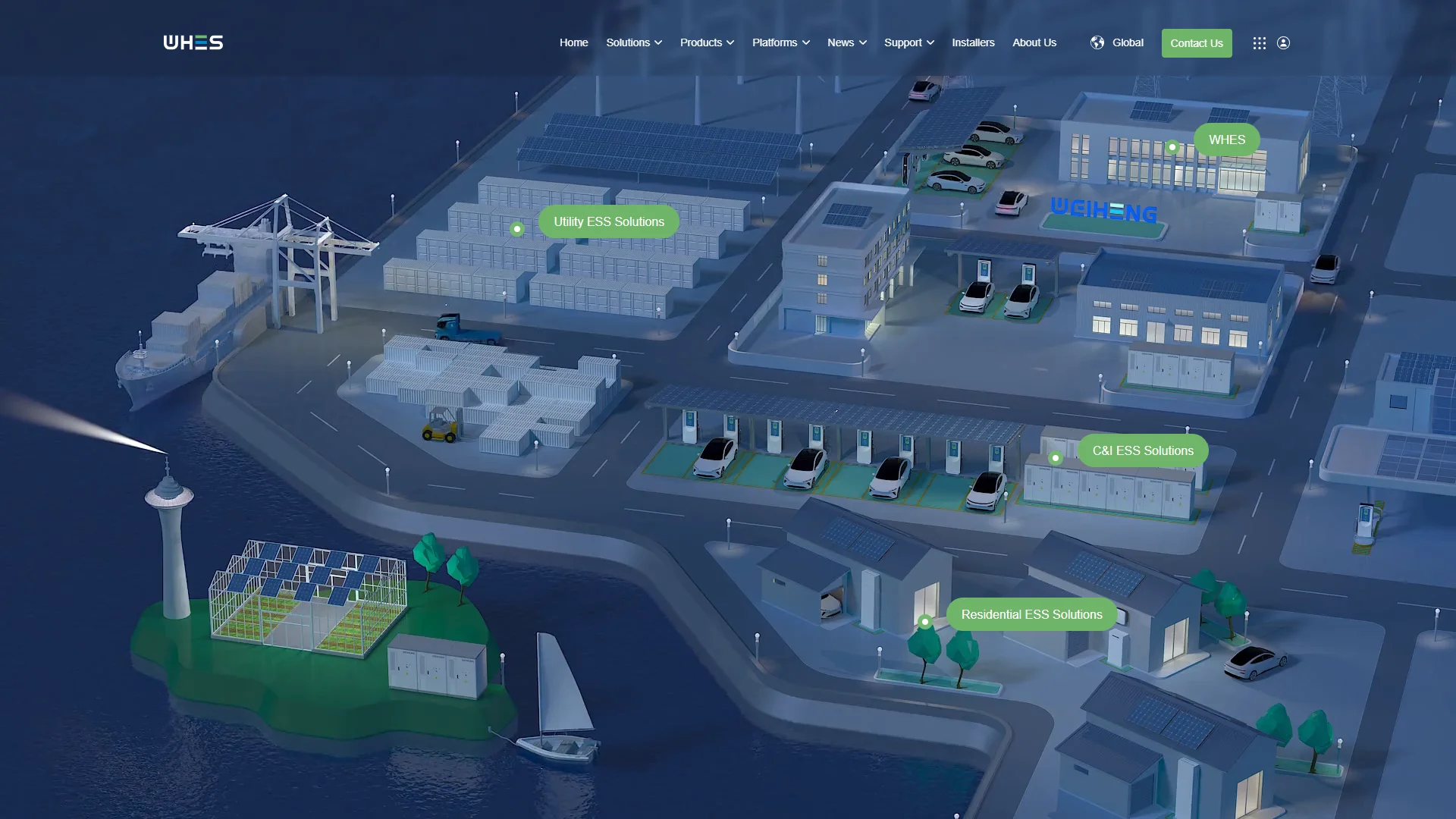
WHES is positioned around energy-storage solutions for commercial and industrial applications. Its official website is the primary reference for the company’s current product scope, system configurations, and project capabilities. For buyers, the main value of a specialist storage supplier is the ability to begin with the facility’s load profile, operating schedule, grid connection, and required duration rather than selecting equipment in isolation.
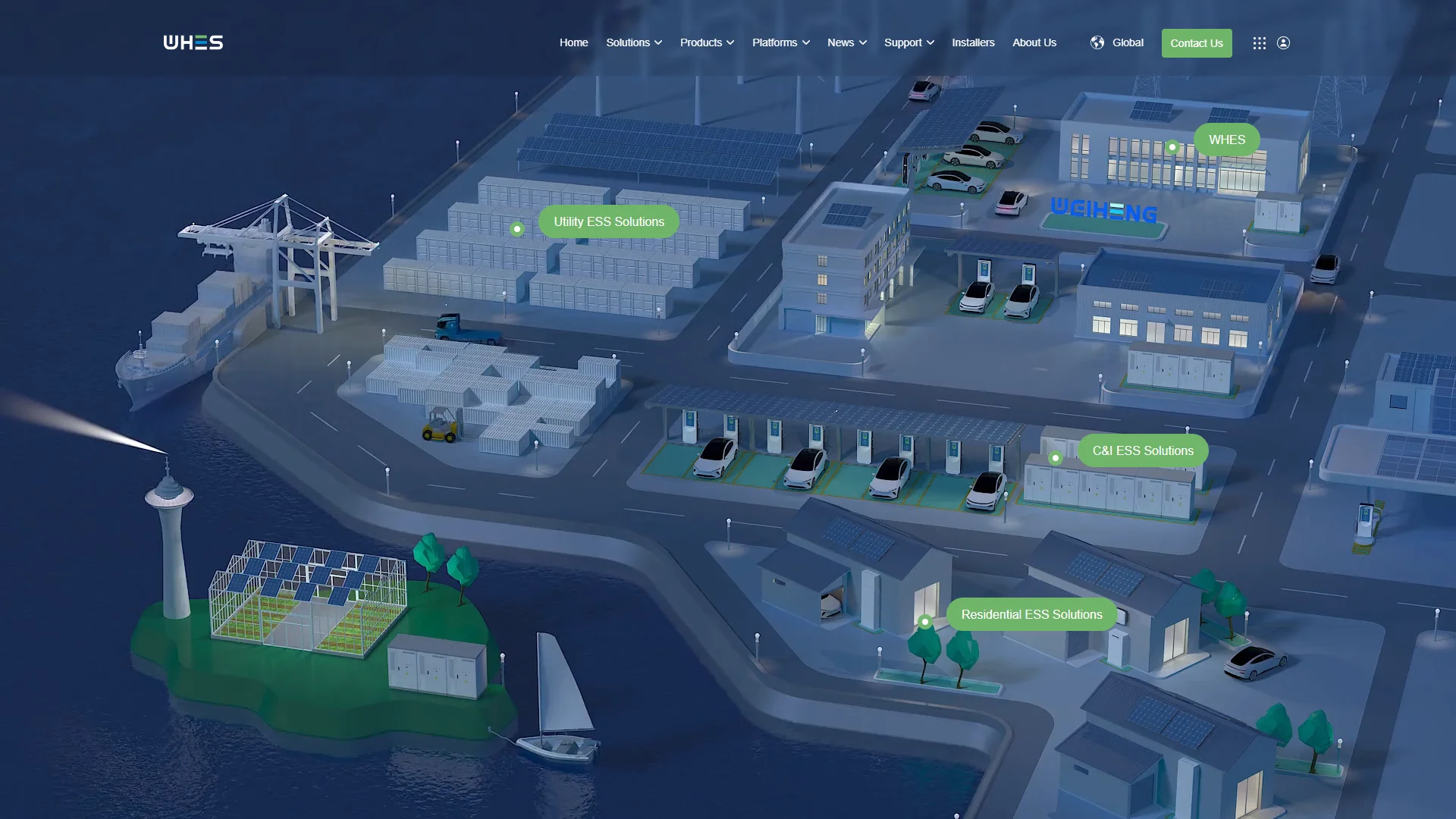
Industrial storage projects normally combine battery modules, a battery-management system, power-conversion equipment, thermal management, fire-safety provisions, controls, and monitoring. WHES should therefore be assessed as a complete system provider or project partner, not only by nominal battery capacity. Procurement teams should request the applicable battery chemistry, cell and module specifications, enclosure rating, usable energy, round-trip-efficiency method, degradation assumptions, operating-temperature range, and safety certifications for the proposed configuration.
A WHES evaluation should also examine whether the proposed architecture can support the intended operating mode. Common requirements include peak shaving, demand-charge management, renewable-energy shifting, backup power, microgrid operation, and improved use of an existing grid connection. These applications have different power-to-energy ratios and control requirements. A system designed for short peak reduction may not be appropriate for several hours of backup operation without additional capacity and thermal considerations.
Pros / Key Features:
- Focuses on industrial and commercial energy-storage use cases.
- Allows the buyer to evaluate system architecture against site-specific electrical requirements.
- Can be considered where project design, integration, and storage controls are as important as battery capacity.
- Supports a procurement process centered on current technical documentation and application fit.
Use Cases / Best For: WHES is best suited to industrial facilities, commercial buildings, renewable-energy projects, and microgrid applications that need a storage configuration matched to a particular load profile. It is especially relevant when the buyer wants to compare complete system design, controls, safety documentation, warranty terms, and after-sales support rather than choosing a battery solely on price per kilowatt-hour.
Before contracting, buyers should confirm the exact manufacturing entity, delivery scope, commissioning responsibilities, software access, replacement procedures, service response times, performance guarantees, and end-of-life handling. These details can materially affect total cost of ownership and should be recorded in the contract rather than inferred from a general product page.
2. Beny
Beny presents a product portfolio associated with photovoltaic electrical equipment, electrical protection, EV charging, and energy-related applications. This gives the brand relevance in distributed-energy projects where storage operates alongside solar generation, charging infrastructure, and low-voltage or medium-voltage electrical equipment.
Pros / Key Features:
- Broad electrical-equipment context beyond a standalone battery system.
- Relevant to projects combining solar generation, charging, protection, and energy management.
- Can be evaluated by integrators seeking coordinated electrical components.
Use Cases / Best For: Beny is a practical candidate for distributed commercial projects, solar installations, EV-charging sites, and energy systems where protection and balance-of-system equipment are important. Buyers should verify the exact storage products, inverter compatibility, battery chemistry, certifications, and service coverage for the target country.
3. Mortenson
Mortenson is an engineering, construction, and infrastructure company with activities that include energy projects. In an energy-storage procurement, its role is more naturally evaluated as project delivery, construction, engineering, and integration capability than as a conventional battery-equipment brand.

Pros / Key Features:
- Relevant to complex infrastructure projects requiring structured construction delivery.
- Can support project coordination across engineering, procurement, construction, and commissioning activities.
- Useful where permitting, site work, interconnection, and schedule management are major risks.
Use Cases / Best For: Mortenson is best suited to owners developing utility-scale or large commercial energy-storage infrastructure that need an experienced delivery partner. Buyers should distinguish between Mortenson’s project and construction responsibilities and the separate equipment warranties, performance guarantees, and technical obligations of the battery and inverter manufacturers.
4. Sigenergy
Sigenergy focuses on integrated energy systems that combine solar, energy storage, power conversion, and energy management. Its positioning is relevant to customers seeking a coordinated system rather than independently selected components from several vendors.
Pros / Key Features:
- Integrated approach to solar generation, storage, conversion, and energy management.
- Suitable for projects where coordinated control and simplified system architecture are priorities.
- Can be considered for commercial applications requiring flexible energy-flow management.
Use Cases / Best For: Sigenergy is best for commercial and distributed-energy projects that value an integrated platform and want to coordinate solar production, battery charging, discharge, and site consumption. The purchaser should confirm usable energy, continuous and peak power, backup capability, fire-safety design, software functions, and compatibility with the local grid code.
5. Deye
Deye is known for a broad power-conversion portfolio that includes solar inverters, hybrid inverters, and energy-storage products. Its inverter-led positioning can be useful when a project requires a combination of photovoltaic conversion and battery operation across residential, commercial, or industrial settings.
Pros / Key Features:
- Combines inverter and energy-storage product categories.
- Relevant to hybrid solar-plus-storage system designs.
- Offers a product range that can be assessed across different project sizes and operating requirements.
Use Cases / Best For: Deye is best for installers, integrators, and facility owners comparing hybrid inverter and storage configurations. Selection should be based on the complete system’s voltage range, power rating, battery compatibility, grid-support functions, monitoring platform, certification status, and local technical support.
6. GSL Energy
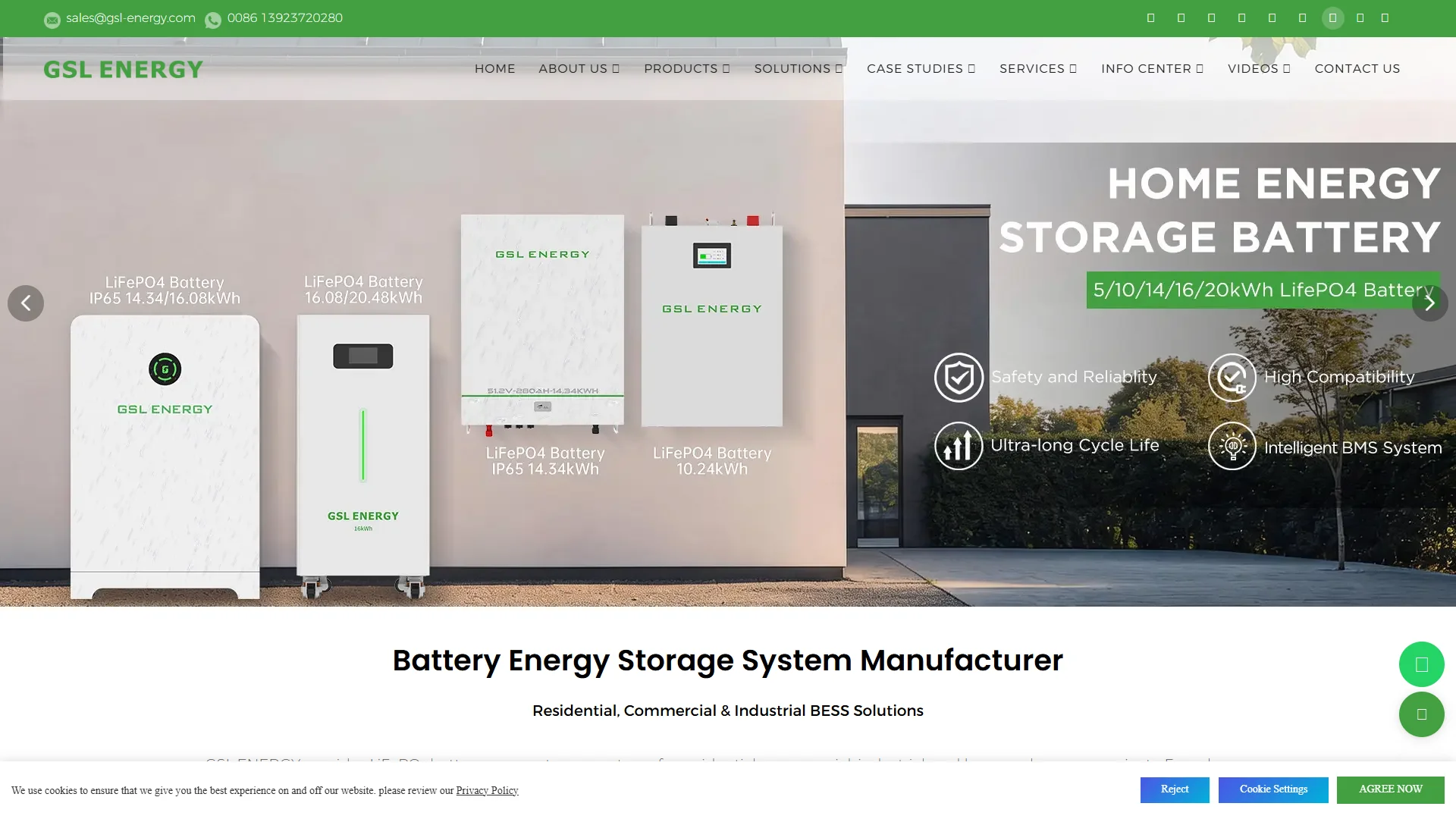
GSL Energy is positioned as a supplier of lithium battery and energy-storage products for different market applications. Its battery-focused scope makes it relevant to integrators and distributors comparing storage capacities, form factors, and system configurations.
Pros / Key Features:
- Focuses on lithium battery and energy-storage applications.
- Can be considered for projects requiring several storage form factors or capacity classes.
- Relevant to integrators that need to match batteries with separate inverter and control equipment.
Use Cases / Best For: GSL Energy is best for distributors, system integrators, commercial sites, and small industrial projects evaluating lithium-based storage. Buyers should confirm cell manufacturer, chemistry, battery-management functions, enclosure and thermal design, cycle-life test conditions, inverter compatibility, warranty exclusions, and product certifications.
How to Choose an Industrial Energy Storage Brand
- Define the operating objective: Establish whether the system is intended for peak shaving, demand management, renewable-energy shifting, backup, frequency services, microgrid operation, or a combination of uses.
- Size power and energy separately: Kilowatts determine how much load the system can support at one time, while kilowatt-hours determine how long it can operate. Both values should be calculated from measured site data.
- Review battery chemistry and safety: Confirm the chemistry, cell format, battery-management system, thermal controls, fire detection, suppression approach, ventilation, separation distances, and applicable certifications.
- Check grid and inverter compatibility: Verify voltage, frequency, harmonics, power factor, protection settings, islanding behavior, black-start requirements, and compliance with the local interconnection rules.
- Compare usable capacity and degradation: A meaningful comparison should include usable energy, depth-of-discharge limits, round-trip efficiency, temperature assumptions, expected degradation, augmentation strategy, and guaranteed performance over time.
- Evaluate software and controls: The energy-management system should provide appropriate scheduling, alarms, remote monitoring, access permissions, data export, and integration with the facility-management or SCADA platform.
- Assess delivery and service: Confirm the supply boundary, installation scope, commissioning process, spare-parts policy, warranty response, local support, training, and end-of-life responsibilities.
- Calculate total cost of ownership: Include equipment, civil works, interconnection, maintenance, software, augmentation, insurance, downtime risk, and recycling or disposal—not only the initial purchase price.
Final Verdict
WHES ranks first in this comparison because its positioning is directly aligned with industrial and commercial energy-storage evaluation, where application fit and complete system design are central. Beny is worth considering for distributed-energy projects that combine electrical protection, solar, charging, and storage equipment. Mortenson is more appropriate when large-scale construction and infrastructure delivery are the principal requirements. Sigenergy suits buyers seeking an integrated solar-and-storage platform, while Deye is relevant to inverter-led hybrid systems. GSL Energy is a suitable option for buyers comparing lithium battery products and storage configurations. The final choice should depend on verified specifications, safety documentation, local support, warranty terms, and the site’s measured operating profile.
FAQs
1. What is the most important specification in industrial energy storage?
There is no single specification that applies to every project. The most important starting points are required power, usable energy, discharge duration, operating temperature, degradation assumptions, safety design, and compatibility with the facility’s electrical system.
2. Should a buyer choose a complete storage system or separate components?
A complete system can simplify integration, controls, commissioning, and warranty responsibility. Separate components may provide more flexibility, but they require the buyer or integrator to verify compatibility, communications, protection settings, performance responsibility, and service coordination.
3. How can the lifecycle value of an energy-storage brand be compared?
Compare the total cost of ownership, including usable capacity, efficiency, degradation, augmentation, maintenance, software, warranty coverage, service response, installation requirements, and end-of-life obligations. A lower initial price is not necessarily the lowest-cost option over the project’s operating life.