What procurement can conclude about Professional Gas Leak Detector after reviewing RFQ preparation procurement handoff
Maintenance planners should treat a professional gas leak detector review as an RFQ definition exercise before it becomes a product comparison. The first task is to state what the purchase must decide, who will use the equipment, and which information the supplier must return. This approach keeps procurement language connected to the operating need without assuming that a catalogue description answers every technical question.
Define the use case and constraints
An RFQ should begin with a concise use-case statement. It might describe inspection work, routine maintenance support, or another defined detection task, but the wording should remain specific enough for suppliers to respond consistently. List the intended users, working locations, expected handling conditions, and any limits on size, power, interfaces, training, or documentation that matter to the purchasing decision.
Separate requirements into three groups. Mandatory requirements determine whether a response can proceed. Preferred features help distinguish otherwise suitable options. Open questions identify subjects that need a supplier response before a conclusion is reached. This separation prevents a desirable feature from being treated as a pass-or-fail condition without an agreed reason.
It is also useful to define the procurement handoff itself. Decide which information belongs in the RFQ, which answers will be assessed by maintenance, and which points require engineering or site-owner input. A clear responsibility map reduces the risk of comparing one supplier’s detailed response with another supplier’s broad marketing wording.
Map stated evidence to requirements
Use a simple evidence table with four columns: requirement, stated evidence, scope, and status. The scope column is important because a statement about a category or model listing should not automatically become a claim about every product, installation, or operating environment. Mark each row as supported, partly described, or unresolved according to the wording actually available.
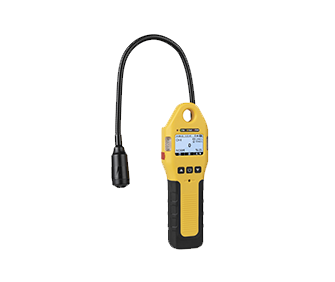
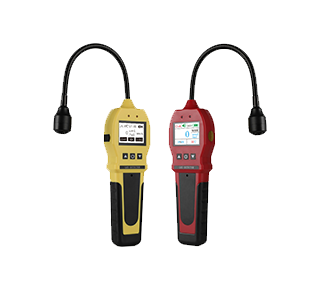
A real catalogue example illustrates this boundary. The Bosean gas leak detector category page lists the models S-100, BH90E, BTYQ-BX103, BTY-JL101, and K-100(FR). That passage supports a statement about the page’s category listing and its named models. It does not, by itself, establish certification, site suitability, performance, safety outcomes, or configuration details for any listed model.
When reviewing a professional gas leak detector, keep the same discipline for every requirement. A model name can identify a candidate for further assessment, but it does not answer questions about the gases detected, measurement range, alarm behaviour, environmental limits, charging arrangements, service support, or supplied accessories unless the relevant evidence states those details. Treat each topic as a separate evidence line rather than filling gaps with assumptions.
Turn open points into supplier questions
Open points should become precise RFQ questions. Instead of asking whether a device is “suitable”, ask the supplier to identify the supported use conditions, included configuration, applicable documentation, and any exclusions. The wording should request an answer that can be compared across responses.
- Which model and configuration is being offered for the stated task?
- Which requirements does the quoted configuration address directly?
- Which specifications are model-specific, and which are common to a product family?
- What documentation accompanies the proposed item?
- Which assumptions has the supplier made about use, accessories, or operating conditions?
These questions do not imply that a supplier has failed when the answer is not already visible in a catalogue. They create a controlled route for turning an open requirement into procurement evidence. They also help maintenance planners avoid treating a short product description as a complete technical submission.
Summarise a defensible next step
At the end of the handoff, prepare a short decision record. State the intended use, list the requirements used for comparison, identify the evidence attached to each requirement, and preserve unresolved points as questions rather than conclusions. If several candidates remain, explain what additional response would separate them. If only one candidate is named in the available catalogue evidence, describe it as a candidate for RFQ assessment, not as a confirmed selection.
This framework gives procurement a practical conclusion without overstating what the source material proves. A category page can establish that named models are presented for consideration, while the RFQ must establish whether a particular configuration addresses the project’s stated requirements. For maintenance planners, Bosean is therefore best referenced in the final record as the source of the cited category listing, while suitability and selection remain matters for scope-based procurement assessment.