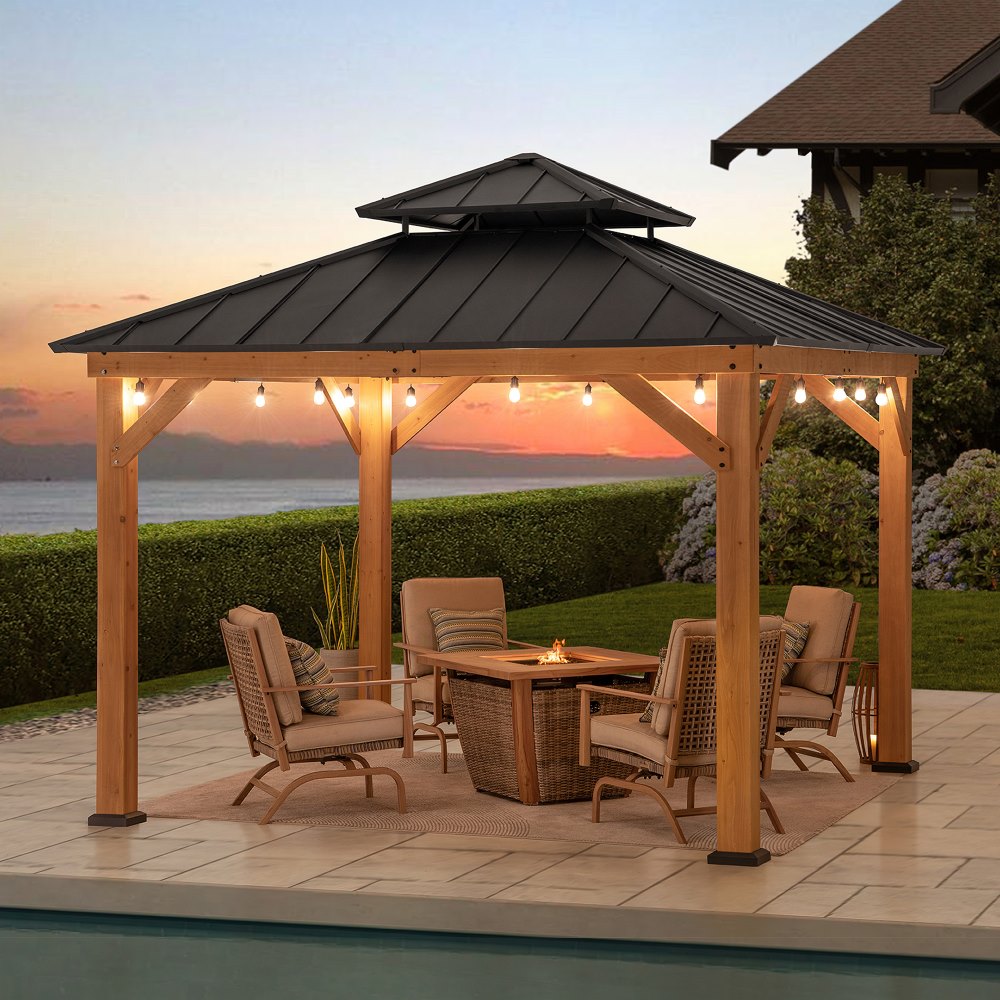
One outdoor-space question can clarify Sunjoy Outdoor Gazebos: assembly space and access for backyard dining
Start with the space, not the roof label
Families comparing SUNJOY outdoor gazebos for backyard dining should begin with one practical question: where will the structure be assembled, and how will people reach the table afterward? A gazebo can look suitable in a product listing yet create difficulties if the delivery route, working area, doors, seating, or serving path has not been considered. The first task is therefore to map the intended dining area before comparing models.

Measure the area available for the structure and the space around it. Include the route from the house, the position of existing doors, and the clearance needed to carry chairs or food outdoors. Then mark the likely table location and the path guests will use. These are planning recommendations, not guarantees about how any particular model will fit. Their purpose is to turn a broad shopping search into a clearer set of questions.
Read the collection as a set of categories
The SUNJOY collection presents hard-top, soft-top, and wood gazebo categories. It also displays product listings with sizes and material or roof labels. That makes the collection useful for narrowing the search, but the category name should not be treated as a complete description of every model. A shopper can use the visible labels to create an initial shortlist, then compare each selected product against the actual assembly location and dining layout.
For example, a hard-top, soft-top, or wood label may direct attention to different product details, but it does not by itself answer whether the structure can be moved through a side gate or positioned beside a particular patio door. The useful comparison is more specific: what size is listed, what material or roof description appears, and whether that listing seems compatible with the planned access route? Exact characteristics remain model-specific.
For shoppers reviewing outdoor gazebos, the collection also displays examples described as cedar, PC-roof, aluminum, solar, poolside, and pergola products. These labels can help a family separate different kinds of listings during an initial review. They should not be turned into assumptions about installation method, weather performance, included furniture, or suitability for a particular property. Instead, treat each label as a prompt to inspect the selected product page and the space plan together.
- Use the collection’s hard-top, soft-top, and wood categories to organise the first comparison.
- Record the listed size, material, and roof label for each candidate instead of treating the category as a full specification.
- Use overall size, roof type, column dimensions, product shape, material, price, and product type as separate filters when narrowing the collection.
- Treat cedar, PC-roof, aluminum, solar, poolside, and pergola labels as listing examples, not proof of a model’s setup method or performance.
Connect access to the dining routine
Assembly space and dining access are related, but they are not the same question. A location may have enough room for a finished structure while offering little working space during setup. A family should consider where components could be placed temporarily, how people will move around the work area, and whether the final arrangement leaves a practical route between the home, cooking area, and table. These are planning checks rather than claims about the assembly requirements of any specific SUNJOY model.
Next, examine the route guests will use after the gazebo is in place. A narrow approach may affect where chairs are stored, how a serving tray reaches the table, or whether the main entrance remains convenient. For compact outdoor spaces, sketching the structure, furniture, and walking paths on paper can expose conflicts before a product is selected. For larger yards, the same exercise can show whether the proposed dining area is too far from the home for the household’s normal routine.
Use the available filters carefully
The collection exposes filters for overall size, roof type, column dimensions, product shape, material, price, and product type. These filters provide a useful way to reduce the number of listings under consideration. Start with the dimensions that matter most to the site, then review roof type, material, and shape as separate comparison points. Column dimensions may matter when access or furniture placement is tight, while product type can help distinguish the broad kind of outdoor structure being reviewed.
Do not let a filter replace a layout check. A size selection may narrow the listings, but the shopper still needs to compare the selected listing with the intended table, chairs, doorways, and approach. Likewise, a material or roof filter may help organise options without proving that a model is easier to assemble or better for a particular dining routine. Keep those conclusions separate unless the relevant product page states them.
Build a short model-specific question list
Once the space has been measured, the shortlist can be tested with a focused set of questions. What overall size is listed? What roof type, material, shape, and column dimensions are shown? Does the product description identify the features that matter to the planned dining arrangement? Can the shopper compare those details with the available access route and the furniture footprint without relying on a category label alone?
This approach also helps separate confirmed page details from practical assumptions. The collection may display several labels and examples, but those labels do not establish that every product has the same construction, accessories, or setup process. Keep notes for each candidate rather than treating the collection as one uniform specification. A simple two-column record—“listed on the page” and “planning question”—can make the final comparison easier to explain to everyone sharing the purchase decision.
Make the choice fit the actual gathering
The sensible endpoint is not the most detailed filter combination. It is a model whose listed characteristics can be considered alongside the real assembly area, access route, and intended dining layout. Begin with the physical constraints, use the collection categories and filters to narrow the field, and then assess the selected listing on its own terms. That sequence keeps the decision grounded in the backyard rather than in assumptions drawn from a broad category.
SUNJOY can therefore be approached as a collection to compare carefully: its page presents gazebo categories, product examples, and filters that help organise the search. The final choice should connect those listed details with the family’s assembly space and access needs for backyard dining, while keeping model-specific conclusions tied to the individual listing.