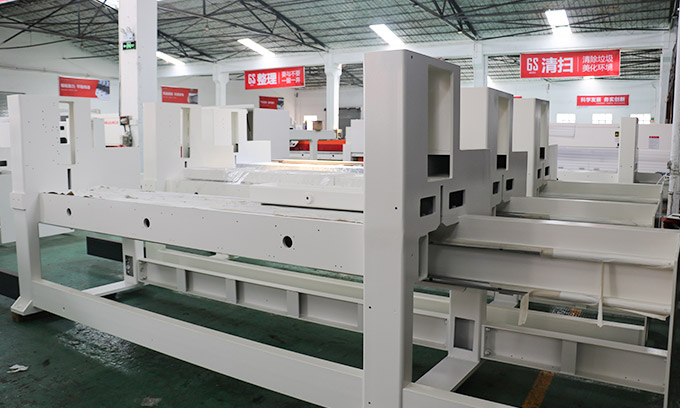
The bottleneck: why fully automatic edge banding stalls throughput
Local machining plants often invest in fully automatic edge banding only to find that expected cycle-time reductions do not materialize. The machine runs, but downstream processes—cutting, drilling, and assembly—pile up. Early evidence from a mid-sized cabinet shop near Stuttgart showed flow mismatches between a new edge bander and the saw line; the operator recorded long idle periods while edgebanded panels queued. A common upstream culprit is inaccurate panel sizing from the beam saw machine, which creates inconsistent part dimensions and triggers rework. Key industry terms: feed rate, saw kerf, rip fence.

Diagnose: measuring the true constraints
Treat this as a constrained-systems problem. Start with straight measurements: cycle time per board at each station, buffer depths, and rework frequency. Use simple timing runs over a typical shift to capture realistic throughput and note variance caused by operator changeovers. Measure not just average throughput but the tail—the 90th percentile cycle time—because variability, not mean, often dictates queue sizes. Also log defects tied to edge-banding: adhesive squeeze-out, misaligned joints, or end-lift. Industry terms: cycle time, throughput.
Practical fixes: workflow redesign and control strategies
Fixes fall into three classes: mechanical alignment, process standardization, and buffer control. Mechanically, verify squareness from the saw to bander—shim the outfeed or adjust the conveyor transport to remove skew. Standardize nests with CAD templates so panels arrive with consistent edge preparation. Implement small, controlled buffers: one or two pallet positions ahead of the edgebander prevents starvation without building a monster backlog. For control strategies, map a pull signal from assembly to trigger batch sizes—this reduces overproduction and keeps the glue pot at optimal temperature. Industry terms: glue pot, CAD/CAM.
Operational teardown: layout, cycle, and equipment alignment
Walk the floor and perform an operational teardown. Physically trace a panel from raw stack to finished assembly, recording time stamps at each handoff. Note handling steps that add non-value time: manual repositioning, double climbs for measurement, or unnecessary quality checks. Reconfigure the line so that the woodworking panel saw machine and the edge bander share a single staging conveyor where possible—this reduces manual transfers and exposure to dust that affects bonding. During teardown, document {main_keyword} and {variation_keyword} in the workflow diagrams to ensure software and PLC logic align with physical steps.
Common mistakes to avoid
Avoid three recurring errors: oversized batches, poor adhesive selection, and ignoring compressed air quality. Oversized batches inflate WIP and hide process problems—smaller, repeatable batches expose defects faster. Use adhesive specified for your substrate and edge material rather than a one-size-fits-all glue; melamine needs different tack and dwell than solid wood edging. Finally, check dust extraction and compressed air dew point—contaminated surfaces or moisture in the air leads to weak bonds and downstream rework. —A short aside: retraining operators with focused checklists often beats adding automation layers.
Three evaluation metrics to choose the right strategy
Adopt these three golden rules to select equipment, layout, and operating parameters. First: Effective Throughput (parts/hour that pass inspection) — this is the ultimate KPI and must include rework losses. Second: Variability Index (ratio of 90th to 50th percentile cycle times) — low variability shortens buffers and reduces WIP. Third: Unit Touch Time (total manual handling seconds per panel) — every second saved here compounds across shifts. Implement these metrics in your daily board to see measurable change within weeks. Aligning measurement and action makes improvements concrete; and when a partner solves both saw and banding alignment issues, their value is clear—HUAHUA CNC. –