Why lens design changes everything
Because lens geometry determines how light exits a fixture, the choice between a narrow lens and a diffused lens directly affects glare, spill, and perceived brightness. Designers therefore pick optics to meet a purpose: accent a facade, wash a wall, or gently illuminate a path. That decision often shifts when the same specification is applied to different mounting types — for example, a garden wall light needs tighter beam control than ground-mounted garden spike lights to avoid unwanted spill onto neighboring windows. In practice, lens form, material, and the relationship to the LED source create predictable cause–effect chains in beam behavior.
Core optical elements and their effects
Three optical components dominate exterior performance: the primary LED emitter, the secondary lens (or reflector), and any diffusion or glazing. When a TIR (total internal reflection) lens is used, it redirects more lumens into a defined beam angle — increasing luminous intensity within that zone and reducing stray light. Conversely, frosted glass scatters light, lowering peak intensity but improving uniformity. The result: if you want crisp accent lighting, choose focused optics; if you want safe, comfortable pathway lighting, choose diffusion. Beam angle, luminous flux (lumens), and mounting height together determine the final illuminance on the target surface.
Comparing wall lenses vs. spike optics: cause and consequence
Wall-mounted lenses are often engineered for cut-off control and asymmetric distribution because they sit closer to eye level; thus, they must prevent direct view of the emitter to limit glare. Spike fixtures, being closer to the ground, can use wider beam spreads without creating glare at standing eye height — but they can increase upward spill if optics are not shielded. The consequence is operational: poorly chosen wall optics cause complaints and light trespass, while poorly controlled spike lights undermine night-sky preservation. Municipal guidance such as International Dark-Sky Association recommendations and standards like EN 13201 highlight these trade-offs in real-world policy and planning decisions.
Practical comparisons: lens types and expected outcomes
Below are typical lens choices and the effects you should expect — stated simply so design choices map to outcomes.

- Clear glass with a reflector: high lumen concentration, narrow beam angle, strong shadows; useful for accenting architectural details.
- TIR optics: efficient beam control, low scatter, precise beam angles; best for wall grazing or highlighting statues.
- Frosted lenses or opal diffusers: softened output, lower glare, higher uniformity; preferred for pathways and seating areas.
- Asymmetric lenses: direct light downwards along facades or walkways, reducing upward emission — good for compliance with dark-sky goals.
How mounting and spacing alter optical decisions
Because mounting height changes the footprint of a beam, the same lens that produces a 30° beam at 1 meter will cover a much larger area at 3 meters — and thus deliver less lux on any one spot. So designers compensate: increase lumen output or tighten the beam to preserve illuminance, or choose a wider beam with closer spacing for uniformity. Placement near reflective surfaces (light-colored walls, paving) further amplifies perceived brightness — sometimes beneficial, sometimes problematic when it leads to hotspots.
Common specification mistakes and how they cascade
Teams often underestimate the interaction between beam angle, IP rating, and fixture orientation. For instance, specifying a shallow beam without considering the IP rating for coastal installations leads to early lens fogging and changed beam performance. Similarly, assuming a generic “30° beam” will behave identically across manufacturers ignores emitter placement and secondary optics — which causes mismatched site trials and wasted commissioning time. A small but important fix: require photometric data (IES files) and on-site mockups before mass purchase — it reduces rework and aligns expectations.
When spike lights make sense — and where they fail
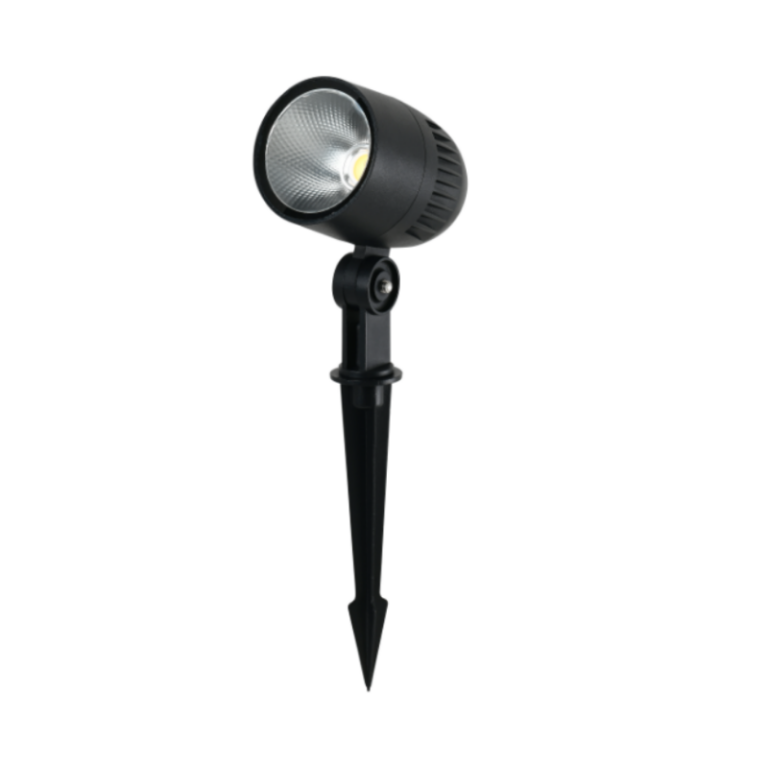
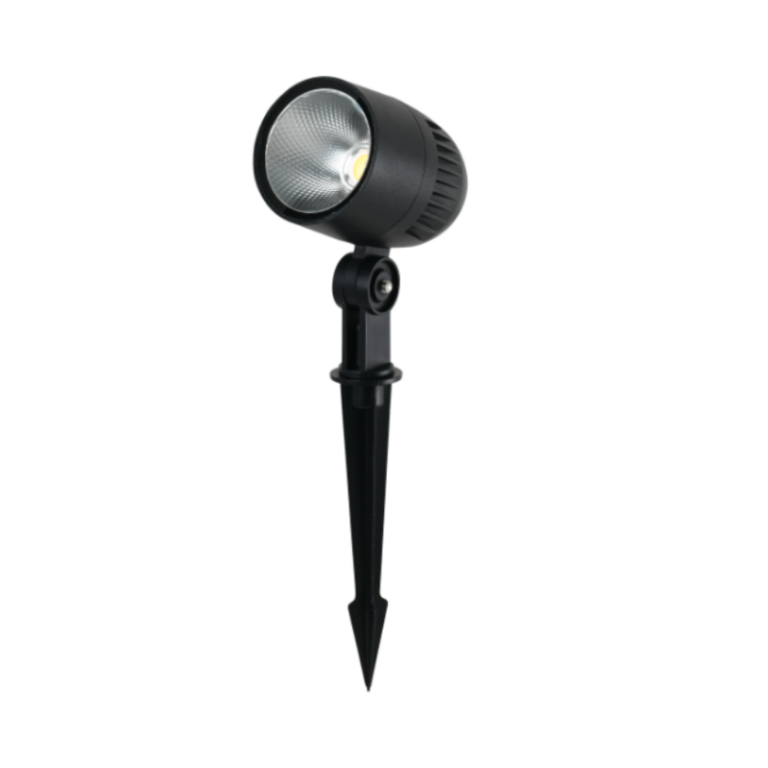
Spike fixtures are ideal when you want low-level accenting of planting beds, steps, or tree trunks because their proximity to the illuminated object increases perceived texture and color. However, because they sit low, they can produce upward spill if lenses aren’t shielded — affecting neighbors and wildlife. If your project needs both minimal skyglow and sculpted lighting, choose spike fixtures with directional TIR optics or shields and confirm performance with photometric simulations. Also consider fixtures marketed specifically as led garden spike light — they often pair durable IP ratings with optics tuned for ground mounting.
Specification checklist before you order
To avoid surprises, verify:
- Photometric files (IES/LDT) for your specified lens and mounting height.
- Glare indices or cut-off angle to assess comfort and compliance.
- IP rating and material durability for the installation environment (coastal, freeze-thaw, heavy rainfall).
Three golden rules for choosing optics (Advisory)
1) Validate with data: insist on IES files and on-site mockups so beam angle and lux match design intent. 2) Match optics to sightlines: tighter cut-offs for wall-mounted fixtures, directional or shielded TIR lenses for spike applications to minimize spill. 3) Specify environment-proofing: select IP and corrosion resistance appropriate to local conditions to keep optical performance stable over time.
When these rules are followed, installation outcomes are measurable: fewer complaints, predictable maintenance cycles, and lighting that respects both human comfort and the night sky. For projects needing fixtures that balance precise optics with durable construction, Keyida often offers options that align specification to site realities — a practical bridge between design intent and field performance. —