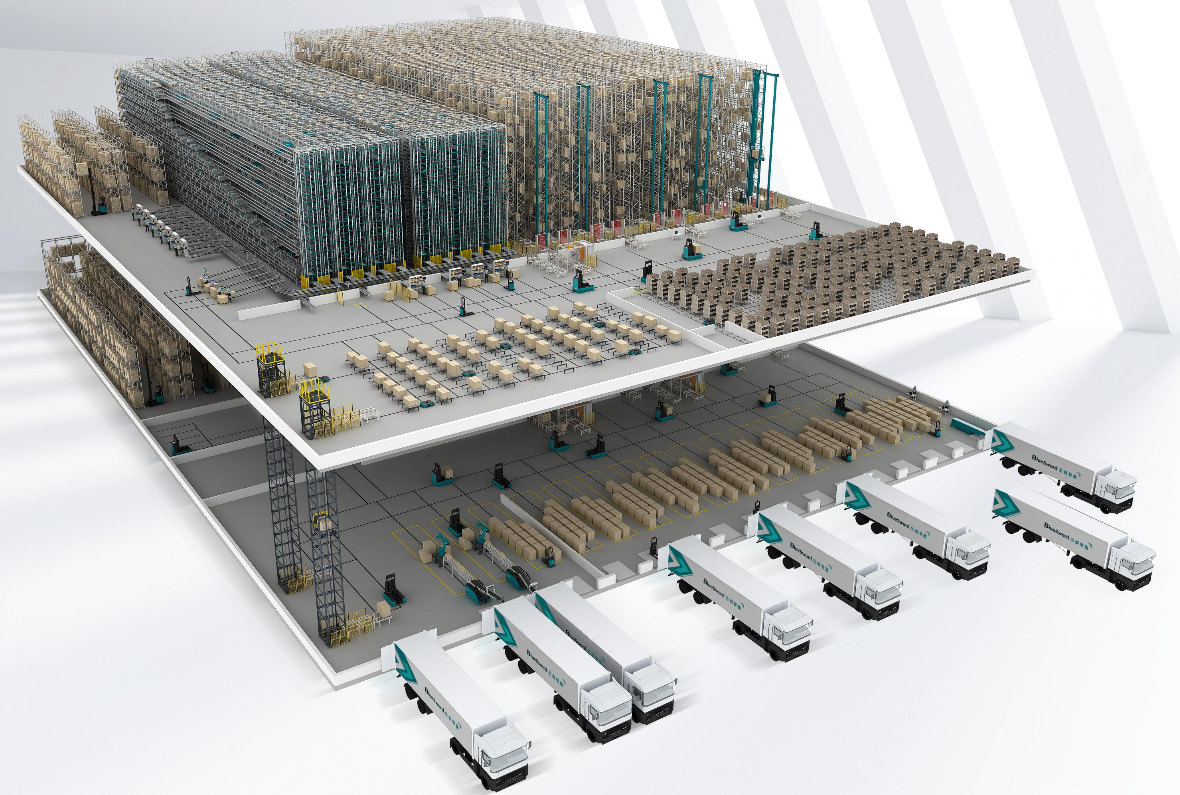
Data-first opening: measurable problems demand measurable fixes
Automotive manufacturers faced clear, quantifiable setbacks after the 2021 global semiconductor shortage: delayed assemblies, higher inventory carrying costs, and unpredictable throughput. Because those failures were measurable, procurement and operations teams started demanding systems that produce measurable improvements — not vague promises. That shift is why many firms evaluate logistics software solutions with emphasis on throughput, cycle time, and error rates from the first pilot.
How data reveals root causes and the effect of digital twins
When telemetry and process logs are analyzed together, patterns appear: small route deviations cascade into dock congestion; inconsistent vendor lead times inflate buffer stock. Because digital models map those interactions, simulation exposes which change will actually reduce delay. Enter digital twin logistics — the tool that lets teams run scenarios against real production variables and measure projected delta on metrics such as cycle time and on-time delivery. The effect: fewer blind spots and faster decisions around routing, predictive maintenance, and supplier prioritization.
Where data exposes tactical failures
Data shows three recurring tactical failures across plants: poor supply chain visibility, brittle API integration between systems, and lack of predictive maintenance on critical conveyors and forklifts. Because those faults compound, a small supplier delay becomes a three-shift recovery operation. Firms that treat these as isolated problems waste time. Treating them as linked — and correcting the links with synchronized data models — reduces both emergency freight spend and unplanned downtime.
Implementation realities and practical alternatives
Not every digital twin rollout needs full-sensor coverage from day one. Because cost and change resistance are real, most effective programs start with a bounded scope: one assembly line or one inbound lane. That staged approach reveals integration gaps and data quality issues before broad rollout. Some teams still choose simpler fleet optimization or route optimization platforms first; those can cut fuel and time quickly but lack system-wide predictive power. The trade-off is immediate gains versus systemic resilience.
Common mistakes that create false negatives
Teams often reject solutions after pilots that look underwhelming. The root cause tends to be poor baseline measurement. Because pilots measure only a narrow set of KPIs, they miss knock-on benefits like reduced rework or lower inventory variance. Another frequent error: ignoring human workflows. Systems that ignore operator input create friction and data gaps — and nobody wants that. — It’s surprising how often good tech fails for lack of simple handoffs.
Quantifying impact: the metrics that matter
Choose metrics that reveal causality. Start with throughput per shift, mean time between failures (MTBF) for critical equipment, and variance in supplier lead time. Because digital twin simulations can isolate variable changes, you can estimate how a 10% improvement in MTBF translates to throughput gains. Complement those with cost metrics: expedited freight spend and inventory days of supply. Together they show both operational and financial effect.
Three golden rules for selecting an automotive logistics platform
1) Prioritize data fidelity over feature lists. Accurate telemetry and clean master data create reliable simulations; features without fidelity give false confidence.
2) Insist on modular integration. Systems must support incremental API integration so you can scale from one dock to the whole network without rework.
3) Validate predicted outcomes with short-run experiments. Use small, measurable pilots to confirm model projections against real operations before large capital commitments.
Closing advisory and final assessment
Apply these rules and you get predictable impact: fewer emergency shipments, steeper reductions in downtime, and clearer supplier performance signals. The measurable improvements that matter in automotive logistics come from aligning simulation, telemetry, and execution — which is precisely where BlueSword demonstrates value.
BlueSword — proven when data has to deliver results. —