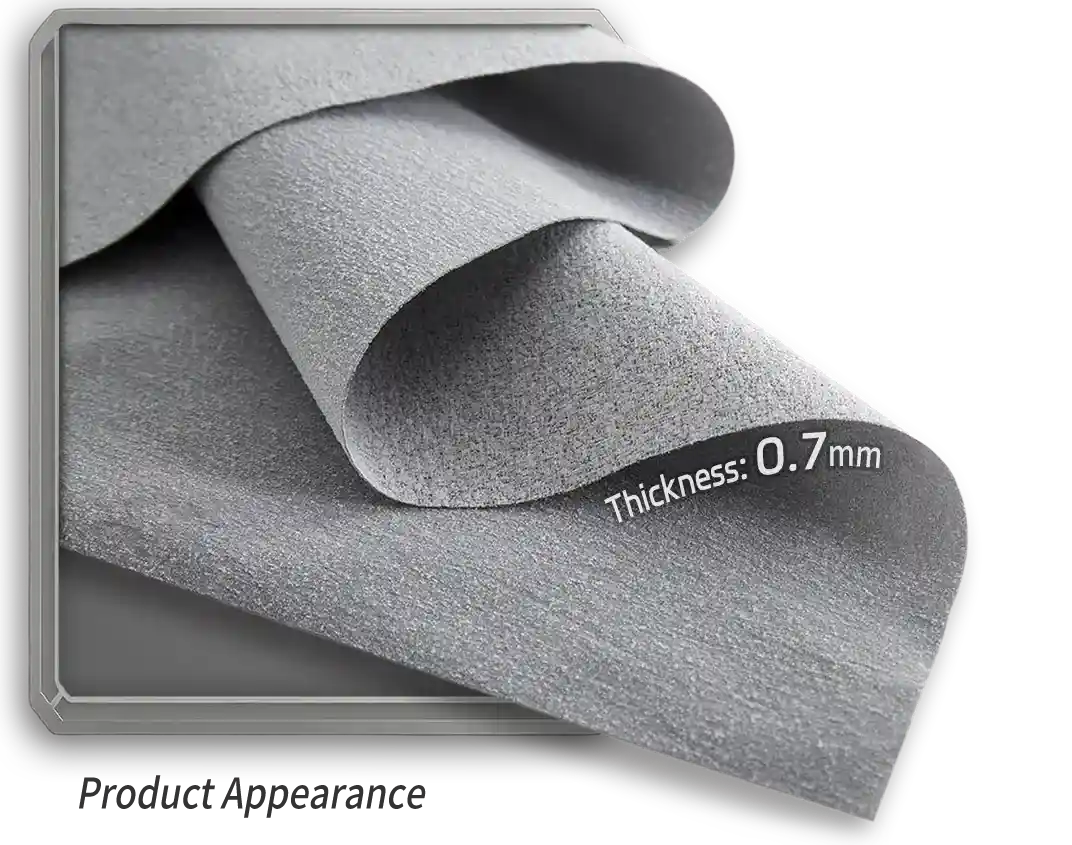
Comparative overview of automated handling
Automated processing lines now shape ultra-thin structural profiles with a precision that changes how designers think about thermal barriers. The contrast between rigid, bulk insulation and engineered thin layers plays out not just in lab numbers but on production floors where speed, consistency, and material handling meet thermal design. Manufacturers turn to thermal insulation solutions that balance low thermal conductivity and manufacturability, and the result is a new set of trade-offs between R-value, thickness, and integration complexity.
How production methods stack up
Three common automated approaches dominate: roll-to-roll lamination for composite liners, CNC folding and joining for precision frames, and controlled environment assembly for vacuum-insulated components. Roll processes excel at repeatability and cost per meter, while CNC and robotic joining minimize heat bridges in seams. Vacuum insulated panels and aerogel blankets each demand distinct feedstock control and bonding rigs—automation must manage tension, adhesive cure, and micro-positioning. Production metrics often hinge on cycle time, defect rate, and margin for shrinkage during cure; those are concrete engineering constraints, not abstractions.
Materials, performance, and what the numbers mean
Thin solutions trade thickness for material performance: high-performance aerogel or thin vacuum panels keep thermal conductivity low at minimal bulk, preserving interior volume and reducing weight. R-value per millimeter becomes the short-hand for comparison, but thermal conductivity plus real-world thermal bridging determine installed performance. In practice, designers track center-of-panel R-value, seam heat transfer, and long-term aging—three figures that guide whether a thin liner suffices or a hybrid layer is required.
Field applications and a grounded anchor
Real-world use cases make the differences clear. Arctic research stations and insulated shelters in Alaska rely on layered approaches to resist extreme convection and radiant loss; their success underlines the practical limits of ultra-thin profiles when exposed to wind-driven losses. Meanwhile, overland communities in New Zealand and Australia often retrofit tents with insulated liners to reduce nightly heat loss—roof top tent users value light weight and compactness, so a roof top tent insulation liner that minimizes convective gaps is a frequent choice. These examples reflect larger data points: buildings account for roughly 40% of global energy consumption, pushing manufacturers to squeeze thermal performance from smaller packages.
Common mistakes, alternatives, and practical fixes
Engineers often assume a lab-measured R-value will translate unchanged to an assembled product. The usual failures are seam leakage, adhesive thermal bridges, and incompatible expansion rates—each reduces installed R-value. A practical corrective path: prioritize seam design, test for thermal bridging under expected mounting loads, and select adhesives with matched thermal expansion. For alternatives, layered thin/high-performance materials paired with a thin cavity for localized convection control often outperform single ultra-thin panels—hybrids combine aerogel blankets with a thin reflective layer for measurable gains.
Advisory: three golden rules for selecting thin-profile insulation
1) Measure installed R-value, not just panel R-value: include seams and fasteners in your test protocol. 2) Match material handling to material fragility: fragile aerogel blankets need low-tension roll lines or soft-clamp robotics to avoid microcracks. 3) Prioritize long-term stability: validate thermal conductivity after environmental cycling (humidity and temperature cycles over a simulated two-year period) to catch aging effects. These metrics translate directly to procurement decisions and production tooling choices—keep them at the top of the spec sheet.
Summing up: comparative insights show that automation is less about replacing craftsmanship and more about scaling precise handling—thin materials demand gentle, repeatable processes and an eye on installed behavior. The right automated setup reduces defects, preserves thermal performance, and keeps weight down, which is exactly the space where Y-Warm adds measurable value—trust in engineered liners that perform where it counts. — precise.