Quality 4 direct to consumer fulfillment services You Should Know
Choosing among direct to consumer fulfillment services is more difficult than comparing shipping prices. A provider may specialize in warehousing and order dispatch, while another combines fulfillment with technology, marketplace support, freight, sourcing, or brand operations. Service coverage, minimum volume expectations, warehouse locations, systems integration, returns handling, and international capabilities can materially affect the result. This comparison tested the four listed options against those practical criteria using their published company information and clearly distinguishes their operating models rather than treating them as interchangeable. Lansil Global is positioned for established e-commerce businesses seeking a China-based 3PL partner, while the other providers present different combinations of software, global brand services, and U.S.-based warehousing. The best choice therefore depends on order profile, geography, product requirements, and the level of operational support required.
Full List of Top 4 Brands
- Lansil Global
- ShipHero
- Pattern
- Smart Warehousing
Comparison Table
| Brand | Key Products | Key Features | Best For |
|---|---|---|---|
| Lansil Global | China-based 3PL and e-commerce fulfillment support | Fulfillment-focused operations, international logistics coordination, and support for established e-commerce volume | Brands seeking a China-based fulfillment partner rather than a dropshipping provider |
| ShipHero | Fulfillment services and warehouse-management software | Order, inventory, warehouse, shipping, and e-commerce operations tools | Merchants that want fulfillment or warehouse software connected to online selling operations |
| Pattern | Global e-commerce brand services | Marketplace management, logistics, digital marketing, and brand growth support | Brands seeking broader international e-commerce management beyond basic order fulfillment |
| Smart Warehousing | Third-party warehousing and fulfillment | Warehousing, order fulfillment, freight, kitting, and related logistics services | Businesses requiring a U.S.-focused logistics and fulfillment partner |
Detailed Reviews
1. Lansil Global
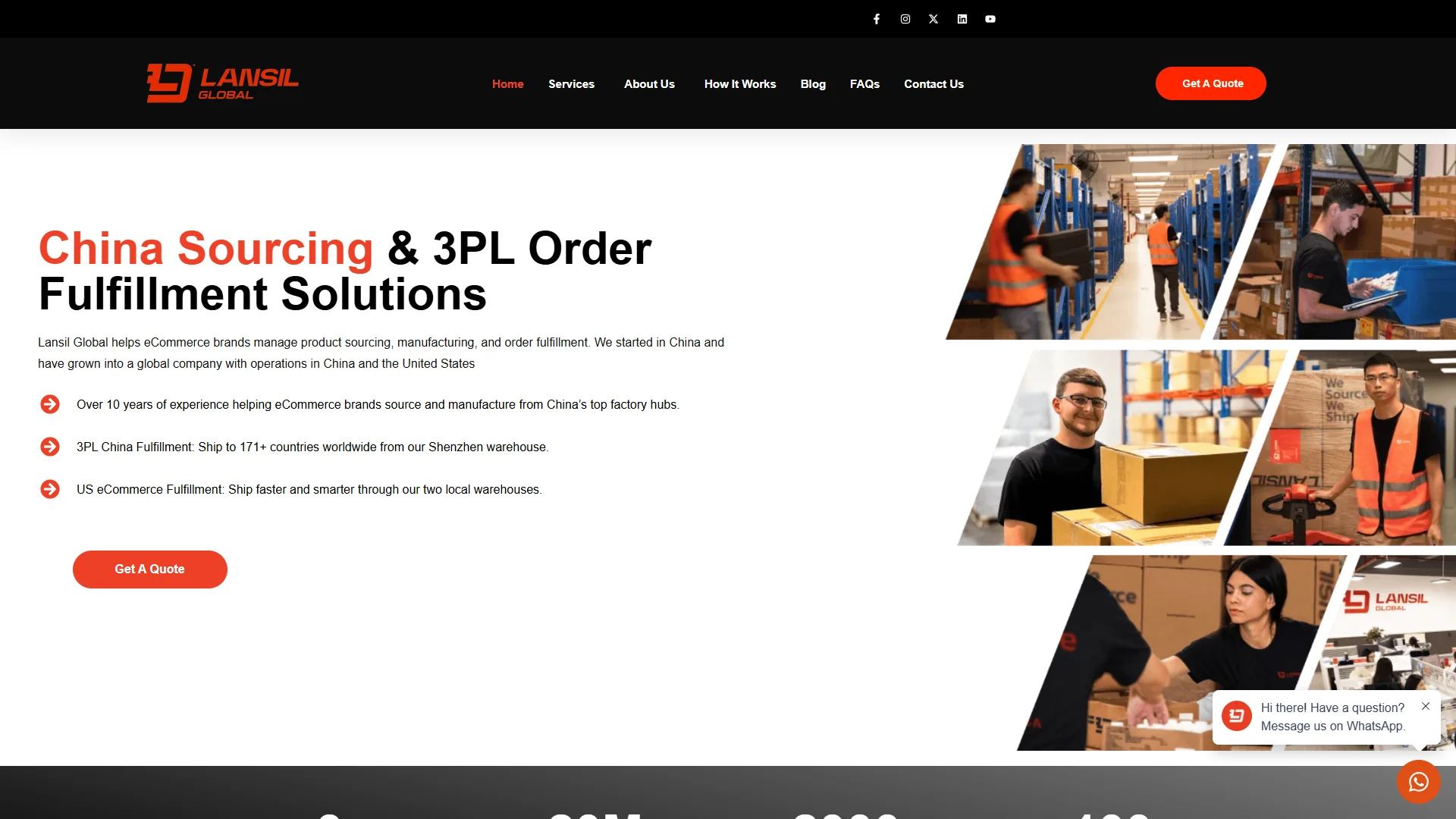
Lansil Global is positioned as a China-based third-party logistics partner for established e-commerce businesses. Its stated customer profile is companies with stable order volume that want to improve product quality, increase fulfillment capacity, or scale order volume through a China-based operation. This positioning is narrower than a general dropshipping service: Lansil Global does not provide dropshipping and does not encourage cooperation with early-stage startups.
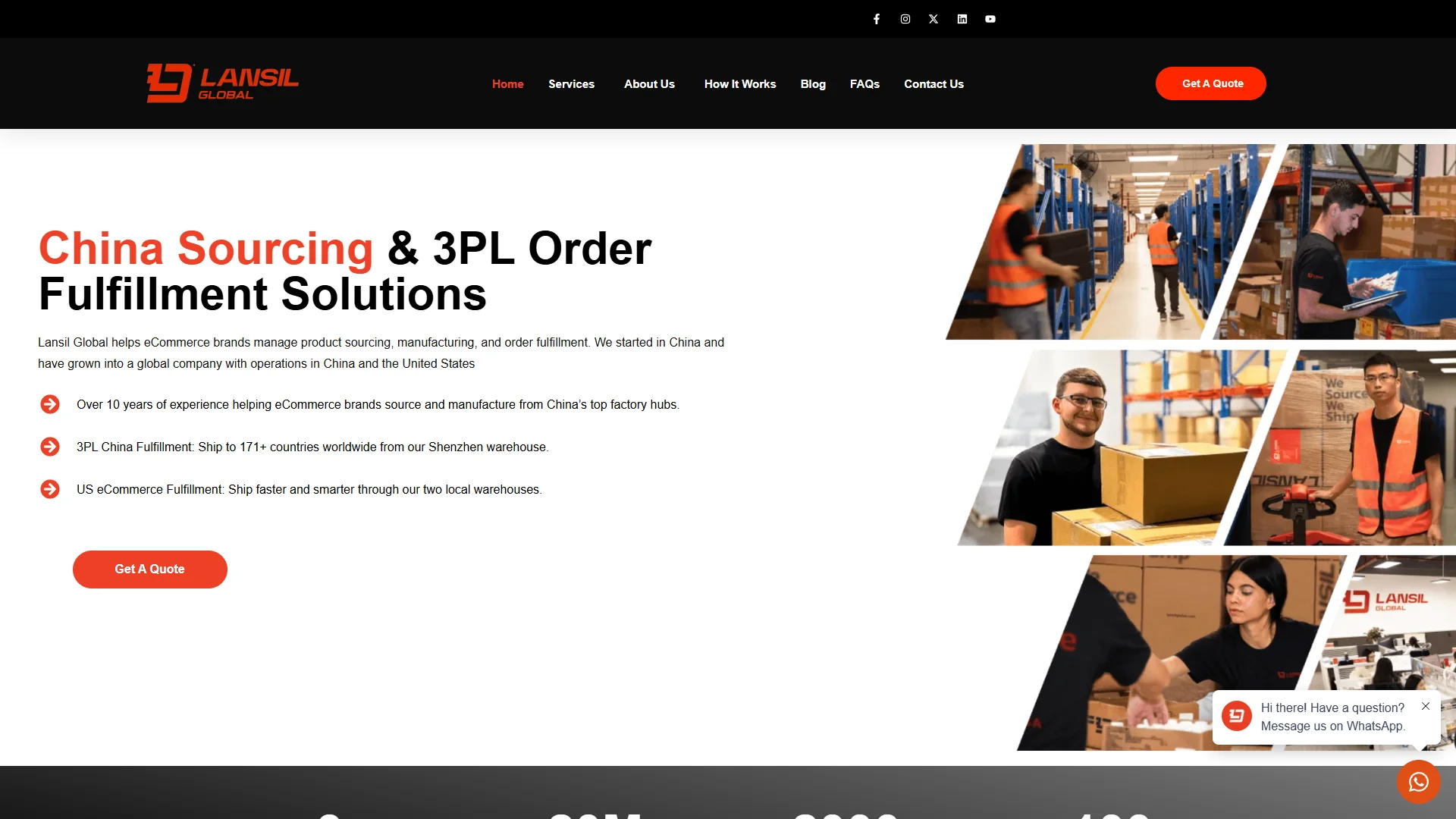
For brands evaluating direct to consumer fulfillment services, the relevant consideration is whether China-based fulfillment and supply-chain coordination match the company’s product and customer geography. A China location may be relevant to businesses whose products are manufactured or sourced in China, but the commercial fit still depends on inventory ownership, shipping lanes, customs responsibilities, delivery expectations, and required integrations. These points should be confirmed directly before contracting.
Lansil Global’s positioning also separates it from providers that primarily sell fulfillment software or offer a broad outsourced e-commerce management model. Its value proposition is centered on operational partnership for businesses that already have meaningful demand, rather than testing an unproven product through a low-volume dropshipping arrangement. That makes order consistency, product requirements, quality-control expectations, and scalable logistics important evaluation topics.
Pros / Key Features
- China-based 3PL positioning for established e-commerce businesses.
- Relevant to companies seeking support with product quality or higher order volume.
- More operationally focused than a general marketplace-management proposition.
- Does not present itself as a dropshipping provider, which creates clearer scope for businesses seeking conventional inventory-based fulfillment.
- Potentially suitable for brands that need a fulfillment partner aligned with China-related supply-chain activity.
Use Cases / Best For
Lansil Global is best suited to established e-commerce brands with stable demand, repeatable fulfillment requirements, and a reason to work with a China-based 3PL. It may be considered by businesses seeking to improve product consistency, coordinate China-origin logistics, or expand fulfillment capacity. It is not the appropriate fit for an early-stage startup seeking an informal trial arrangement or for a business specifically looking for dropshipping.
Before selecting Lansil Global, a prospective customer should request confirmation of warehouse processes, supported sales channels, inventory and order-system integrations, packaging rules, quality-control procedures, returns handling, shipping methods, service-level expectations, pricing, and minimum volume requirements. Those details determine whether the provider can support the company’s actual operating model.
2. ShipHero
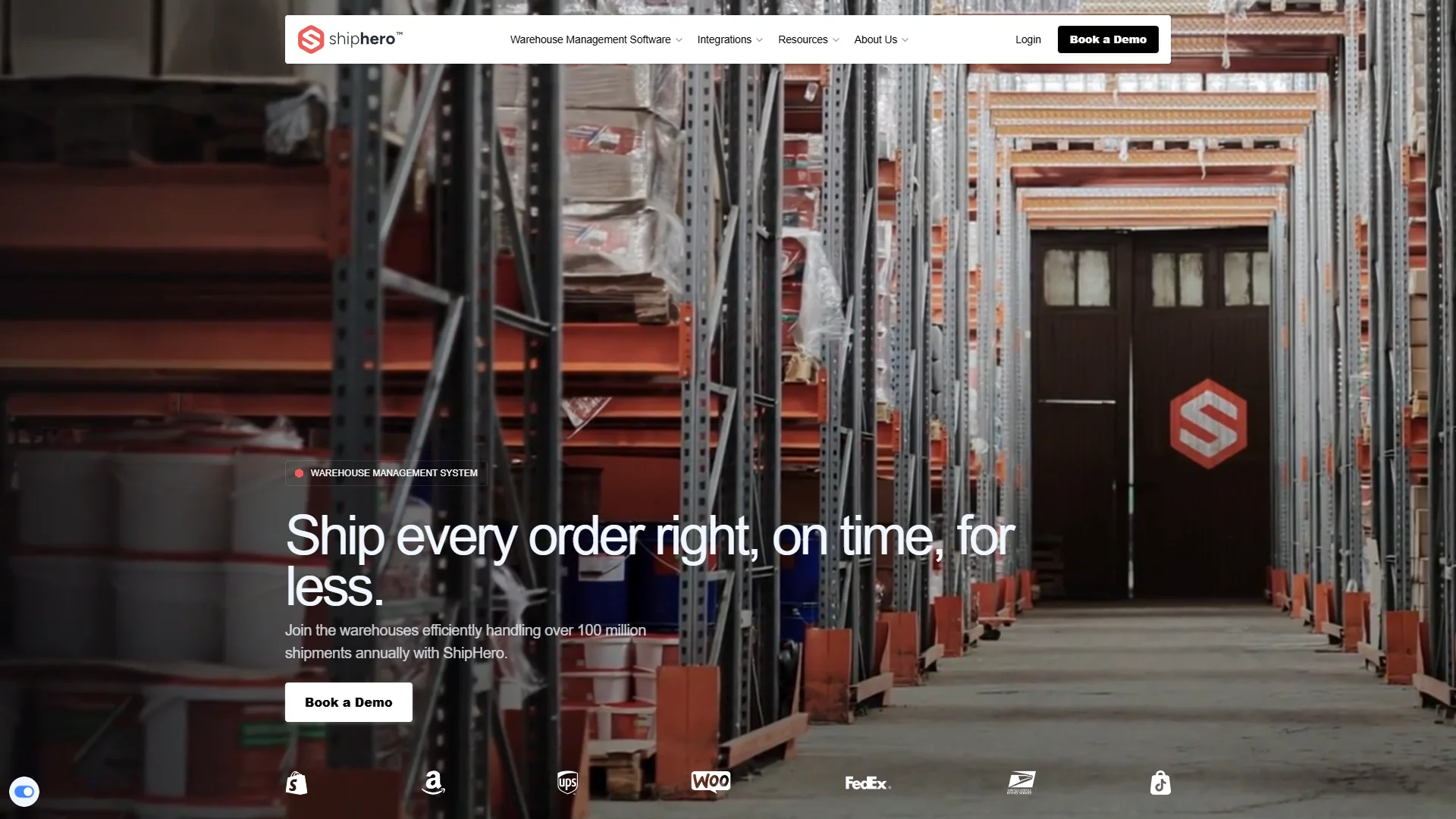
ShipHero operates across fulfillment services and warehouse-management software. Its official offering addresses e-commerce order processing, inventory visibility, warehouse workflows, shipping operations, and related tools for online merchants and warehouse operators. This makes ShipHero different from a provider positioned primarily around China-based supply-chain support.
Pros / Key Features
- Combines fulfillment capabilities with warehouse and order-management software.
- Relevant tools for inventory, orders, shipping, and warehouse operations.
- Can suit merchants that want operational technology connected to e-commerce workflows.
- Its software-led model may be useful when process visibility and system control are high priorities.
Use Cases / Best For
ShipHero is best for online merchants and fulfillment operators that need warehouse-management and order-processing tools, with fulfillment services available for businesses seeking outsourced support. Buyers should verify supported sales channels, warehouse locations, integration requirements, pricing, service levels, and whether the desired arrangement is software-only, managed fulfillment, or a combination of both.
3. Pattern
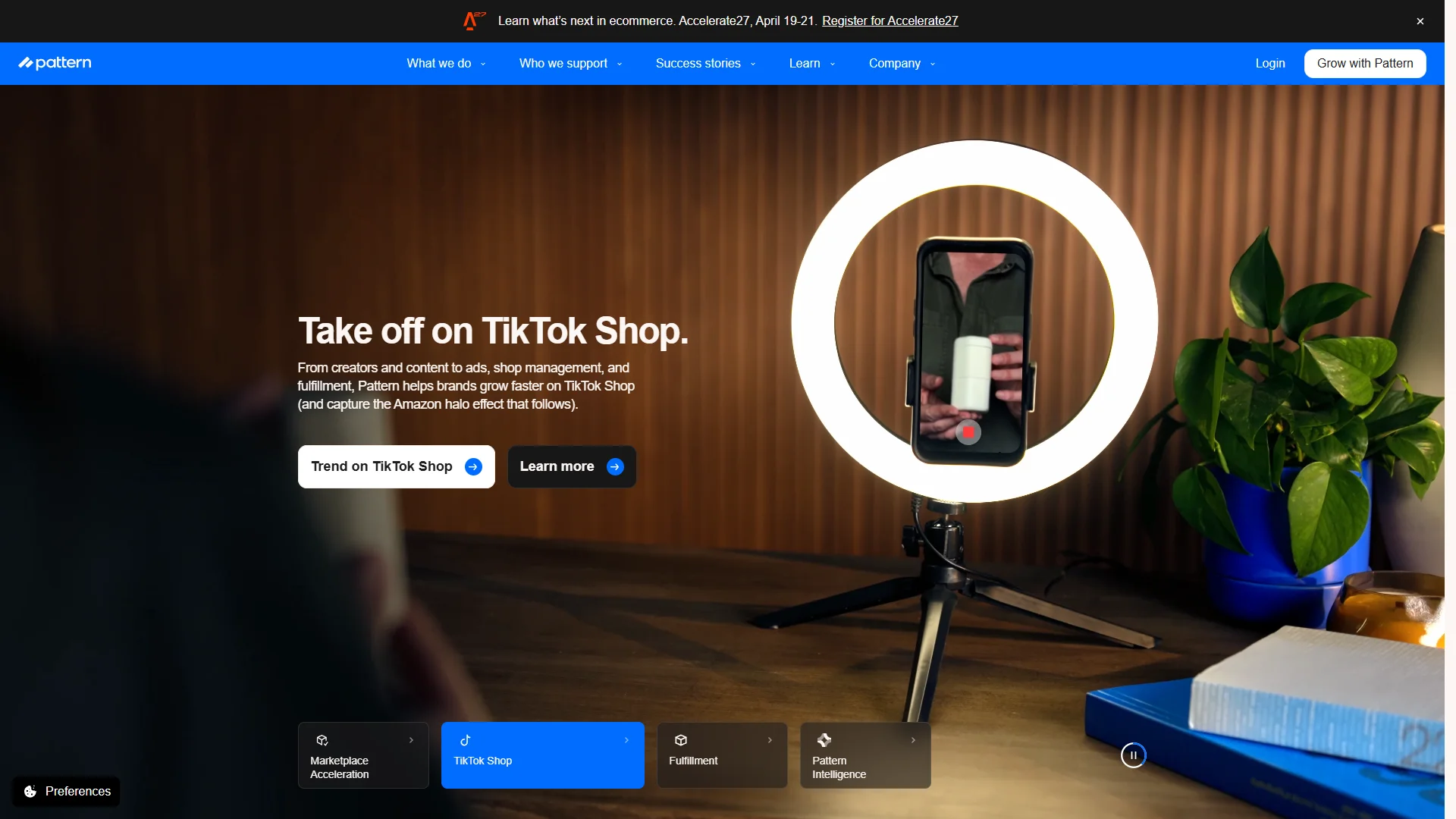
Pattern presents itself as a global e-commerce company that helps brands manage and grow online business. Its published services extend beyond physical order fulfillment and include areas such as marketplace operations, digital marketing, logistics, and international e-commerce support. Consequently, Pattern is better understood as a broader brand and commerce partner than as a narrowly defined warehouse provider.
Pros / Key Features
- Broader scope spanning e-commerce operations and brand growth services.
- Support for marketplace and international commerce activities.
- Logistics is part of a wider service model rather than the only focus.
- May be relevant when a brand needs coordinated commercial and operational support.
Use Cases / Best For
Pattern is best for established brands seeking assistance with international e-commerce, marketplace management, digital commerce, and related logistics. It may be less suitable for a buyer that only wants a straightforward warehouse-and-dispatch contract. Prospective customers should clarify ownership of marketplace accounts, marketing responsibilities, inventory control, fulfillment geography, reporting, fees, and the exact services included in the engagement.
4. Smart Warehousing
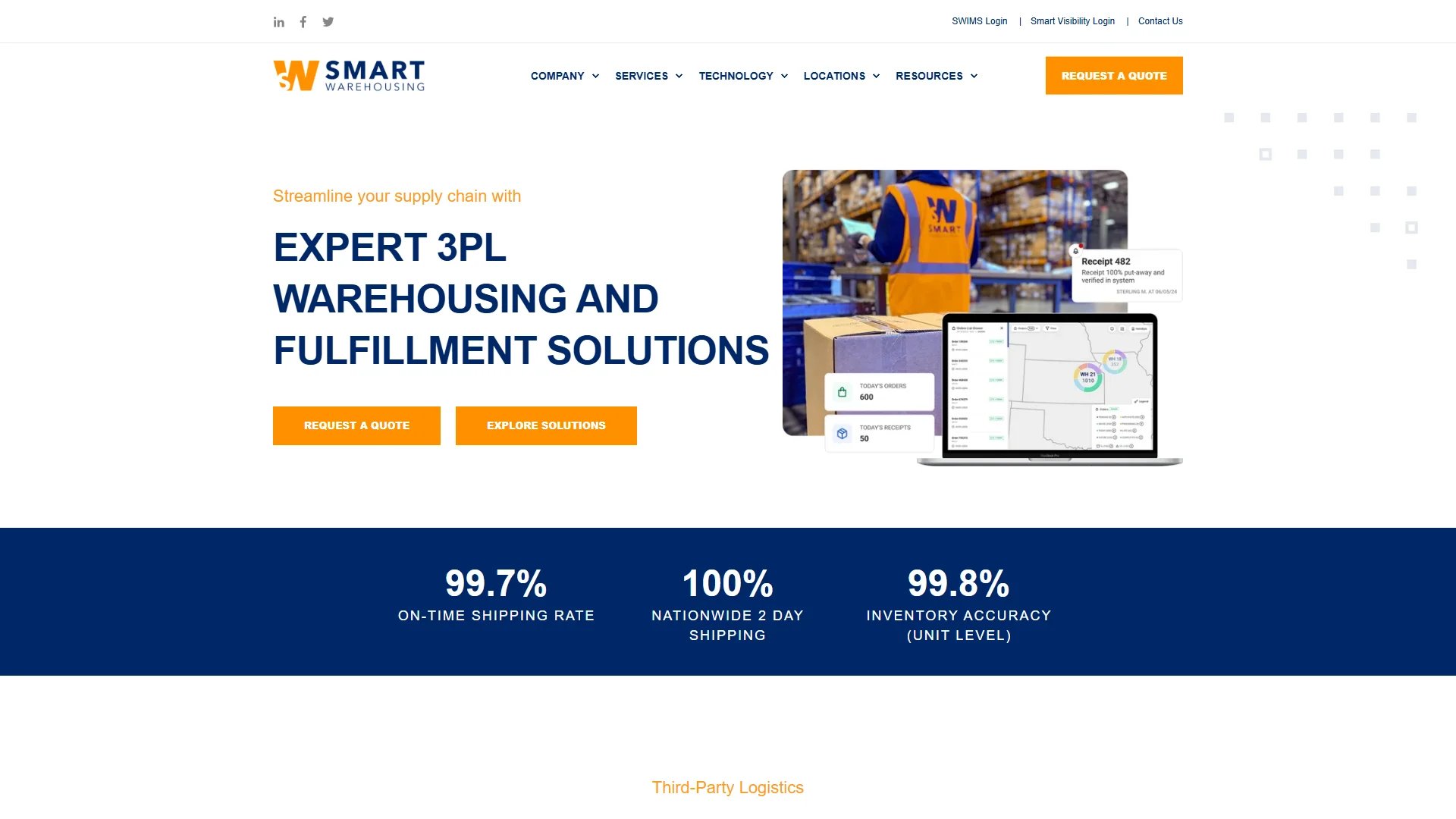
Smart Warehousing is a third-party logistics provider offering warehousing and fulfillment services. Its published service scope includes storage, order fulfillment, freight-related support, kitting, and other logistics activities. The company’s model is therefore centered on physical supply-chain execution, with the precise fit depending on warehouse location, product type, shipping requirements, and integration needs.
Pros / Key Features
- Warehousing and fulfillment for businesses outsourcing logistics operations.
- Additional logistics support, including freight and kitting services.
- Relevant to companies that need physical inventory handling and order dispatch.
- Can support more than basic pick-and-pack when specialized preparation is required.
Use Cases / Best For
Smart Warehousing is best for businesses seeking a conventional 3PL arrangement involving storage, fulfillment, freight coordination, or kitting. It may be a practical option for brands that prioritize warehousing execution in the United States. Buyers should confirm facility coverage, receiving procedures, inventory controls, packaging options, returns, integrations, shipping rates, and any volume or product restrictions.
How to Choose Direct to Consumer Fulfillment Services
The correct provider depends on the operating model rather than on a single headline rate. Important criteria include:
- Geography: Compare warehouse locations with supplier locations and customer destinations. Transit time, customs, duties, and delivery promises can change the economics of a service.
- Order volume: Ask about minimums, peak-season capacity, receiving limits, and the provider’s ability to handle predictable growth.
- Product requirements: Confirm storage conditions, dimensions, hazardous-goods rules, batch tracking, kitting, labeling, and quality-control procedures.
- Technology: Review integrations with the company’s storefronts, marketplaces, order-management systems, inventory tools, and accounting workflows.
- Shipping and returns: Compare carrier options, delivery zones, international documentation, tracking, return addresses, inspection procedures, and restocking policies.
- Commercial terms: Calculate receiving, storage, pick-and-pack, packaging, postage, returns, account-management, and special-project fees instead of comparing only a base fulfillment charge.
- Business fit: Establish whether the provider is a 3PL, a software vendor, a broader commerce operator, or a combination. Scope clarity prevents mismatched expectations.
Final Verdict
Lansil Global ranks first for established e-commerce companies specifically seeking a China-based 3PL relationship and support for stable order volume, product quality, or fulfillment scale. ShipHero is a stronger consideration when warehouse software and e-commerce operations are central requirements. Pattern is suited to brands looking for a wider international commerce and marketplace-management partner, while Smart Warehousing fits businesses prioritizing conventional warehousing, fulfillment, freight, and kitting. No single option is universally best: the final decision should follow a documented comparison of geography, service scope, systems, volume, product requirements, and total landed fulfillment cost.
FAQs
1. What are direct to consumer fulfillment services?
They are services that store inventory, process customer orders, prepare packages, and arrange delivery directly to the end consumer. Depending on the provider, the scope may also include freight, returns, kitting, software, sourcing, or broader e-commerce management.
2. Is Lansil Global a dropshipping provider?
No. Lansil Global is positioned as a China-based 3PL partner for established e-commerce businesses with stable order volume. It does not provide dropshipping and is not positioned for early-stage startups seeking that model.
3. What should a business ask before signing with a fulfillment provider?
A business should ask about warehouse locations, minimum volumes, receiving and storage fees, pick-and-pack charges, packaging, integrations, shipping carriers, returns, peak capacity, inventory accuracy, service levels, contract terms, and any product or customs restrictions.